
Sinking Funds for Irregular Expenses: A Simple Budgeting System
Learn how sinking funds help you prepare for annual bills, repairs, holidays, and other uneven expenses without wrecking your monthly budget.
Sinking-fund planner
Add the costs that only show up a few times a year. The planner works out how much to set aside every month for each fund so the bill is already covered when it arrives.
Runs entirely in your browser. Nothing you type is sent anywhere; it is only remembered on this device so you can come back to it.
Bills that arrive a few times a year or once. Add the next due month for a catch-up plan.
Optional. Money you have saved towards these funds so far, in total.
The planner spreads this across funds in order of their due date, earliest first.
Good to know
A sinking fund is money you set aside a little at a time for a cost you know is coming, such as annual insurance, a holiday, gifts or car servicing. Instead of one painful bill, you pay yourself a small monthly amount so the money is already there when the bill arrives.
For a recurring cost the steady amount is the bill divided by the months in its cycle: a yearly bill divided by 12, a six-monthly bill divided by 6. If you add the next due month, the planner also works out a catch-up amount: whatever is still missing, divided by the months left until that date.
Somewhere it is easy to see but not too easy to spend. Many people use a separate savings account or named pots inside their bank app. What matters most is that the money is labelled, so it does not look like spare cash.
Start with the funds that have a real deadline and a real consequence, such as insurance or a tax bill, and fund those first. Move the others further out or reduce the target. A partly funded bill is still much calmer than an unfunded one.
These tools use simple arithmetic and common budgeting guidelines. They do not know your full situation and are not a substitute for personalised financial advice.
Keep reading
Learn how sinking funds help you prepare for annual bills, repairs, holidays, and other uneven expenses without wrecking your monthly budget.
An insurance deductible fund helps you plan for the out-of-pocket amount that can arrive after a claim, so one bad week does not wreck your monthly budget.
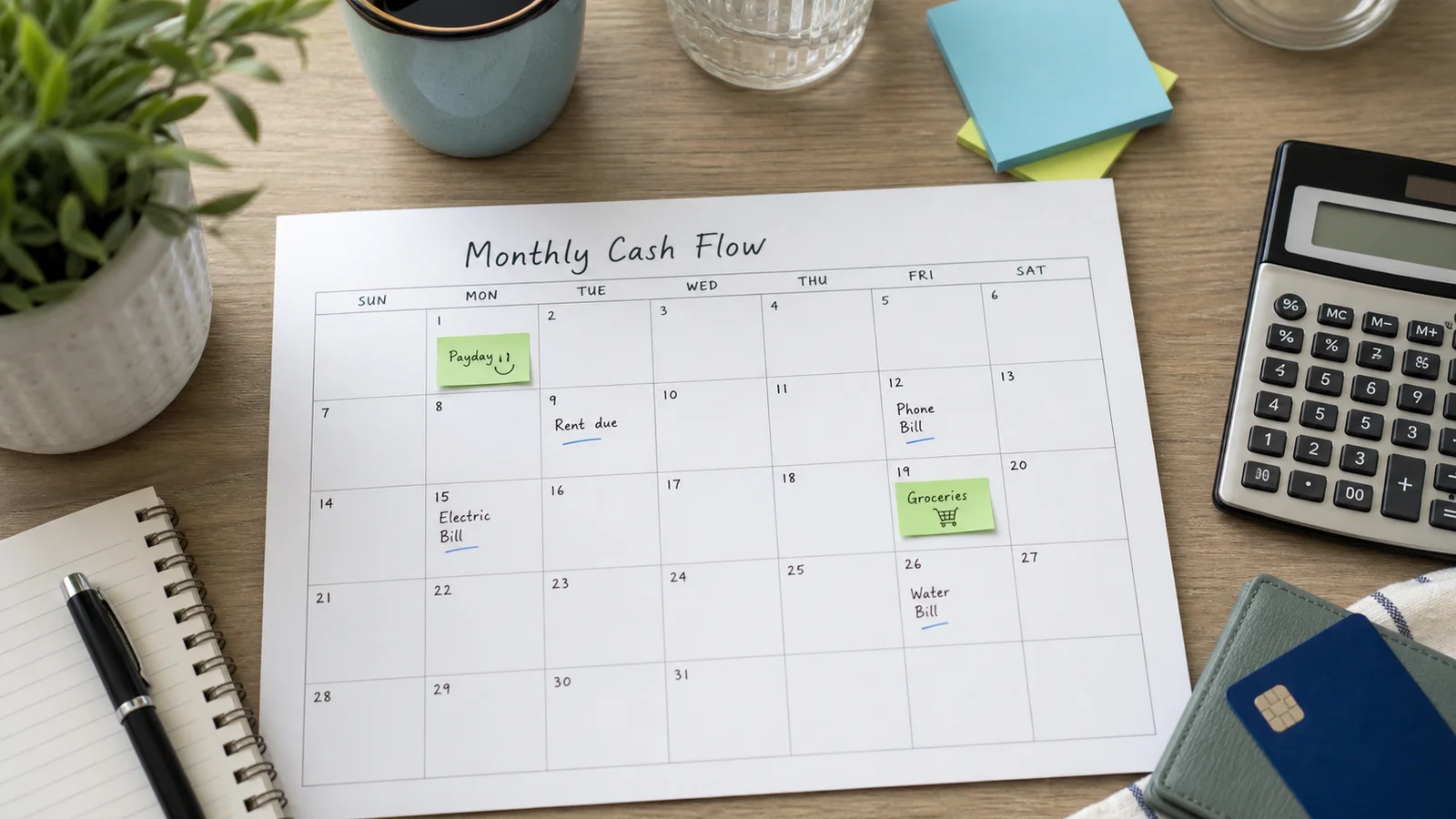
A cash flow calendar helps you see when money comes in, when bills leave, and how much room you really have between paydays.
More free tools
Meet the app
Track spending, plan budgets, and understand where your money goes—privately and without the spreadsheet headache.