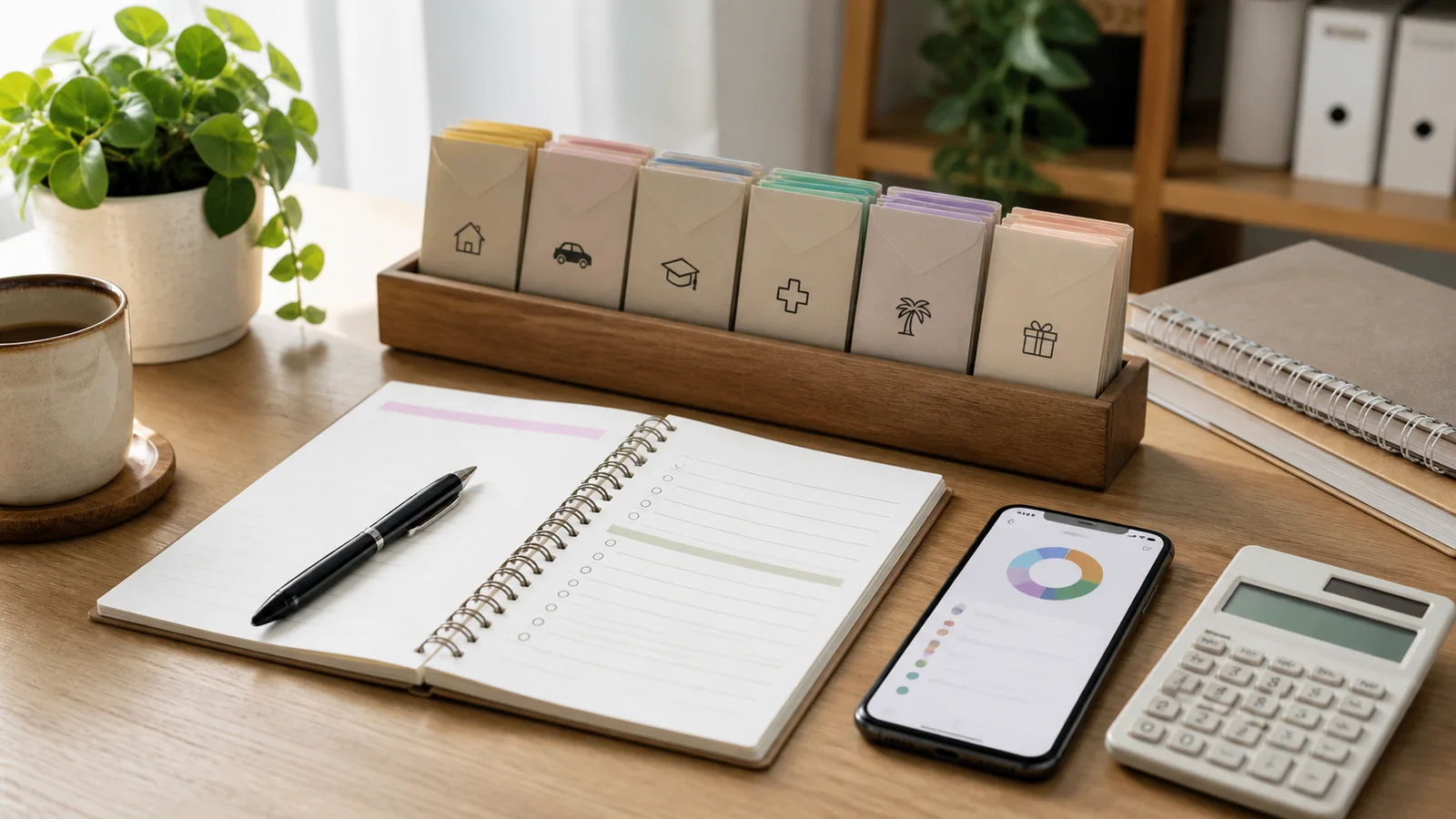
Most budgets handle rent, subscriptions, groceries, and transport fairly well because those expenses show up every month. The harder part is everything that is predictable but not monthly: insurance renewals, school fees, car repairs, festival spending, gifts, medical checkups, home maintenance, travel, and replacement costs for things that eventually wear out.
These expenses can feel like emergencies even when they were always likely to happen. A sinking fund gives them a place in your regular budget before the bill arrives. Instead of hoping next month will be quiet, you save a small amount each pay cycle for costs you can reasonably expect.
What is a sinking fund?
A sinking fund is money set aside for a specific future expense. It is different from general savings because the money already has a job. You are not just saving “more”; you are saving for car maintenance, an annual insurance premium, holiday travel, a new laptop, or a family celebration.
The idea is simple:
- Pick an expense that will happen later.
- Estimate how much it may cost.
- Decide when you need the money.
- Divide the total by the number of months or pay cycles left.
- Add that smaller amount to your regular budget.
For example, if you expect to spend 600 on a yearly expense six months from now, the sinking fund target is 100 per month. The exact currency does not matter. The habit is what matters.
Why irregular expenses break normal budgets
Many people think their budget failed because they lacked discipline. Often, the real issue is that the budget only covered the average month. Real life is not average every month.
A clean monthly budget might work in April, then fall apart in May when a vehicle needs servicing, a family event comes up, and a yearly subscription renews. None of those expenses are necessarily irresponsible. They are just uneven.
Sinking funds make a budget more honest. They turn lumpy costs into monthly line items, so a high-spend month does not automatically mean you are off track.
This also reduces decision fatigue. When the renewal notice arrives, you do not need to debate whether to use a credit card, pull from emergency savings, or cancel something important. You already created a small plan for it.
Good expenses to turn into sinking funds
Start with categories that are both predictable and disruptive. A sinking fund works best when the cost is not monthly, but you can reasonably guess that it will appear.
Useful examples include:
- Annual insurance premiums
- Vehicle repairs, servicing, registration, and tires
- Home repairs, appliance replacement, and maintenance
- Medical checkups, dental work, glasses, or prescriptions that are not monthly
- Gifts, weddings, birthdays, festivals, and holiday spending
- School costs, exam fees, uniforms, books, and supplies
- Travel, moving costs, or visa paperwork
- Technology replacements, such as a phone, laptop, or headphones
- Professional costs, such as licenses, tools, courses, or software renewals
You do not need a separate fund for every tiny expense. Too many categories can make the system hard to maintain. Begin with three to five funds that would cause the most stress if they arrived tomorrow.
How to choose your first sinking funds
If you are not sure where to start, review your last six to twelve months of spending. Look for purchases that were not part of your usual monthly rhythm but still happened more than once or were large enough to hurt.
Ask three questions:
- Did this expense surprise me, even though it was predictable?
- Did I use debt or emergency savings to cover it?
- Would saving a smaller amount each month have made it easier?
Any “yes” answer is a good candidate.
You can also use your calendar. Scan the next year for renewal dates, birthdays, festivals, school terms, planned trips, and seasonal costs. Your calendar often knows about future spending before your budget does.
If you use Furt Money to track expenses, category history can help here. Look for spikes in areas like travel, household, medical, gifts, education, or vehicle costs, and decide whether each one deserves a small monthly plan. When it does, describe it in one sentence as a savings goal (“Car insurance 1,200 every year, due April”) and the app drafts the target, the yearly cycle, the due month, and the amount to put in each month. Money added to a goal is set aside rather than counted as spending, and when the bill arrives you pay it from the goal so it stays out of your monthly budgets.
A simple formula for monthly contributions
Use this formula:
Target amount minus current saved amount, divided by pay cycles remaining.
If you need 900 in nine months and already saved 180, you still need 720. Divide 720 by nine months, and the sinking fund contribution is 80 per month.
If your income is monthly, use months. If you are paid weekly or every two weeks, use pay cycles. The best rhythm is the one that matches how money actually arrives.
When the target is uncertain, use a practical estimate rather than waiting for a perfect number. If car maintenance usually lands somewhere between 300 and 600, you might start with a 500 target and adjust after the next bill. A rough plan beats no plan.
For open-ended categories like home maintenance, choose a monthly amount that feels sustainable. You can review it every quarter. If the fund keeps emptying too quickly, raise it a little. If it grows far beyond what you need, pause or redirect contributions.
Where to keep sinking fund money
The best place for sinking fund money is somewhere accessible, separate enough to avoid accidental spending, and simple enough that you will keep using it.
Common approaches include:
- Separate bank sub-accounts, if your bank supports them
- One savings account with a spreadsheet or notes app tracking each category
- Digital wallets or jars, if they are easy to manage
- Cash envelopes for people who budget better with physical money
Avoid putting short-term sinking fund money somewhere volatile or hard to access. This money has a near-term job. The goal is reliability, not chasing returns.
It also helps to name the funds clearly. “Car service” is more useful than “miscellaneous.” “December gifts” is more useful than “shopping.” Clear names make it easier to leave the money alone.
How to use the fund without breaking the system
When the expense arrives, spend from the matching sinking fund and record the transaction in the right category. That keeps your budget honest. You are not hiding the spending; you are showing that it was planned.
After spending, reset the fund if the cost will happen again. If you just paid an annual subscription, estimate next year’s cost and start saving again next month. If you used the car repair fund, decide whether it should be rebuilt to the same target or adjusted based on what you learned.
If a fund is short, avoid treating that as failure. It is information. You may need more time, a smaller target, a higher monthly contribution, or a decision to reduce the expense. The system improves as you use it.
A quick monthly sinking fund review
Set a small review once a month. It can take ten minutes.
Check these items:
- Which sinking funds received contributions this month?
- Which upcoming expense is closest?
- Is any target too high, too low, or no longer needed?
- Did any irregular expense happen that should become a new fund?
- Did you borrow from a fund for something unrelated?
The last question matters. Borrowing from a sinking fund is sometimes necessary, but it should be visible. If you keep using the holiday fund for groceries or the insurance fund for takeout, your categories may need a reset.
A monthly review keeps the system calm. You are not trying to predict every detail of the future. You are giving the most likely expenses a place to land.
The bottom line
Sinking funds are a practical way to make your budget less fragile. They help you prepare for expenses that are not monthly but still belong in your money plan.
Start with one fund this week. Pick a future cost, set a target, divide it into smaller contributions, and track it clearly. The next time that bill arrives, it may feel less like a crisis and more like something you already handled.