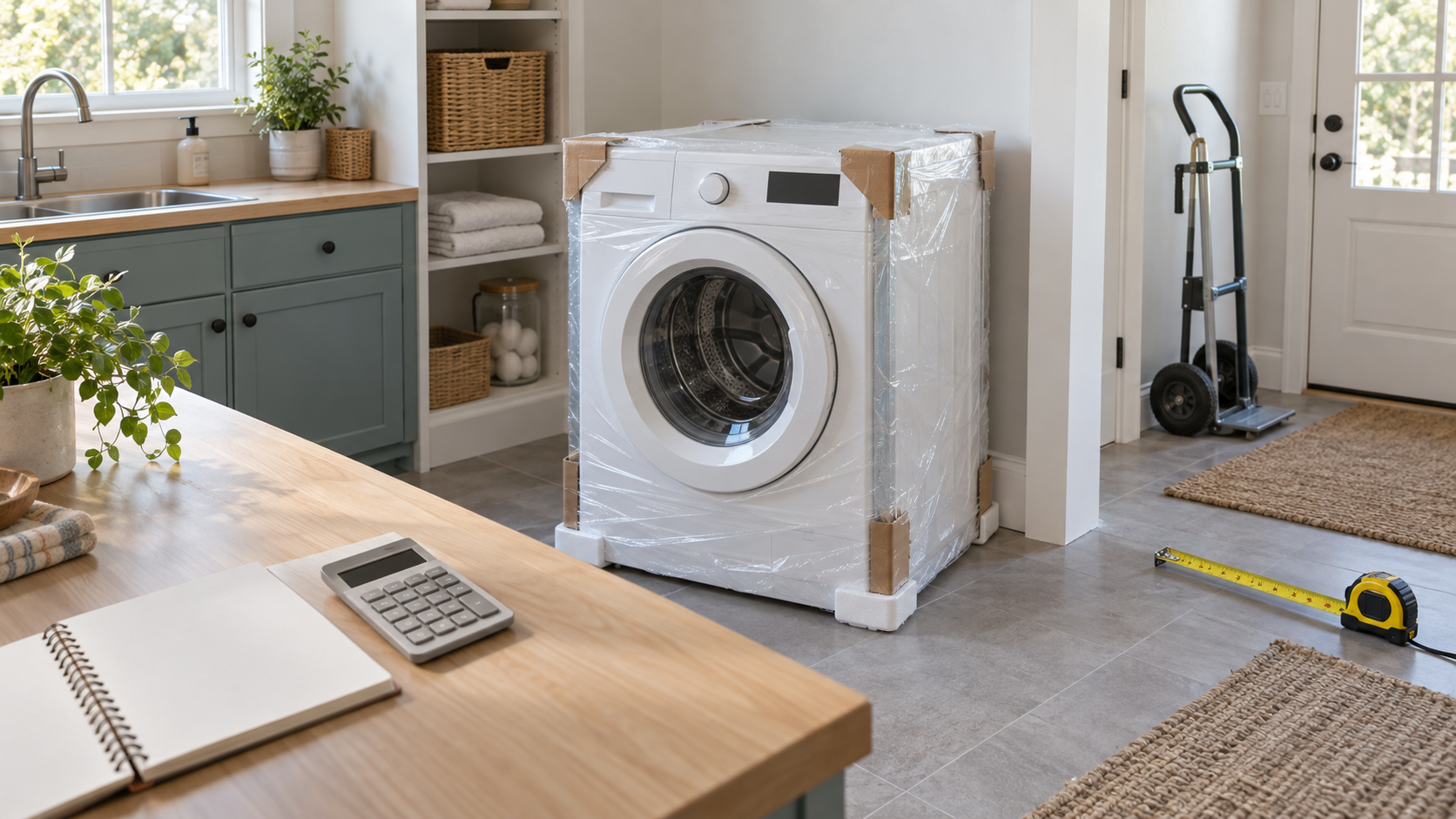
A replacement appliance may fit your shopping budget and still cost more than you expected to get working at home. Delivery to the building is not always delivery to the room. Setup, removal of the old unit, and a difficult stairway can change the total. An appliance delivery and installation budget puts those costs beside the sticker price before you commit.
This is a purchasing checklist, not a forecast of any retailer’s fees. Services and conditions vary by seller, location, building, and appliance. Ask for a written quote for your actual address and model rather than relying on a generic checkout estimate.
Start with the all-in purchase number
Record the model, its purchase price, and every charge shown before payment: delivery, taxes or other applicable charges, installation, accessories, and removal. Keep optional protection products separate so you can decide on them deliberately. A discount on the appliance does not automatically discount the services around it.
Write down all-in cost = appliance + required delivery + required setup and materials + old-unit handling + other applicable charges. Put a small, explicitly labeled contingency next to this total if the site has uncertainties. The contingency is money reserved for a surprise, not a fee you have already been quoted.
For example, imagine an appliance priced at 500 units, delivery of 35, installation of 45, and old-unit removal of 20. The working total is 600 units, before any other applicable charges. These units are illustrative, not market prices. A competing appliance at 530 with delivery and installation included could cost less overall, but only if the included services cover your address and the work needed.
Check the route from vehicle to final spot
Measure the appliance and the path it must travel: entry, lift or stairs, hallway turns, doors, and the space where it will operate. Include packaging dimensions if the seller says the unit arrives boxed. Check the clearance and connection requirements in the manufacturer’s instructions; a unit that fits between two cabinets may still need room to open or be serviced.
Tell the seller about stairs, restricted parking, a distant loading area, building delivery hours, or a lift reservation. Ask whether delivery means doorstep, inside the home, or placement in the final room, and whether any extra labor is quoted separately. If the route is uncertain, do not assume a driver can solve it on arrival. For rented or managed housing, check any building permissions and access arrangements before ordering.
Separate basic delivery from installation
“Delivery included” can mean the box is dropped off, not that the appliance is connected or tested. Ask exactly what the installation service covers: positioning, connection to existing suitable points, an initial test, packaging removal, and any materials. Ask what it excludes, especially changes to plumbing, electrical, ventilation, cabinetry, or the existing connections.
Do not improvise work on utilities to save the service fee. If your site needs modifications, get an appropriate qualified professional’s scope and price before buying. The retailer’s installer may be able to tell you that an existing connection is unsuitable without being contracted to fix it. Build time and money for that possibility into the plan, rather than assuming every installation succeeds on the first visit.
Decide what happens to the old unit
If the old appliance is still in place, ask whether removal is available and what must be done before pickup. Some services may require the old unit to be disconnected or empty; others may bundle that work. Confirm the conditions for your order, including whether the old unit must be the same type and accessible on delivery day. Local recycling or disposal options also vary, so compare their current arrangements rather than assuming removal is free.
If you hope to sell or donate the old unit, treat any proceeds as uncertain until received. Arrange safe storage and pickup timing so it does not block installation. A cheap new unit that leaves you paying separately for removal may not be the cheapest workable option.
Compare quotes on the same scope
When two sellers give different totals, write one short line for each: model, delivered price, placement, installation scope, materials, old-unit removal, earliest realistic date, and any stated extra-charge conditions. If a service is missing from one quote, add a separate estimate instead of calling that offer cheaper.
Ask what happens if the appliance cannot be installed as planned: who contacts whom, whether another visit is charged, and how a return or cancellation would work under the seller’s current terms. Check the order terms yourself; do not count on a refund or free revisit that has not been confirmed. Keep the quoted scope and order details together so you can resolve a mismatch later.
Protect cash flow around the delivery date
An appliance may be charged when ordered while installation or haul-away is charged later. If you need a temporary workaround—laundromat trips, chilled food, or an alternate cooking arrangement—give it a modest line in the same budget. Delay can cost time and money even when the appliance price does not change.
Check when each payment is due and keep enough available for ordinary bills while you wait. If a transaction is merely authorized or a refund is pending, do not treat it as returned cash. Avoid placing a second order solely because the first delivery is delayed without checking how both payments would affect your available money.
Close the loop after it is working
Save the final receipt and compare it with your written total. Track the appliance, delivery, installation, and removal in your household spending review so a later purchase estimate is based on what you actually paid. If you use Furt Money for expense tracking, categorize the real payments and look at the pattern; keep installation terms and technical specifications with your order records, not in a guessed budget figure.
Before checkout, take five minutes to measure the route, ask what “delivery and installation” actually include, and total the quoted lines. One accurate all-in number is more useful than an attractive price tag that leaves the job unfinished.