School lunch spending can look small until it repeats for weeks. One cafeteria meal, one packed lunch grocery run, one forgotten snack, one after-school stop, and one emergency convenience meal can all feel harmless on their own. Together, they can quietly crowd the grocery budget.
A school lunch budget gives weekday food a clear lane. It helps you decide when cafeteria meals make sense, what packed lunches actually cost, how snacks fit, and what to do when a busy morning does not follow the plan.
The goal is not to make every lunch homemade or every choice perfectly cheap. The goal is to feed kids reliably while keeping the rest of the month easier to read.
Start with the real school week
Begin with the schedule, not an ideal menu. A lunch plan that works during a calm week may fall apart when there are early meetings, sports practices, clubs, late buses, exams, half days, field trips, or shared custody transitions.
Look at the next two weeks and mark:
- days when lunch is needed at school
- days when cafeteria food is planned
- days when a packed lunch is realistic
- after-school activities that need snacks
- mornings when the household is usually rushed
- special events that may change the food plan
This step matters because school food is not just a grocery question. It is a calendar question. If Tuesday mornings are always chaotic, pretending Tuesday will be a perfect packed-lunch day can create wasted groceries and a last-minute purchase.
Choose a pattern that fits the week you actually have. That might mean packed lunches three days, cafeteria meals twice, and a small snack plan for activity days.
Price cafeteria meals without guessing
Cafeteria spending is easy to underestimate because it often happens through an account, card, app, or student ID instead of a visible cash payment. Check the current school menu, payment portal, or recent account history so you are working with the right numbers.
Write down:
- the usual meal cost
- any extra sides, drinks, or snacks that are commonly bought
- account fees or minimum reload amounts, if they apply
- how often the account needs to be topped up
- whether unused balance carries forward
Avoid using old prices from last year or another school. Meal costs and rules can vary by district, campus, program, age group, and country. If you cannot confirm the exact amount quickly, use a temporary estimate and update it after the next account statement.
Then turn the number into a weekly expectation. For example, two cafeteria days per child is easier to plan than a vague “school lunch money” category that gets refilled whenever it runs low.
Count the full packed-lunch cost
Packed lunches can save money, but they are not free. The cost is spread across groceries, containers, freezer items, snacks, drinks, and sometimes extra convenience foods bought to make mornings easier.
Build a simple packed-lunch list:
- main item such as sandwiches, leftovers, pasta, rice, eggs, wraps, or soup
- fruit or vegetables
- protein or dairy item
- snack
- drink or reusable bottle plan
- backup item for rushed mornings
- replacement items such as bags, napkins, utensils, or containers
You do not need to calculate every crumb. Estimate the cost of a normal packed lunch and compare it with the cafeteria option. Sometimes the difference is large. Sometimes the packed lunch is only cheaper if the food is actually eaten and not thrown away.
Waste belongs in the budget too. If a certain item keeps coming home untouched, it is not helping even if it looked affordable at the store.
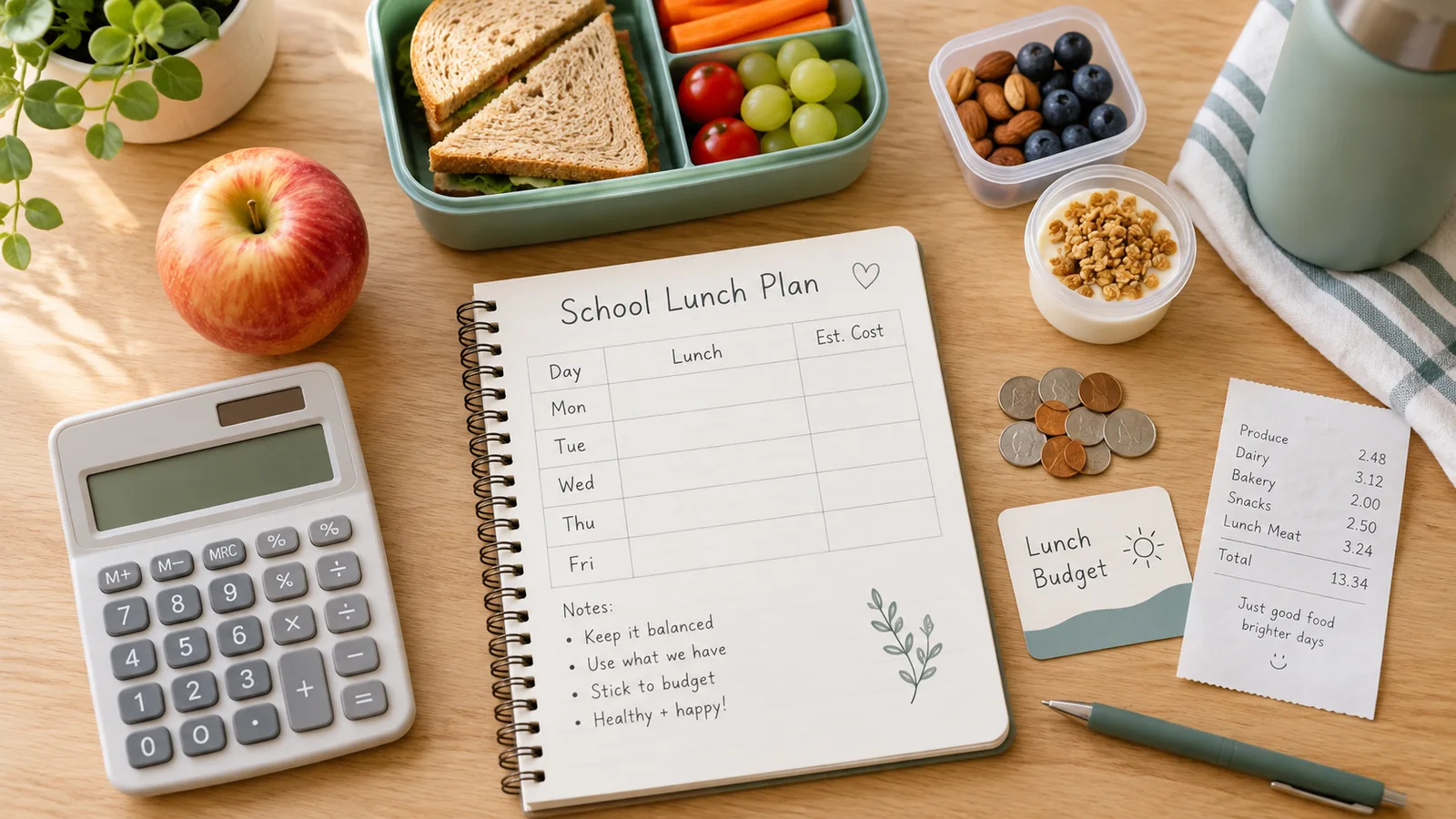
Make a simple weekly lunch rhythm
A school lunch budget works better as a rhythm than a strict menu. Kids’ preferences, school rules, and family schedules change too often for a perfect plan.
Try a weekly rhythm like:
- Monday: packed lunch from weekend groceries
- Tuesday: cafeteria meal
- Wednesday: leftovers or easy assembly lunch
- Thursday: packed lunch
- Friday: cafeteria meal or planned treat
Your rhythm can be completely different. The useful part is making the decision before the morning rush. A clear rhythm reduces the number of small negotiations that happen when everyone is already late.
Keep the rhythm visible somewhere practical: a calendar, fridge note, shared phone note, or weekly budget review. If the school publishes menus in advance, mark the cafeteria days that are actually appealing instead of paying for meals that come home half-eaten.
Separate snacks from lunch
Snacks can be the hidden pressure point. They may come from the grocery category, school vending, sports practice, convenience stores, backpacks, lunch accounts, or quick stops after pickup.
Give snacks their own mini-plan if they keep surprising you. Decide:
- which snacks are for school
- which snacks are for after-school activities
- which snacks are household extras
- which items are occasional treats
- who can buy snacks during the school day
This does not need to be strict. It just keeps snacks from quietly using the money meant for lunches, dinners, or weekend groceries.
If older kids buy snacks independently, agree on a weekly amount or decision rule. For example, lunch account money may be for meals only, while personal allowance covers extra treats. The exact rule matters less than making the tradeoff clear.
Plan for the mornings that go wrong
Every lunch system needs a backup. Someone oversleeps. Groceries run out. A container disappears. A child changes their mind. A lunch gets left on the counter.
Build a small backup plan before it happens:
- one cafeteria day that can be moved around
- a few shelf-stable lunch items
- freezer options that can be packed quickly
- an emergency account balance
- a simple rule for buying lunch when the packed option fails
Backups prevent one rough morning from becoming a budget failure. They also reduce guilt. A planned cafeteria meal on a busy day is different from a stressful last-minute purchase that nobody budgeted for.
Keep the backup small enough that it does not become the default by accident. If the emergency lunch account is always being used, the normal plan may be too complicated for real mornings.
Track school food as one pattern first
School food spending can scatter across groceries, cafeteria accounts, payment apps, convenience stores, and dining out. If you try to analyze every line separately, the pattern can become harder to see.
For the first few weeks, track school food as one pattern. Include cafeteria reloads, packed-lunch groceries, snack runs, and emergency purchases. Once you know the total, you can decide whether to split categories more carefully.
If you use Furt Money, review the grocery and school-related spending together before payday. Look for simple signals:
- cafeteria reloads happening sooner than expected
- packed-lunch groceries spoiling
- snack spending rising on activity days
- convenience stops replacing planned lunches
- one child needing a different routine from another
The point is not to police every purchase. The point is to notice where the plan and the week are disagreeing.
Adjust without rebuilding everything
After two or three weeks, make one small adjustment. Do not rebuild the entire food budget unless the pattern clearly needs it.
Useful adjustments might be:
- add one planned cafeteria day during the busiest morning
- reduce packed-lunch variety if groceries are going to waste
- buy snacks in a planned grocery trip instead of daily stops
- keep a small lunch account buffer for forgotten lunches
- set a weekly reminder to check the cafeteria balance
- ask kids which packed items they actually eat
If the total school lunch budget feels too high, look for the repeat choice that changes the most money with the least stress. That may be packing drinks, limiting paid snacks, planning leftovers, or moving one cafeteria meal to a day when it prevents takeout later.
If the budget feels too tight, the answer may not be stricter rules. It may be a more honest number. A budget that recognizes real school food costs is easier to manage than one that looks good on paper and fails every week.
Keep the system easy to repeat
A school lunch budget is useful when it survives normal family life. It should help you answer three questions quickly: what is being packed, when cafeteria meals are planned, and how much school food is likely to cost this week.
Start with the next five school days. Pick the cafeteria days, choose the packed-lunch basics, set a snack plan, and keep one backup for the morning that does not go smoothly. Then review what actually happened before the next grocery trip.
Feeding kids through a busy school week takes enough energy. A clear lunch budget will not make every morning easy, but it can keep daily food choices from turning into a monthly surprise.