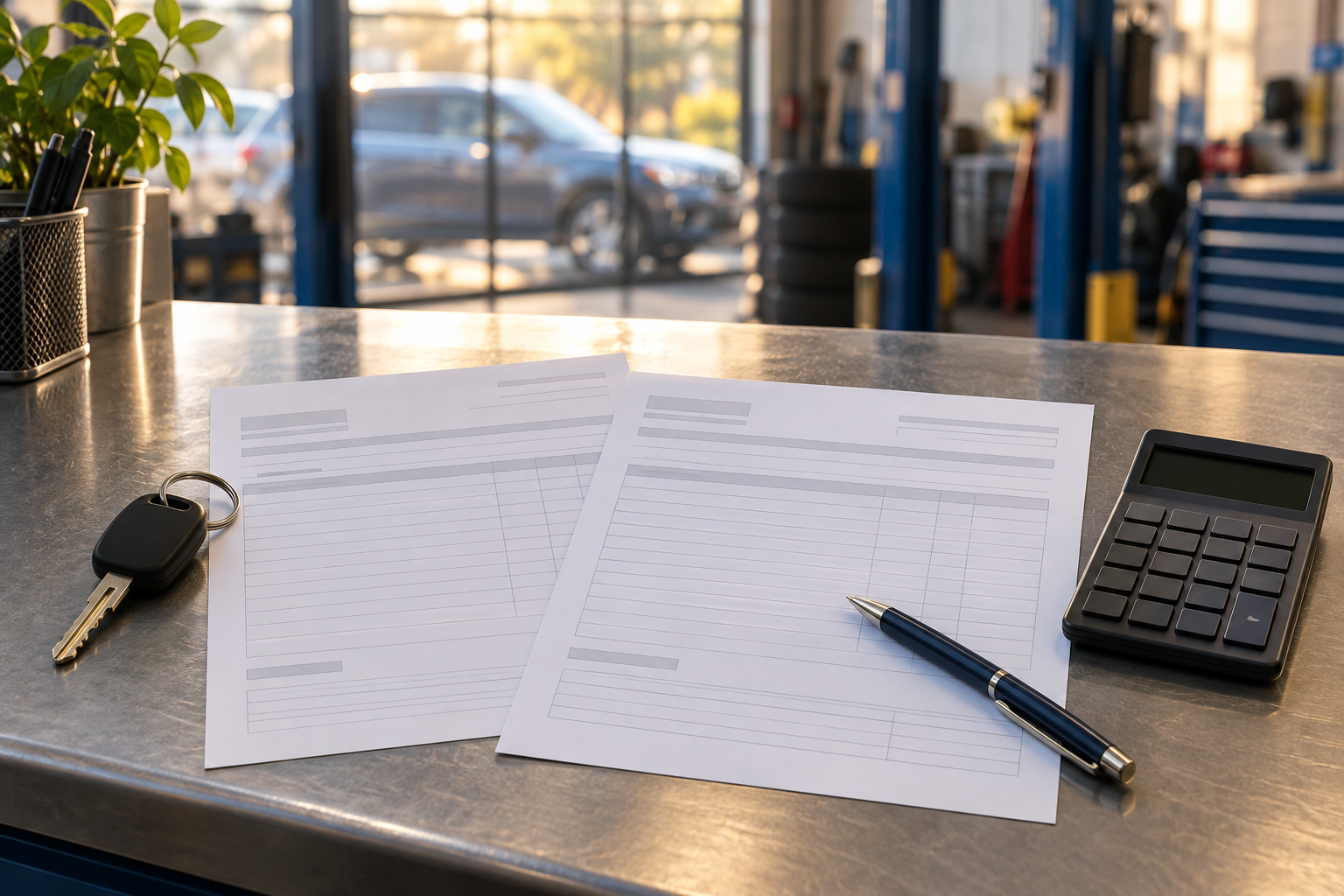
A car repair estimate is more useful when you can tell exactly what the shop proposes to fix and what might change the price. A single total does not show whether it includes the diagnosis, the right parts, taxes, or the time you will be without the car. Before approving work, turn the estimate into a short set of comparable questions.
This checklist is for a planned repair or a car already at a shop. If you are stranded, put safety first and use the car breakdown cost plan to handle towing and backup travel before shopping around.
Separate the diagnosis from the proposed work
Ask the shop what it observed or tested, what it believes caused the problem, and which proposed repair addresses that cause. A symptom such as a noise can have more than one possible explanation. You do not need to diagnose it yourself; you do need to know whether the quote is for a confirmed repair, further testing, or a reasonable first step with uncertainty left over.
Write down the diagnostic charge, whether it is due even if you decline the repair, and whether any of it is included in the work you approve. Ask what happens if the first repair does not resolve the symptom. Do not treat an estimate as a guarantee that no other fault will appear.
Read the itemized estimate, not just the total
Request the proposed work in writing, with parts, labor, and any separate fees easy to identify. Check:
- Which components will be repaired or replaced, and which parts are new, rebuilt, or otherwise specified?
- Are labor, diagnosis, shop supplies, disposal, taxes, and other charges included in the quoted total or added later?
- Is the quote a fixed amount for a defined job, an estimate that may change, or a range pending more testing?
- What is excluded, and is any other work recommended but not necessary for this repair?
- What are the expected start and completion dates, and when is payment due?
If a line is vague, ask for an explanation rather than guessing. Keep the written estimate and any later revisions together. Local rules about estimates and authorization vary, so check the terms the shop gives you and the rules where you live if a dispute arises.
Compare like with like before choosing a shop
If the car is safe to move and there is time, a second estimate may help. Give each shop the same symptoms and relevant service history, but let each perform its own assessment. Compare the diagnosis and scope first: a cheaper quote for one part is not directly comparable with a quote that includes a second fault, a diagnostic fee, and follow-up testing.
Make an all-in comparison for each option: quoted work plus any separate diagnosis, transport between shops, and the cost of being without the car. For example, in made-up units, Shop A quotes 320 including diagnosis, while Shop B quotes 290 plus a 45 diagnostic charge. Before travel or other differences, B would cost 335, not 290. These numbers illustrate the method, not typical repair prices.
Do not move an unsafe vehicle just to obtain another quote. When timing or safety makes comparison impractical, clarity about scope and approval is still valuable.
Decide what to approve now and what can wait
Ask the shop to distinguish work needed to make the car safe or usable for its intended trips from preventive or optional recommendations. Do not postpone a safety issue based on a budget article; seek qualified advice about whether the vehicle is safe to drive. For work that genuinely can wait, ask for a separate written amount and revisit it in your car maintenance fund plan.
Set a decision point for surprises: “Please contact me with the revised scope and total before doing additional work.” Ask how a newly discovered fault affects timing and whether there is a further diagnostic charge. Approval and cancellation rules depend on the shop and location, so agree on the process in writing where possible rather than relying on an assumed universal rule.
Place the repair on a cash-flow calendar
List cash available now, the payment expected at pickup, your next payday, and essential bills due before then. A quote that fits a monthly budget can still be difficult if the full amount is due the day before rent. Add realistic travel costs while the car is unavailable, and keep any potential warranty or insurance reimbursement out of available cash until confirmed and received.
If the total would crowd essentials, ask about a different appointment date, a safely staged scope, or clearly written payment terms before authorizing work. Check the total cost of any financing, not only the initial installment. Do not assume the shop offers a payment plan. For an amount you have already saved for vehicle work, decide how much to use and what remains for the next known cost.
Check the invoice against what you agreed to
At pickup, compare each invoice line with the original estimate and any approved changes. Ask about an unexpected charge before paying it without explanation. Keep the estimate, authorization, final invoice, and any written parts or labor terms with your records; do not assume coverage or a follow-up visit unless the documents say so.
Record the actual repair, diagnosis, and temporary travel spending in your budget. If you use Furt Money to categorize expenses, this makes the cost of keeping the car running easier to spot at the next spending review. The app does not replace your repair paperwork. Update your maintenance fund based on what you paid, not what the first quote suggested.
Next step: request an itemized written estimate and mark anything that could change the final amount. One clear approval conversation can make the payment easier to plan, even when the repair itself is inconvenient.