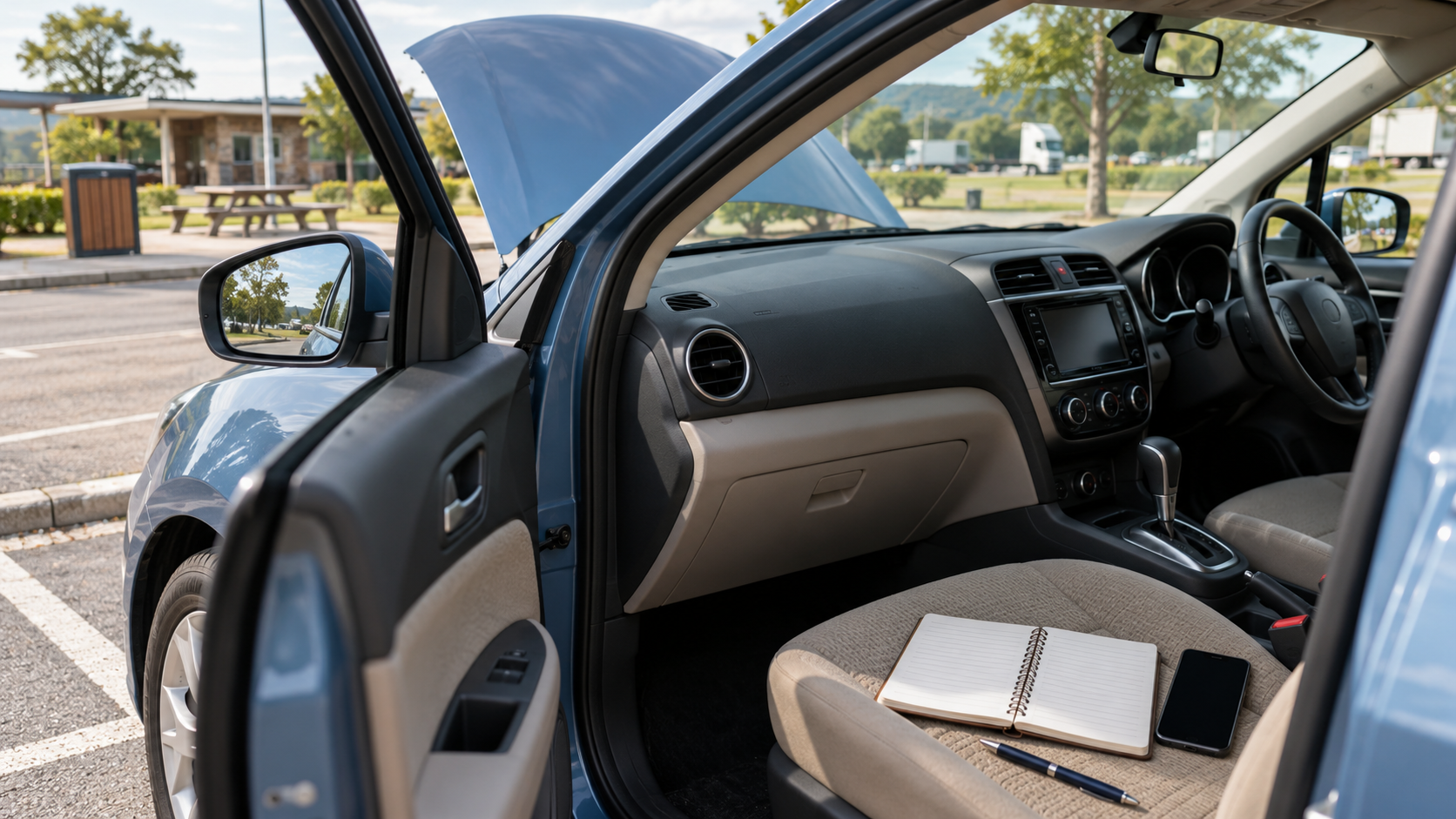
A breakdown rarely arrives as one neat repair bill. You may need a tow, a diagnosis, another way to get to work, and perhaps a second visit before the car is usable again. A car breakdown cost plan separates what you must decide now from what can wait, so urgency does not turn every estimate into an automatic yes.
Put safety first. If you are in an unsafe location, follow local emergency or roadside guidance and get to safety before comparing prices. This guide addresses the money decisions, not how to handle a vehicle at the roadside.
Make a three-column cost list
Use a note on your phone or a sheet of paper. Label the columns confirmed, quoted but not approved, and possible later. Add each cost once:
- Getting the car somewhere safe: roadside call-out, towing, mileage beyond any included distance, and possible storage.
- Finding the fault: diagnostic charge and whether that charge is included in a later repair.
- Getting it running: parts, labor, taxes or other charges on the written estimate, and any work that needs separate approval.
- Getting around meanwhile: public transit, a ride, a rental, delivery, or time away from paid work if applicable.
Do not add the full repair quote to your committed expenses until you understand the scope and authorize the work. Equally, do not leave the diagnostic fee out simply because the final repair is uncertain.
Check coverage before paying for duplicate help
If you have a roadside plan, vehicle warranty, insurance policy, membership benefit, or service agreement, look up its actual terms and contact the listed provider. Ask what service is included, any distance or provider restrictions, whether you must use its dispatch process, and what you might owe. Coverage and reimbursement depend on the specific agreement; do not assume a tow or rental is free.
If you already paid a provider, keep the itemized receipt and ask the relevant plan whether a claim is possible and what documentation it requires. Treat any potential refund as pending, not as cash available for today’s bills. Check whether you would be charged twice if you book your own tow while another is already on the way.
Get a repair decision you can understand
Ask the shop for the diagnostic result, a written estimate that separates parts and labor, the proposed timeline, and the amount due before it starts. Clarify which work is necessary to address the current problem, which items can wait, and what would trigger a revised estimate. Ask before approving additional work if the diagnosis changes. Keep the estimate and authorization together.
A cheaper first quote is not always a cheaper completed repair if it excludes diagnosis, transport, or follow-up. You can ask a second qualified shop for an estimate when time and safety permit, but include the extra tow and delay in the comparison. If you are deciding whether an expensive repair still makes sense, use a broader repair-or-replace budget rather than treating this one incident as the entire decision.
Plan the gap while the car is unavailable
Write down the next few trips you cannot postpone: work, school or care, medical appointments, and essential shopping. For each, note a workable backup, its cost, and how many days you may need it. Ask the shop for an update date, not a guaranteed return date it cannot promise. If a rental or ride is being considered, compare the full likely period and any deposits or temporary card holds with the alternatives.
For a simple illustration, not market prices, suppose the tow is 70 units, diagnosis 40, a proposed repair 260, and two days of transit 50. If you approve that repair, the planned total is 420 units. Before the shop confirms it, only 160 units are known or planned without the repair; reserve room for a possible 260 without presenting it as a final bill. Recalculate when the shop supplies a real estimate.
Protect the next pay cycle
Place the due dates beside your confirmed take-home pay and essentials such as housing, food, utilities, and any required debt payments. A roadside bill due today and a repair balance due at pickup create different cash-flow problems. If the full cost will crowd an essential bill, ask the provider about timing or a written payment option before agreeing. Check any fees, interest, and total repayment; a low initial payment is not automatically affordable.
Use savings set aside for car repairs if that is what the money was for, but keep track of what remains for the next unavoidable expense. Your car maintenance fund is a planning tool, not a rule that every repair must fit inside it. Avoid counting a claim, employer reimbursement, or sale of the car before money actually arrives.
Reconcile the final bill and rebuild
At pickup, compare the invoice with the work you authorized, check the final payment and any outstanding tow or storage charge, and save receipts and written terms. Record the actual car, transit, and incidental spending separately so the emergency does not disappear into a generic category. If you track expenses with Furt Money, categorizing those charges can make the total easier to review later; keep detailed service documents with your own records.
Once the car is back, look at the amount spent and the time it took to resolve. You might adjust your car reserve or write down a cheaper backup route for a future interruption. One breakdown does not establish a typical annual cost, but it can show which part of your plan needs a buffer.
Next step: make the three-column list and confirm your roadside terms before authorizing a non-urgent expense. The goal is not a perfect prediction—just a safe, clear sequence of decisions.