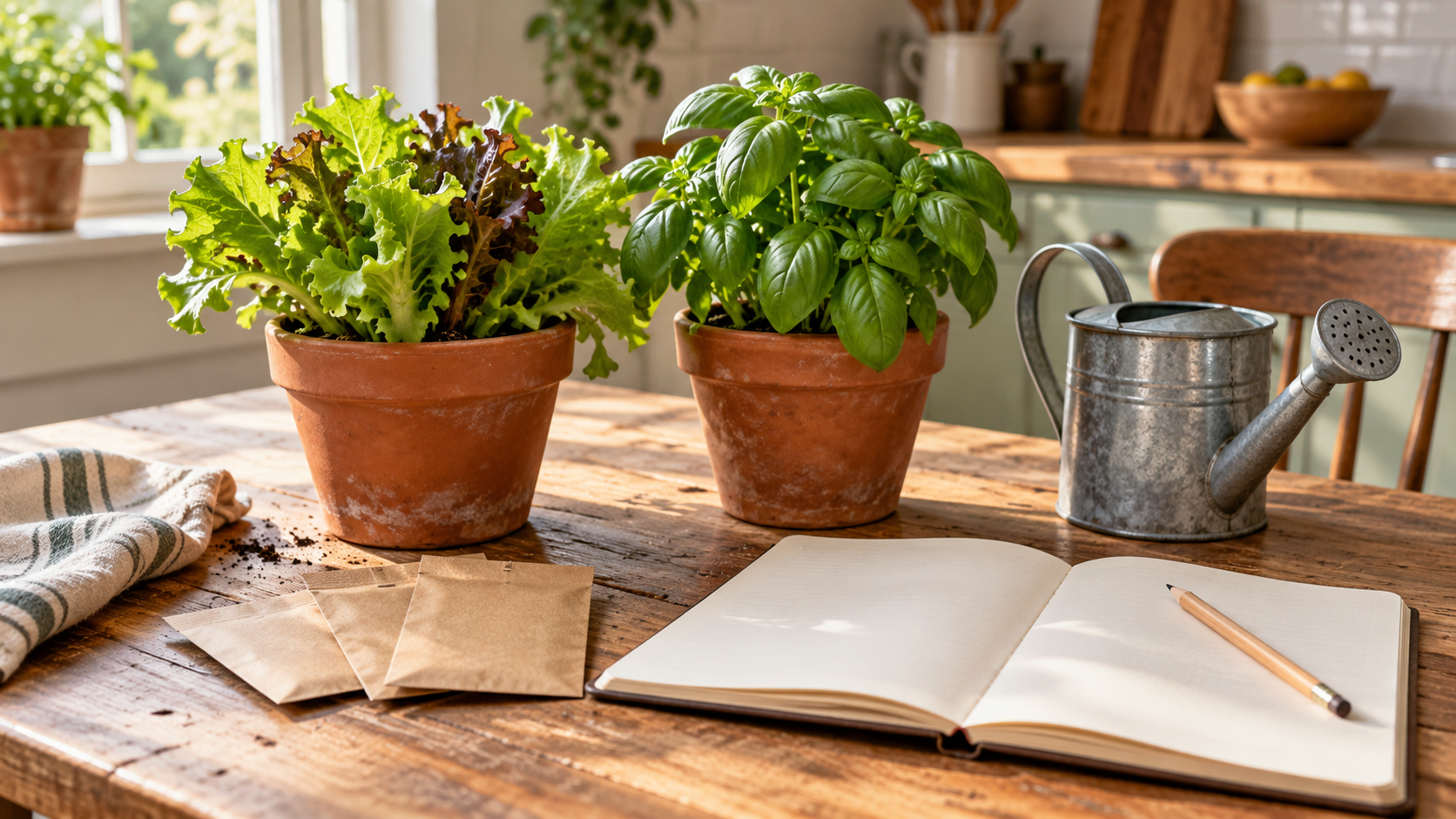
A few pots of herbs or a vegetable bed can be satisfying. But a garden is not automatically a cheaper grocery aisle. Containers, soil, plants, water, and replacements cost money before you pick anything. The useful question is not “Will this garden pay for itself?” but “What can I comfortably spend on it, and will I use what grows?”
A vegetable garden budget keeps the experiment enjoyable without quietly borrowing from your food or bill money. You can start with one container, measure what you actually eat, and expand only if the space and costs work for you.
Set a purpose and a spending ceiling
Decide whether your first goal is learning, fresh ingredients, time outdoors, or lowering a particular grocery purchase. A hobby can be worth paying for even if it never produces a financial return. Calling it a guaranteed saving, though, can hide the real cost.
Choose a setup limit that leaves your usual groceries, bills, and cash buffer intact. Then set a separate, smaller limit for ongoing supplies. If you rent or share a space, check what you are allowed to place, water, or install before buying anything permanent. A windowsill pot and a built garden bed have very different commitments.
List one-time costs separately from repeat costs
For a small start, write down what you already own before shopping. Possible one-time costs include containers, a tray, basic tools, and a watering can. Repeat costs may include seeds or seedlings, potting mix, fertilizer, replacement plants, and any noticeable change in water use. Delivery charges and transport to a garden store also count if they are part of the purchase.
Avoid buying an entire kit to grow one herb. Borrowing a tool, reusing a suitable container, or starting with a single plant can lower the initial outlay. Make sure reused containers are appropriate for food growing and drain safely; saving on a pot is not useful if it damages your home.
If you track expenses in Furt Money, label these purchases consistently and review them alongside groceries. Keeping garden purchases distinct from food purchases makes it easier to see whether the garden changed your actual spending.
Pick crops you already buy and eat
The cheapest plant is not a bargain if its harvest goes unused. Look at a few recent grocery trips: which herbs or vegetables do you regularly buy in small quantities? Which ingredients spoil before you finish them? Choose one or two crops that fit your light, space, climate, and schedule. Ask a local grower or nursery what is suitable for your conditions rather than assuming a plant will thrive anywhere.
Plan for the way you cook. If you use a handful of herbs each week, a small pot may be more practical than a large crop that arrives all at once. If your household rarely cooks with a vegetable, growing a lot of it will not necessarily reduce grocery spending.
Work through a simple starter budget
Suppose your initial ceiling is 60 units in your currency, and you already have a watering can. You price two containers at 12 each, potting mix at 15, and two seedlings at 5 each. The setup would cost 49 units, leaving 11 units under the ceiling. These numbers are an illustration, not local prices or a forecast of yield.
Now suppose you later spend another 8 units on supplies. Your total cash outlay is 57 units. If you use produce you would otherwise have bought for 18 units, the garden has not “saved 18” net: it has offset at most 18 of grocery purchases while costing 57 so far. You may still enjoy the experience. Future harvests may change the picture, but do not book them as savings before they happen.
Compare used harvest with real grocery purchases
Keep a short harvest note: date, what you picked, and whether it went into a meal. Compare it with the closest grocery item you would actually have purchased, using your own recent receipt or store price. Do not assign a high retail value to every leaf if you would not have bought that quantity. Do not count produce that spoils or is given away as a reduction in your own grocery bill.
Then review the grocery category itself. Did you buy fewer herbs or vegetables, or did you buy the same amount plus gardening supplies? A garden can improve meals without reducing the checkout total. That is a useful answer, not a failure. The comparison is especially important when a season ends and purchases continue but harvesting stops.
Plan for a quiet month and a reset
Plants need attention even when you travel, get busy, or have an unproductive season. Before adding more containers, decide how much time and replacement spending you can tolerate. You can pause new purchases, use what you have, or try again later. Avoid buying extra equipment to rescue a low-cost experiment unless it still fits the hobby budget.
At the end of a season, total setup and repeat costs, note how much of the harvest you used, and ask whether you want to repeat the same scale. Reusable containers can serve another season, but new soil or plants may still be needed. Separate “already paid for” from “will need cash next time.”
A five-minute checklist before you shop
- What food do I already buy that I would actually use fresh?
- What space, light, water access, and permissions do I have?
- Which supplies do I already own or can I borrow?
- What is my setup ceiling, and what repeat costs can I afford?
- How will I record the harvest I eat and any grocery purchases it replaces?
- If nothing grows, will this still be an affordable experiment?
Start with one plant and one clear spending limit. After a few weeks, compare your real costs and meals with your grocery receipts. That evidence is more valuable than any promise that a garden will pay for itself.