Overspending is rarely just a math problem. Sometimes the numbers work on paper, but the real month includes stress, boredom, late nights, social pressure, convenience, and small rewards that feel deserved in the moment.
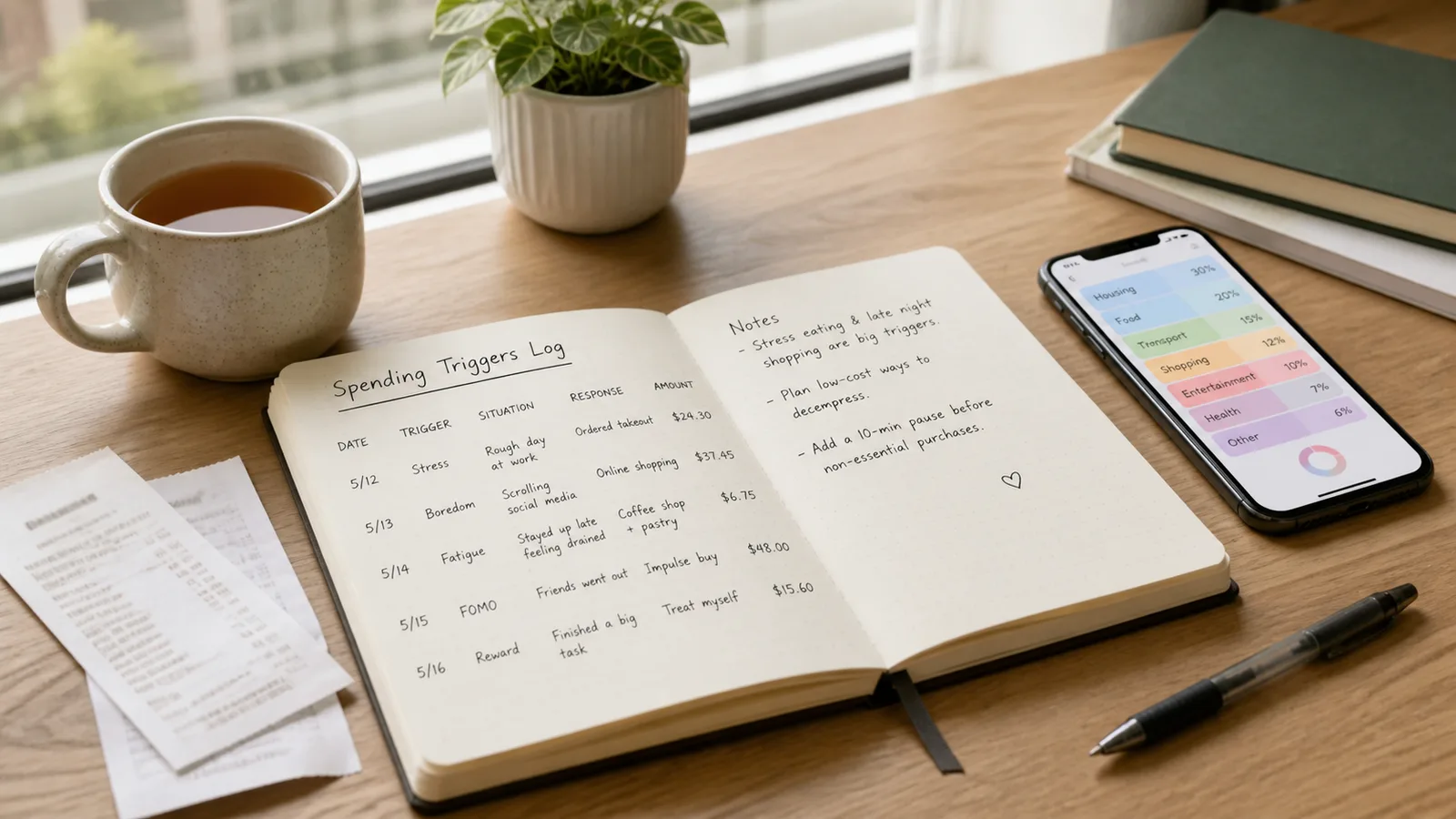
A spending trigger journal helps you connect those moments to the purchases that follow. It is not about blaming yourself for every mistake. It is about finding the patterns that make spending harder to control, then building a budget that respects real life.
The goal is simple: when an unplanned purchase happens, write down what was happening around it. Over time, the notes show which situations need a better plan.
What a spending trigger actually is
A spending trigger is any situation, feeling, routine, place, or person that makes spending more likely.
Common triggers include:
- Stress after a long workday
- Boredom while scrolling
- Hunger before grocery shopping
- Feeling underprepared for an event
- Wanting to keep up with friends
- Seeing a limited-time deal
- Being tired and choosing convenience
- Using shopping as a reward after a hard task
The trigger does not force the purchase. It simply raises the chance that a purchase will feel reasonable before you have checked the budget.
This is why a trigger journal can be useful. It gives you a pause between “I always mess this up” and “Here is the pattern I can plan for.”
Track just enough detail
The journal should be small enough to use after real purchases. If it feels like homework, it will not last.
For each unplanned or regretted purchase, write down:
- Date
- Amount
- Category
- What you bought
- What was happening before the purchase
- Mood or energy level
- Whether it solved the problem
- What you might try next time
You do not need perfect wording. A useful entry can be as short as: “Ordered takeout, $24, tired after late meeting, had no easy food at home.”
If you use Furt Money to categorize spending, review the categories where unplanned purchases appear most often. The journal explains the why behind the category. The spending tracker shows the where.
Look for repeat situations, not character flaws
After a week or two, read the entries without judging them. You are looking for patterns that repeat.
Ask:
- Do purchases happen at the same time of day?
- Do they follow certain moods, such as stress, boredom, loneliness, or celebration?
- Do they happen in the same apps, stores, websites, or neighborhoods?
- Do they happen before payday, after payday, or when the budget already feels tight?
- Are they connected to being hungry, tired, rushed, or underprepared?
- Are they connected to people you want to please?
One purchase may not mean much. Three similar purchases probably do.
For example, if online shopping happens most often after 10 p.m., the budget problem may not be “shopping.” The real problem may be a tired evening routine with too much friction between you and rest.
Build a replacement response
Once you know the trigger, choose a replacement response that solves the same need with less damage to the budget.
Use this simple format:
“When I notice [trigger], I will try [replacement] before spending.”
Examples:
- When I want takeout after a late workday, I will eat the backup meal already in the freezer.
- When I want to browse sales because I am bored, I will put the item on a 24-hour list.
- When I feel pressure to say yes to an expensive plan, I will suggest one lower-cost option.
- When I want a reward after finishing a hard task, I will choose from a short list of planned treats.
- When I am tempted by a deal, I will check whether the item was already on my list.
The replacement should be easier than the old habit. If your plan requires a lot of discipline at the exact moment you feel tired or emotional, it is unlikely to work.
Add friction where spending is too easy
Some triggers are powerful because the purchase takes almost no effort. Saved cards, one-click checkout, delivery apps, and constant sale alerts can shorten the distance between impulse and payment.
Add a little friction where it helps:
- Remove saved cards from tempting sites.
- Turn off retail app notifications.
- Move shopping apps off your home screen.
- Keep a waiting list for non-essential purchases.
- Set a weekly review time for items you still want.
- Use a separate category for impulse spending so it stays visible.
- Keep a small fun-money amount so the plan does not feel like punishment.
Friction should make you pause, not make ordinary life miserable. If you rely on a delivery app during genuinely hard weeks, the answer may be a planned convenience budget, not a total ban.
Create a trigger-aware budget category
Some spending repeats because the budget pretends it will not happen. A trigger journal helps you decide whether a category needs a better limit, a new rule, or a small planned allowance.
Try these decisions:
- If a category is useful but too vague, split it into clearer parts.
- If the spending is emotional but harmless within a limit, give it a small planned amount.
- If the spending creates regret every time, create a waiting rule.
- If the spending happens because life is rushed, plan a cheaper backup.
- If the spending happens around other people, decide your limit before the invitation arrives.
For example, “food” may hide groceries, takeout, snacks, coffee, and social meals. Splitting the category can show whether the real issue is daily convenience, weekend plans, or shopping without a list.
Review the journal once a week
A trigger journal works best when it feeds a short money review. Once a week, scan the entries and pick one adjustment for the next week.
Use this review:
- Circle the most common trigger.
- Choose one replacement response.
- Adjust one budget category if the old number is unrealistic.
- Remove one easy spending cue.
- Plan one low-cost way to meet the same need.
- Notice one thing that went better than last week.
Keep the review focused. You do not need to redesign your whole budget because of one tough week. One useful change is enough.
Start with the next purchase that feels off
You do not need to track every dollar forever. Start with purchases that feel surprising, stressful, hard to explain, or out of sync with your priorities.
The next time a purchase makes you think, “Why did I do that again?”, write down the situation around it. That one note can turn a vague money problem into a pattern you can actually change.
A spending trigger journal does not make you perfect with money. It makes your budget more honest. And an honest budget is much easier to return to after a messy day.