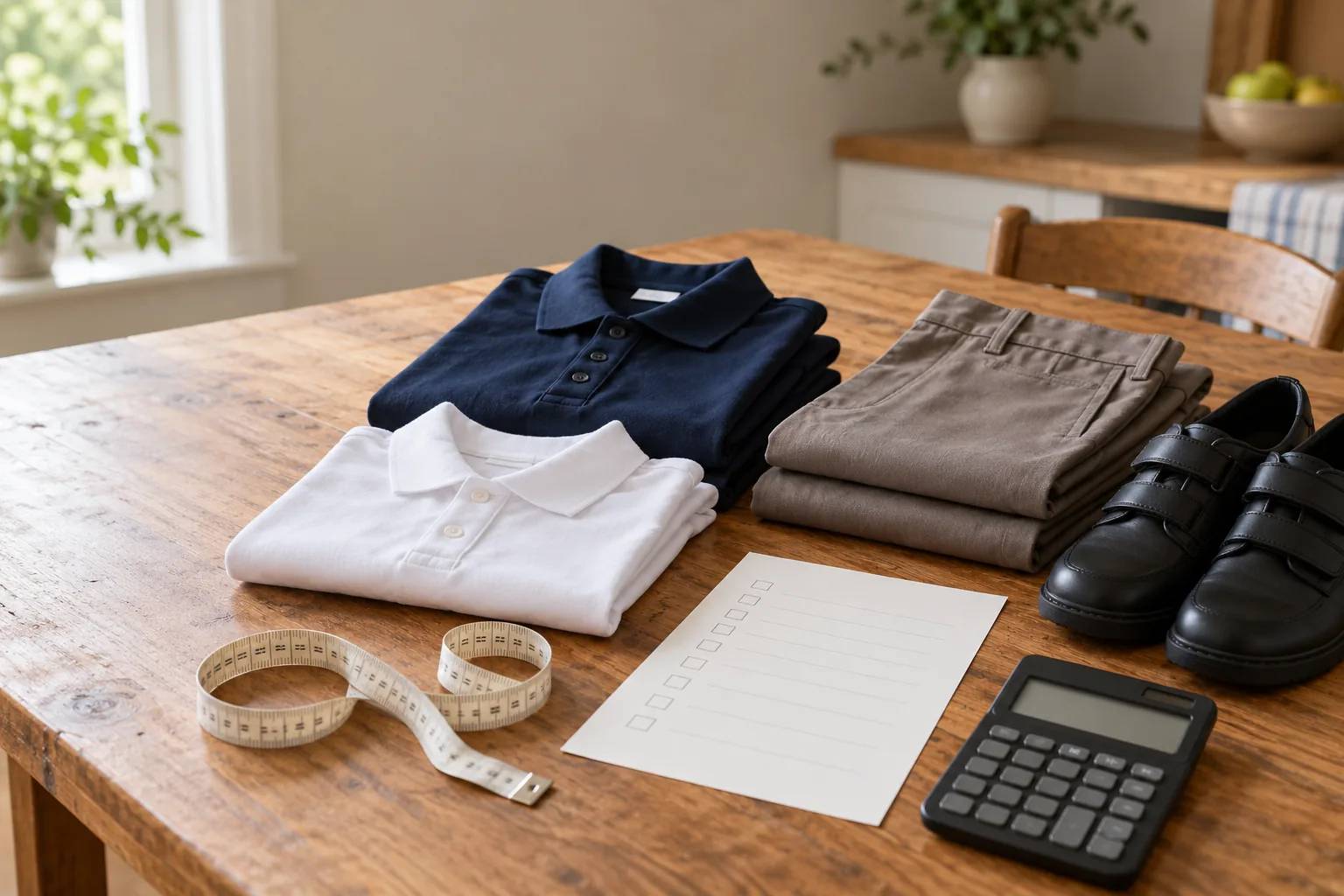
A school uniform list can look short until you account for laundry days, changing sizes, shoes, sportswear, and items that must come from a particular supplier. The cheapest shirt on the shelf is not a bargain if it does not meet the school’s rules or survive regular wear.
A school uniform budget starts with what is actually required and spreads purchases across the term. It is a focused clothing plan, separate from the rest of a back-to-school budget for supplies, transport, and lunches.
Get the current dress code before making a cart
Find the school’s latest uniform guidance, including rules for colors, logos, footwear, seasonal layers, and sports days. Do not assume that last year’s list or a sibling’s school has the same requirements. Note which items can come from any retailer and which, if any, have a specified supplier.
Make three columns on paper or in a note:
- Required now: pieces needed for the next school week.
- Required later: seasonal or activity-specific pieces with a known start date.
- Optional: extra sets or accessories that are convenient but not mandatory.
If a requirement is unclear, ask the school before buying. A quick clarification can prevent a return, an unusable item, or an unnecessary premium purchase.
Count wearable pieces, not pieces in a drawer
Take out what the child already owns and check fit, condition, and compliance with the current rules. Include hand-me-downs, but try them on rather than treating a labeled size as a promise. Note what needs a simple repair and what cannot reasonably make it through another term.
Next, map a real laundry week. A household that washes midweek may need fewer everyday tops than one that washes only on weekends. Count the sets needed between washes, plus a modest spare if spills or weather make it useful. Do not turn an idealized laundry schedule into a reason to buy too little—or a fear of every mishap into a reason to buy too much.
Build a two-stage uniform cost list
Split the budget into first-week purchases and later replacements. For each item, record quantity, acceptable source, estimated price from a current listing or shop, and when payment is due. Include shoes, sportswear, outerwear, and alterations only if they are needed for this child.
For example, suppose the required-now list totals 90 in your own currency, while an optional extra set and a seasonal layer would add 45. Your immediate cash need is 90, not 135, if the later items can genuinely wait. The figures are only an illustration; use your school’s rules and local prices.
Check the total against the paydays and essential bills before placing an order. If the full first-week list does not fit, contact the school about any permitted alternatives, secondhand sales, assistance, or timing options rather than assuming an exception will be granted.
Compare new, secondhand, and hand-me-downs fairly
Secondhand uniforms can be useful when sizing, condition, and the dress code align. Check school resale groups, official exchanges, or trusted local listings where available. Compare the usable cost: purchase price plus any travel, shipping, alterations, and time needed to obtain the item.
Inspect high-wear areas such as knees, seams, collars, closures, and shoe soles. A slightly more expensive piece that fits and lasts may cost less than replacing a poor-fit bargain. Conversely, a brand-new item is not automatically better if a clean, compliant hand-me-down has another term of use.
Keep receipts and check return rules before removing tags, especially for shoes and rapidly changing sizes. Do not buy several future sizes simply because they are discounted unless you have room in the budget and a realistic plan to use them.
Set aside a small replacement lane
Uniform costs do not end on the first day. Shoes wear out, children grow, and sports schedules change. Estimate what might need replacing before the next term, then divide that amount by the number of pay periods available. Even a small regular amount makes a replacement less likely to disrupt groceries or rent.
Keep this lane distinct from the immediate shopping total. When a replacement happens, record the actual cost and reset the estimate. If you use Furt Money to categorize spending, reviewing uniform purchases together can help you see whether the pressure came from sizing, footwear, sportswear, or an extra set.
Use a simple shopping decision rule
Before each purchase, ask: Is it required, does it fit now, does it meet the rules, and can it wait? If it is required soon and the current item is unusable, buy within the planned limit. If it is optional or needed next term, put it on the later list and revisit it closer to the date.
After the first few weeks, check what was actually worn and how often laundry caused a shortage. Adjust the next purchase to that evidence rather than buying a duplicate of every item. Keep the list and receipts together so the next sizing change starts with useful information.
Make the next purchase a measured one
Start with the current school rules and a ten-minute try-on. Write down the gaps for the coming week, price only those pieces, and reserve a separate line for later replacements. A school uniform budget works best when it buys enough for real school days without asking this month’s money to solve every future growth spurt.