Grocery spending is one of the easiest budget categories to misread. A cart can look reasonable item by item, then still create a high total at checkout. Later, some of that food may sit unused because it did not fit the week, duplicated something already at home, or required ingredients you never bought.
A pantry budget starts before the store. It asks a simple question: what meals and snacks can you build from what you already have? That one pause can reduce waste, lower duplicate purchases, and make the grocery list easier to trust.
This is not about cooking every meal from scratch or turning food into a strict project. It is about making the first few grocery decisions at home, where the quiet information lives.
What a pantry budget means
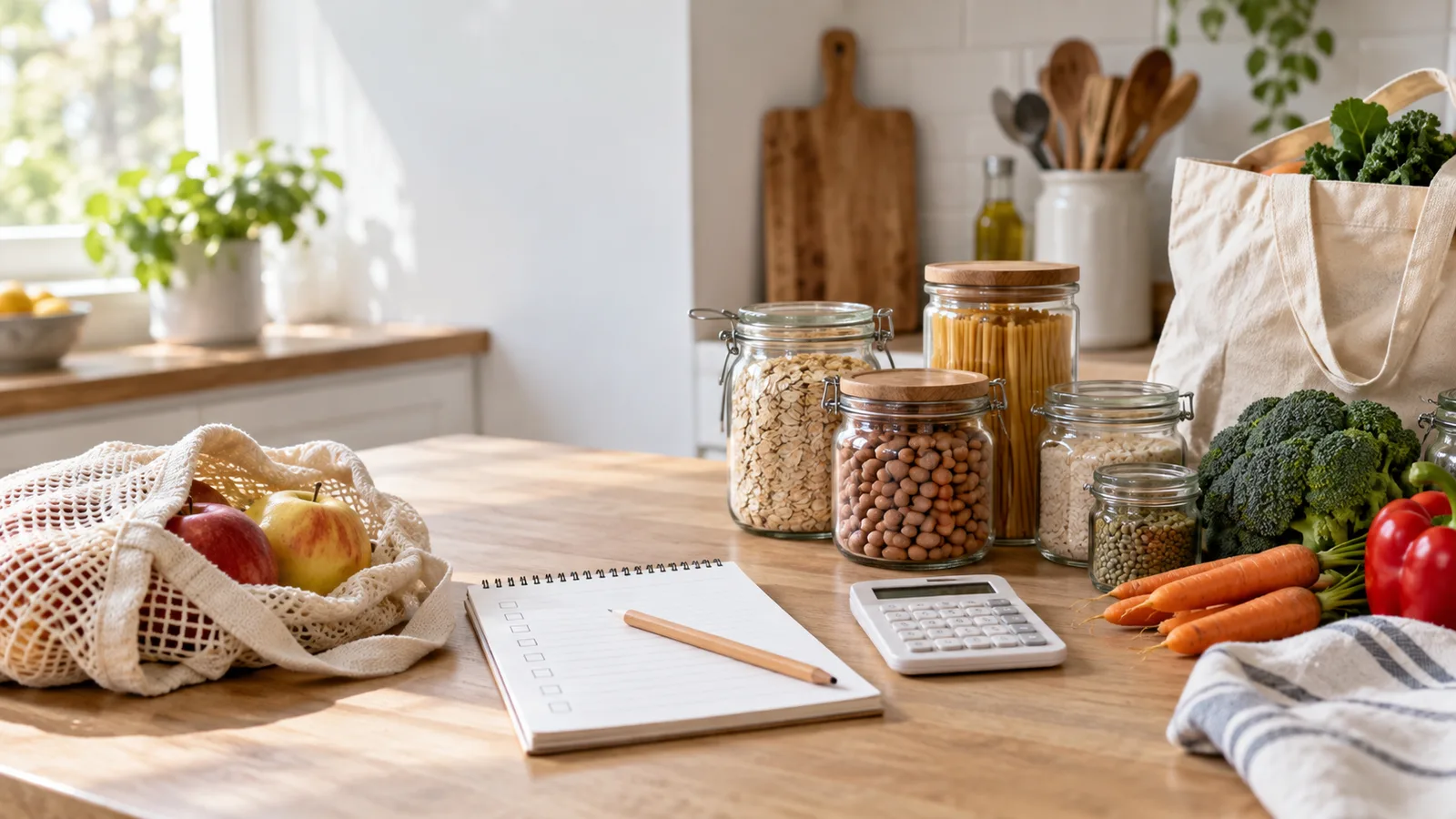
A pantry budget is a grocery plan that begins with your current food, not with a blank shopping list. It includes shelf-stable items, frozen food, fridge basics, leftovers, spices, sauces, snacks, and anything that needs to be used soon.
The goal is to connect three things:
- food already paid for
- meals you will realistically eat
- groceries you still need to buy
Without that link, grocery shopping becomes guesswork. You may buy another bag of rice while one is already open, forget the vegetables that need to be cooked, or pick up snacks because the week has no clear backup plan.
A pantry budget gives existing food a job before more money leaves the account.
Do a quick shelf and fridge scan
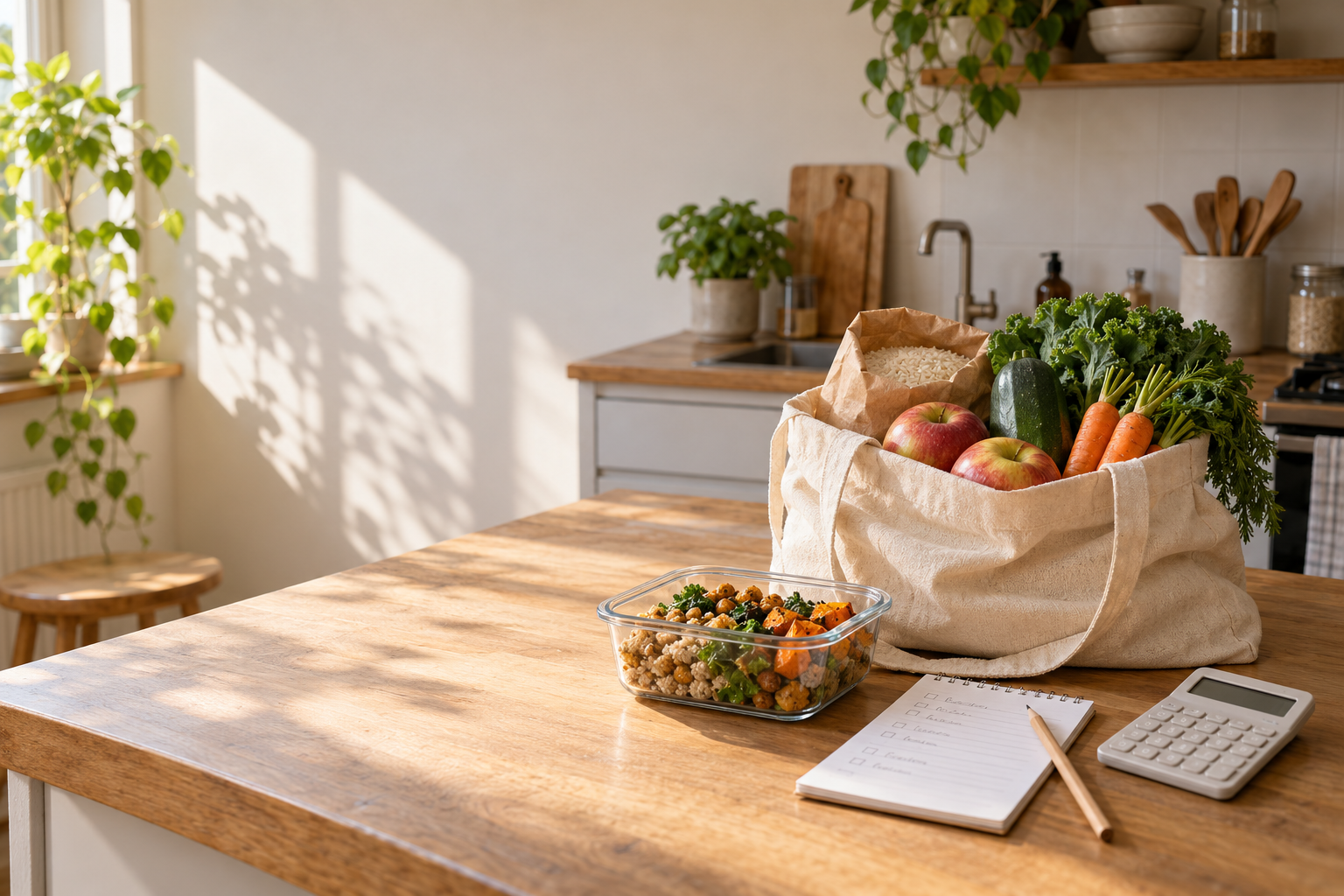
Start with a ten-minute scan, not a full kitchen overhaul. Open the pantry, fridge, freezer, and snack area. Write down anything that is ready to become part of a meal or needs attention soon.
Look for:
- proteins in the freezer or fridge
- grains, pasta, oats, tortillas, or bread
- canned beans, tomatoes, soups, or sauces
- vegetables and fruit that should be used first
- open snacks, nuts, yogurt, cheese, or eggs
- condiments and seasonings that can make simple food feel finished
Keep the list plain. You do not need brand names, exact weights, or perfect inventory tracking. “Two cans beans, half bag rice, frozen chicken, spinach, apples, eggs” is useful enough.
If you use Furt Money to review categories, compare this scan with recent grocery transactions. When spending is up but the kitchen still has plenty of food, the issue may be planning, not the food budget amount.
Build meals around anchor ingredients
An anchor ingredient is something you already own that can shape a meal. It might be frozen chicken, a box of pasta, a container of lentils, tortillas, eggs, rice, leftover roasted vegetables, or a jar of sauce.
Choose three to five anchors for the next few days. Then write one simple meal beside each one.
For example:
- rice plus frozen vegetables becomes fried rice
- pasta plus canned tomatoes becomes a quick tomato pasta
- eggs plus spinach becomes breakfast-for-dinner
- tortillas plus beans becomes tacos or wraps
- oats plus apples becomes easy breakfasts
The point is not to create a perfect meal plan. It is to reduce the number of meals that require a full new set of ingredients. When each anchor already exists at home, the grocery list becomes shorter and more focused.
Make a list of gaps, not wishes
After choosing the anchor meals, write the grocery list as a gap list. A gap is the missing piece that makes food you already own easier to use.
Useful gap items might include:
- fresh vegetables for a pantry meal
- one sauce or spice that works across several meals
- milk, eggs, yogurt, or another breakfast staple
- fruit for snacks
- bread, tortillas, or another base
- a protein that fills the week without overbuying
This keeps the list from becoming a collection of every food that sounds good. “Buy lettuce, yogurt, bananas, tortillas, and one protein” is easier to manage than a list built while hungry or rushed.
Before shopping, check whether each item has a job. If it does not support a planned meal, snack, household need, or realistic convenience backup, it can wait.
Set a use-first zone
Food waste often happens because the right food is present but invisible. A use-first zone makes the next best choice obvious.
Use one fridge shelf, a small basket, or a clear corner of the counter for items that should be eaten soon. Put leftovers, cut produce, open packages, and fragile ingredients there. If something is in the freezer, add it to a note or whiteboard so it is not forgotten.
Then plan one or two low-effort meals from that zone before buying more ingredients. This might be a stir-fry, soup, sandwich night, grain bowl, omelet, or snack plate.
The use-first zone also helps with emotional spending. When you can see a ready backup at home, takeout may feel less automatic after a tiring day.
Create a grocery ceiling for the trip
A pantry budget works best with a spending ceiling for each grocery trip. The ceiling should reflect what you already have and what the week needs, not a vague hope to “spend less.”
Try this simple approach:
- Start with your normal weekly grocery amount.
- Subtract a small amount if pantry anchors cover several meals.
- Add a small amount if you are restocking true staples.
- Keep a separate line for household supplies so food numbers stay clear.
For example, if a normal grocery trip is 120 but you already have dinners covered for three nights, you might set this trip at 85 or 90. If you also need detergent, paper goods, or pet supplies, do not bury those in the food budget. Separate them so the grocery category does not look higher than it really is.
The ceiling is a guide, not a punishment. If prices or needs make it unrealistic, adjust the plan and note why.
Keep convenience in the plan
A pantry budget fails when it assumes every night will go smoothly. Most weeks need a few convenience choices: a frozen meal, simple sandwich ingredients, quick breakfast items, or a low-effort dinner that prevents a more expensive last-minute decision.
Plan for those choices on purpose. A realistic grocery list might include:
- one backup meal for tired nights
- one snack option that reduces impulse stops
- breakfast food that takes less than five minutes
- a flexible ingredient that works in several meals
Convenience is not the enemy. Unplanned convenience is what tends to crowd the budget. When you choose it at the grocery store with a ceiling in mind, it can be cheaper and calmer than solving dinner at the last minute.
Review what actually got used
At the end of the week, do a quick review before shopping again. Ask what got eaten, what was ignored, and what spoiled or came close.
Useful questions:
- Which pantry items helped reduce the grocery list?
- Which foods did you buy again even though you had enough?
- Which meals were too complicated for the week you actually had?
- Which convenience foods saved money by preventing takeout?
- Which category in your spending tracker rose for a clear reason?
This review keeps the pantry budget practical. If fresh herbs spoil every week, buy fewer or use a longer-lasting option. If lunches keep failing, plan easier lunches. If bulk purchases are sitting untouched, pause them until you know how they will be used.
Make the next shopping trip smaller
A pantry budget is a small reset before money leaves your account. Scan what you have, choose a few anchor meals, buy the missing pieces, and give use-first food a visible place.
For your next grocery trip, pick three ingredients you already own and build the list around them. Even one smaller, clearer shop can make the grocery category easier to understand and easier to repeat.