A doorway that is difficult to cross or a bathroom that no longer works comfortably can turn an ordinary day into a string of workarounds. Planning a home accessibility upgrade budget helps you identify what needs to change, what it will really cost, and which costs belong now rather than later. It is not about making every possible renovation at once.
The right modifications depend on the person, the space, and local building requirements. This is a money-planning framework, not a substitute for an accessibility assessment, professional installation, or medical advice.
Start with the task, not the product
Write down the specific difficulty before shopping: entering the front door, getting from bed to bathroom, using a shower, reaching storage, or moving through a narrow hallway. Note when it happens and what would make the task easier. A visit from an appropriate accessibility or building professional may help you assess options for your situation.
Separate your list into urgent barriers, useful improvements, and nice-to-have changes. A temporary adjustment might help while you price a larger project, but do not assume a cheap product is safe for a particular person or surface. If a change affects weight-bearing fixtures, electrical work, plumbing, structural elements, or an exit route, ask a qualified professional what is suitable before buying materials.
Map the whole space and the permissions
The price of a grab bar or ramp is only one line. An installer may need to check the wall or floor, repair the surface, or move a fitting. In a rental or shared building, ask the owner or manager about required permission and what happens at move-out. For any substantial work, ask about permits or inspections where you live instead of assuming that a small-looking job is exempt.
Make a short scope sheet for each possible change:
- The task it should make easier and the exact location
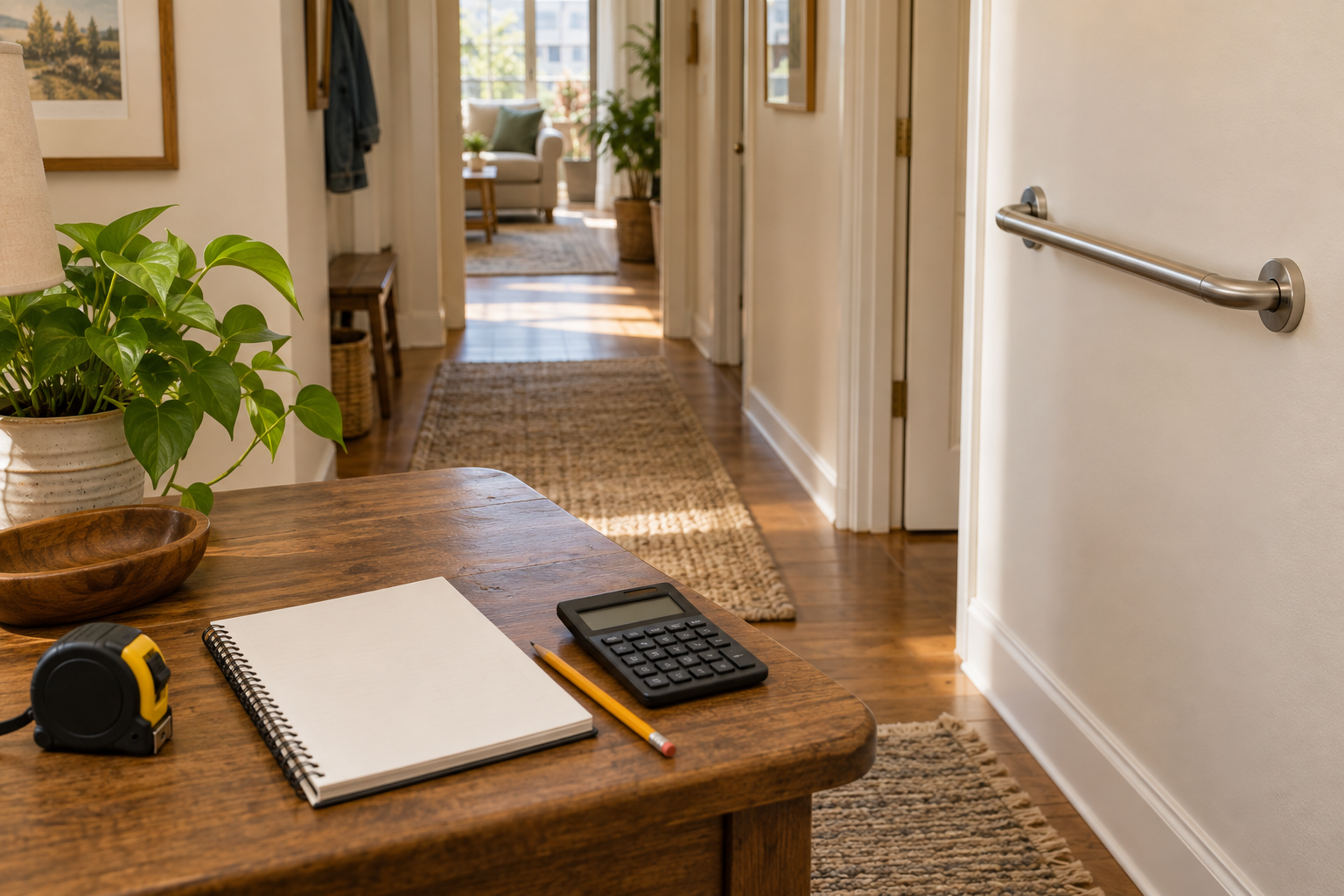
- Measurements and any obstacles, such as a door swing or uneven floor
- Who has to approve the work, and whether a professional assessment is needed
- Materials, labor, delivery, surface repair, and cleanup
- Any follow-up maintenance or replacement parts
A scope sheet makes quotes more comparable. It also helps prevent buying equipment that does not fit the doorway or cannot be installed safely in the chosen spot.
Compare quotes on the same job
Ask installers to quote the same scope and say what is included. A low quote may exclude wall reinforcement, disposal of old fittings, finishing work, or a site visit. A higher quote might include those items. Ask each provider to describe materials, labor, expected timing, payment schedule, and what happens if hidden conditions change the price. Get important details in writing.
For illustration, suppose one option is quoted at 400 units but excludes a 100-unit repair, while another is 470 units including that repair. On the known scope, the totals are 500 and 470 units. These are made-up numbers, not local prices. The useful habit is to compare the same finished result, not two headline amounts. Verify credentials or references as appropriate for the work and your location; do not pay for a job based only on a verbal promise.
Build three budget lines, not one guess
Keep the budget in three parts. First, the project cost: assessment if needed, materials, labor, delivery, permissions, and finishing. Second, the disruption cost: temporary access, travel, storage, or another usable space while work is underway. Third, a contingency for unforeseen conditions that the written quote does not cover. You can choose a contingency based on your available cash and the uncertainty of the work; there is no universal percentage that fits every home.
Put each item next to its expected payment date. A deposit may be due before installation, with the balance due on completion; a reimbursement, if available, might arrive much later. Do not treat unapproved funding or a hoped-for reimbursement as cash already in the account. If the full project would squeeze rent, food, or essential bills, ask whether safe, smaller stages are possible rather than financing a rushed scope by default.
Check help without building your plan around it
Potential support varies widely by place, housing arrangement, eligibility, and the type of work. If a landlord, insurer, employer, public program, or community organization might contribute, ask for the current written rules: which changes qualify, whether approval must come before work, what documentation is required, and when payment occurs. Do not assume that an accessibility need automatically makes an upgrade covered or deductible.
Keep quotes, approvals, invoices, and payment records together. Even if no assistance applies, this paperwork helps you reconcile the final cost and explain future repairs. For legal, benefit, tax, or insurance questions specific to your circumstances, use the relevant official guidance or a qualified adviser rather than a general blog checklist.
Stage the work and review the result
If several changes are needed, prioritize the barrier that most disrupts everyday use and can be addressed safely. Some jobs must be done together—for example, one contractor may need access before another can finish a surface. Ask whether splitting the project would add repeat visit fees or create an unusable gap between stages. Then schedule work in an order that preserves access to essential rooms.
After each stage, compare the invoice with the written scope and note any agreed changes. Keep a small list of what still needs adjustment or maintenance. A finished project that does not solve the original task is not a successful saving just because it came in under budget. If you track expenses in Furt Money, categorize project payments consistently and review the category against your plan; keep measurements, approvals, and safety notes outside your spending log.
Make one useful next move
Choose one everyday barrier and describe it in a sentence. Measure the space, find out who must approve a change, and request a written quote for the same clearly described job from suitable providers. That gives you a realistic starting number—and a safer decision than buying the first product that looks like a quick fix.