A family-size packet can have a tempting unit price. When you shop for one, though, the useful question is not “How much is in the packet?” It is “How much will I eat before it goes to waste?”
A grocery budget for one person should fit your appetite, schedule, storage space, and energy. It can include small packages, repeat meals, and the occasional convenient dinner without treating any of those as a failure. Here is a way to make the numbers work for your real week.
Start with meals you will actually eat at home
Look at the next seven days before making a shopping list. Mark dinners out, work meals, travel, leftovers you already have, and evenings when cooking is unlikely. Count the remaining meals, not an idealized seven breakfasts, lunches, and dinners.
For example, if you expect to eat dinner at home four times, plan four dinners and perhaps one shelf-stable backup. Do not shop for seven elaborate recipes merely because the calendar has seven days. If your plans change often, use a three- or four-day shopping window and restock later.
A quick kitchen check matters too. Write down an open sauce, a half bag of frozen vegetables, or bread that needs using. These are the first ingredients in your plan, not extras to remember after checkout.
Set a food limit and a first-shop limit
Decide how much of this pay cycle’s money is available for all food: groceries, planned meals out, delivery, and small convenience purchases. Then assign a grocery share rather than spending the entire food amount on the first trip.
Suppose your illustrative food limit for a week is 70 units of your local currency, with 55 for groceries and 15 reserved for one planned meal out. You might spend only 38 on the first shop and leave 17 for fresh items or a changed plan later. The figures are an example, not a recommended amount or a claim about current prices. Use your own receipts and actual local prices.
Leaving room for a second shop is particularly useful when one person cannot finish a large batch of produce before it spoils. It also protects the planned meal-out money from being spent twice.
Compare the cost of the portion you will use
Unit price is helpful only when you can use the units. Before picking the larger package, ask three questions:
- How many portions will I realistically eat before the food deteriorates?
- Can I freeze or store the rest safely, and is there space?
- Will this purchase leave enough cash for the other meals this week?
Imagine a small bag of greens costs 3 and yields two portions you will use. A larger bag costs 5 and yields five portions, but you expect to use only two. The small bag costs 1.50 per used portion; the large bag costs 2.50 per used portion if the rest goes uneaten. That is why the larger package can be the more expensive choice for your actual week. These amounts are illustrative; do the same calculation with prices on the shelf.
Dry staples that you use regularly are different from delicate perishables. A larger bag may be worthwhile when it fits your storage and cash flow. You do not need one rule for every food.
Build a short ingredient chain, not seven separate recipes
Choose two or three flexible ingredients that can appear in several meals. A cooked grain could become a bowl one night and a quick lunch another. A vegetable can go into a stir-fry and then a sandwich or soup. Make each repeat intentional so leftovers have a destination.
Try a simple four-dinner sketch:
- Cook one base meal that makes two portions; eat one and refrigerate or freeze the other promptly according to safe storage guidance.
- Make a second meal using an overlapping ingredient but a different flavor or preparation.
- Use the saved portion on a busy night.
- Keep one easy pantry or freezer dinner for when plans change.
This is a framework, not a menu prescription. If you dislike repeat meals, use smaller quantities or ingredients that can be prepared differently. Buying food you do not want to eat is not a saving.
Shop in two rounds when perishables are the problem
The first shop can cover shelf-stable basics, a few fresh ingredients, and the meals you know you will make. A second, smaller shop can cover produce or other perishables once you know what is left. Compare the extra trip’s transport or delivery cost with the food you would otherwise waste; two rounds are not automatically cheaper if the second order has a large fee.
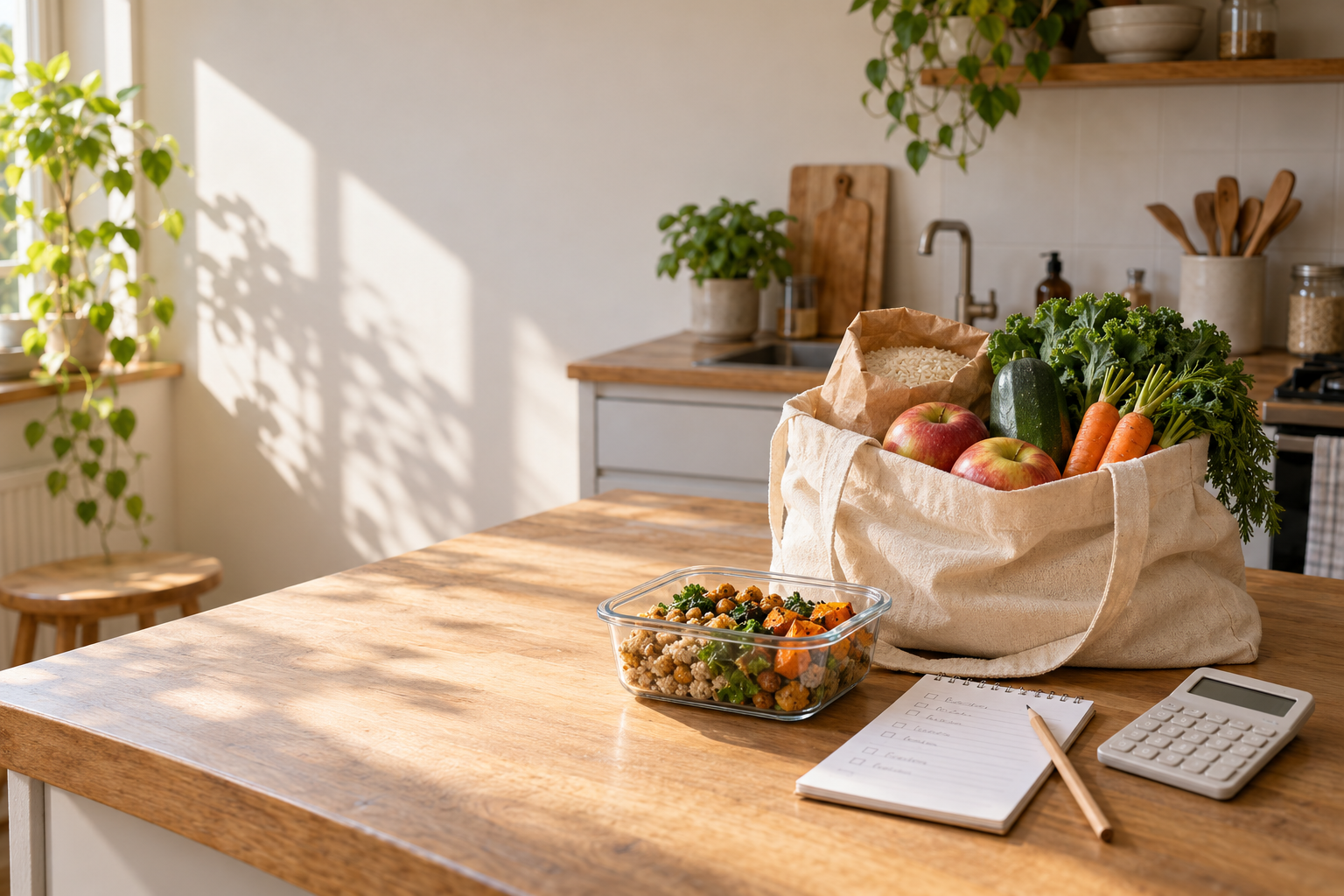
Use a short list for each round: item, meal it supports, amount needed, and an acceptable substitute. At checkout, check the basket total against the remaining grocery money, not the original weekly limit. If an ingredient is unavailable, change the meal instead of buying several unplanned replacements.
Keep convenience food in the plan
Cooking for one can be tiring. A ready meal, frozen portion, or planned takeaway may be more useful than ingredients for a dinner you will never cook. Give convenience a visible place in the food limit rather than letting it appear as an emergency every evening.
The tradeoff to watch is paying for both unused groceries and takeout. If work regularly runs late on Thursdays, plan a low-effort Thursday dinner or budget for eating out that day, and shop for one fewer fresh meal. This is a scheduling decision as much as a price decision.
Review used food, wasted food, and the full food total
At the end of a week or pay cycle, compare what you planned with what happened. Look at your grocery and dining categories together, then ask:
- Which purchases produced meals you ate?
- What spoiled, and was the cause quantity, timing, storage, or a changed schedule?
- Did a “deal” use cash needed for more practical meals?
- Which one-person portion sizes worked well enough to buy again?
If you categorize spending in Furt Money, review groceries alongside dining and delivery to see the whole food pattern. A low grocery total is not a win if it came with unplanned meals out; a higher week may be fine if staples carry into the next one. The point is to learn from your own receipts, not to force every week to look identical.
A useful next step is small: count the meals you expect to eat at home over the next four days, then list only the ingredients needed for those meals and one backup. You can build a better one-person grocery budget from that honest list than from a cart sized for someone else’s household.