A budget that leaves no room for enjoyment is hard to keep. You may follow it for a few weeks, then one stressful day turns into takeout, a small purchase, another small purchase, and a quiet feeling that the plan has already failed.
A fun money budget solves a different problem than cutting back. It gives everyday personal spending a clear place to live. Coffee, games, hobbies, books, snacks, small upgrades, nights out, and unplanned treats do not have to be hidden or defended. They just need a limit that fits the rest of your money.
The goal is not to make spending feel childish or careless. The goal is to create a small zone where you can spend without renegotiating your entire budget every time.
What fun money is supposed to cover
Fun money is the flexible spending you want to enjoy without turning every purchase into a full financial review. It usually covers small, optional expenses that make life nicer but are not required for bills, food, transport, debt payments, or savings.
Common examples include:
- Coffee, snacks, and casual treats
- Games, books, music, apps, or hobby supplies
- Solo meals out that are not part of the grocery plan
- Small clothing or personal-care extras
- Entertainment, local events, or weekend plans
- Random purchases that are fine in moderation
The category works best when it is specific enough to guide behavior and broad enough to feel useful. If you create a separate mini-budget for every tiny pleasure, the system may become exhausting. If you call everything “miscellaneous,” you may stop learning from the pattern.
Fun money is not an emergency fund, a hidden debt-payment source, or a place to store bills you forgot to plan. It is planned flexibility.
Start with the money that is already spoken for
Do not choose a fun money number because it sounds normal. Start with the money that already has a job.
Before setting the limit, check:
- Housing, utilities, groceries, transport, and other essentials
- Minimum debt payments and any extra payoff goal
- Savings transfers you want to protect
- Upcoming irregular costs, such as gifts, repairs, medical visits, renewals, or travel
- A small checking buffer if your account often gets tight before payday
What remains is the space where personal spending can live. That does not mean every leftover dollar should become fun money. Some of it may need to support groceries, cash flow, or a sinking fund. But starting with obligations first prevents the fun category from accidentally borrowing from essentials.
If the leftover amount is small, keep the first version small. A realistic 25 that you can spend freely is better than a hopeful 150 that causes stress two weeks later.
Pick a reset rhythm that matches your pay cycle
A monthly fun money number can be simple, but it is not always the easiest to manage. If the full amount is available on the first day, it may disappear before the month is halfway over. A shorter reset rhythm can make the category easier to use.
Try one of these options:
- Weekly reset: helpful if impulse spending is the main issue
- Payday reset: helpful if income arrives twice a month or every two weeks
- Monthly reset: helpful if you already review spending calmly
- Event-based reset: useful for a trip, busy season, or temporary tight month
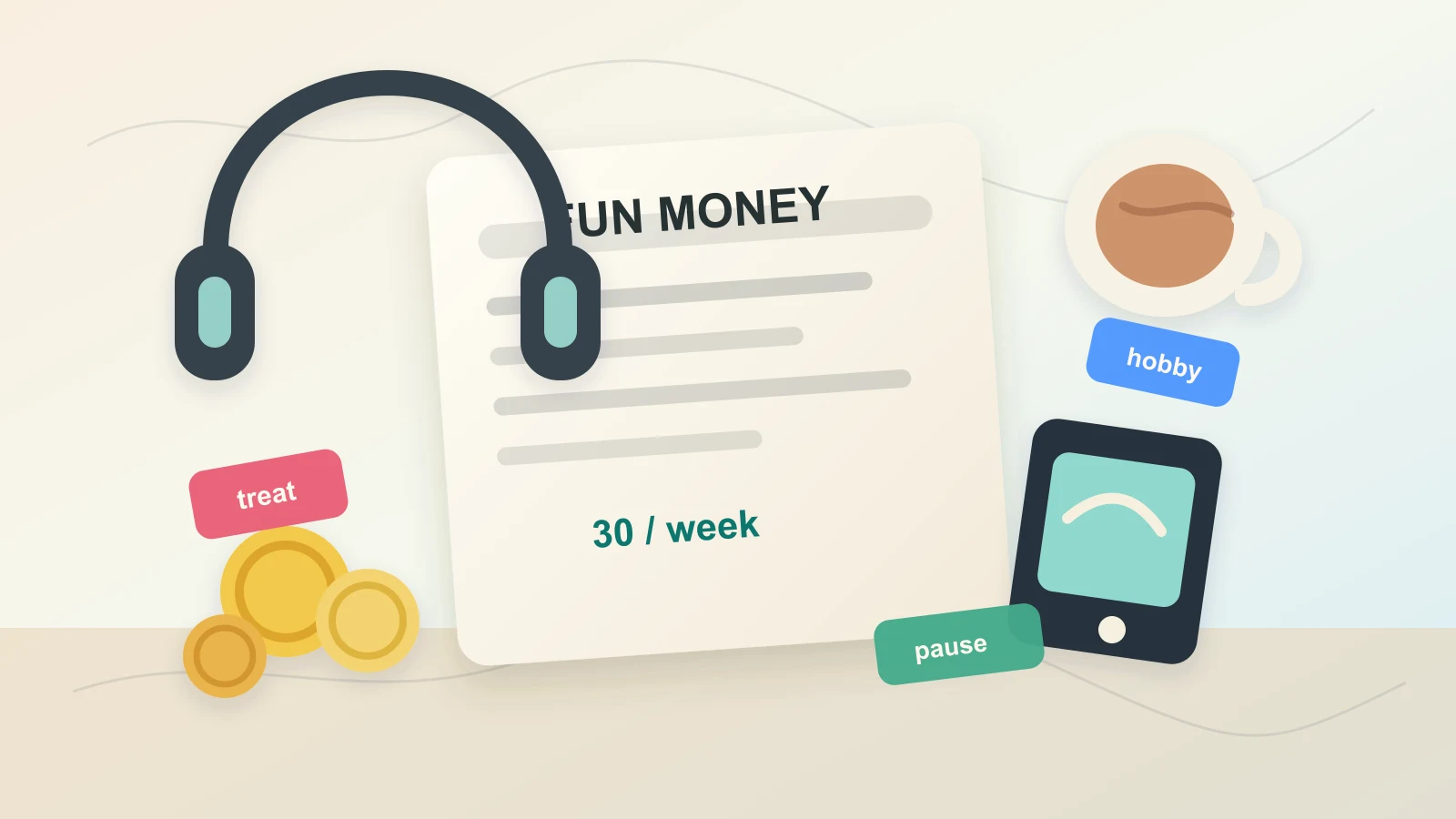
For example, a monthly limit of 120 could become 30 per week. That smaller number makes tradeoffs clearer. If you buy a game, you may choose a quieter weekend. If you skip a few treats, you may have more room for dinner with a friend.
The reset rhythm should reduce decision fatigue, not create another chore.
Separate fun money from shared or household spending
Fun money gets confusing when it mixes with categories that serve other people or bigger plans. A lunch with friends might be personal spending. Groceries for the household are not. A solo hobby purchase might be fun money. A birthday gift might belong in a gift budget. A date night might be shared entertainment if both people agreed on it.
Clear boundaries prevent two common problems.
The first problem is guilt. If every personal purchase feels like it is competing with groceries, you may avoid looking at the budget or feel bad for normal spending.
The second problem is drift. If household expenses keep landing in fun money, the category stops showing what you personally chose to spend. That makes it harder to decide whether the limit is fair.
Write a simple rule for your own budget:
- Personal enjoyment goes in fun money.
- Shared plans go in the shared category.
- Gifts go in gifts.
- Health, work, and household needs stay separate.
If you use Furt Money to categorize spending, review the last few weeks and look for personal purchases that are scattered across shopping, dining out, entertainment, and apps. You may not need a new category for everything, but you do need a view clear enough to see the habit.
Decide what happens when the category runs out
A fun money budget only works if the limit means something. Decide in advance what happens when the category is spent.
You have a few options:
- Pause optional spending until the next reset
- Move money from another flexible category on purpose
- Use a small rollover from a previous week if you saved it
- Delay a purchase and decide again later
What you want to avoid is silent borrowing. Silent borrowing happens when fun money runs out, but spending keeps going because the charge can technically fit somewhere else. That is how a useful category turns into a suggestion instead of a plan.
If you do move money, make the tradeoff visible. For example, you might move 20 from dining out to hobbies because you care more about a class this week. That is not failure. That is budgeting. The important part is choosing the swap before the money leaves.
Use rollover carefully
Rollover can make fun money feel more generous. If you do not spend the full amount this week, the leftover can build toward a larger purchase next week. This works well for hobbies, clothing, concerts, books, or any treat that costs more than your usual weekly limit.
But rollover can also make the category blurry if you never know how much is truly available. Keep it simple.
Choose one rule:
- Full rollover: every unused amount carries forward
- Capped rollover: unused money rolls over up to a set limit
- No rollover: each reset starts fresh
Capped rollover is often the calmest option. For example, a weekly fun money budget might roll over up to 100. That lets you save for something nicer without letting months of unused money distort the rest of the plan.
If money is tight, no rollover may be cleaner. Unused fun money can go toward a buffer, savings goal, or next month’s pressure point.
Review the pattern, not every purchase
You do not need to judge every coffee or app download. Review the pattern.
At the end of each pay cycle, ask:
- Did the fun money amount feel too tight, too loose, or about right?
- Which purchases felt worth it after a few days?
- Which purchases were mostly stress, boredom, or convenience?
- Did personal spending crowd out any bills, savings, or debt payments?
- Would a different reset rhythm make the category easier?
The answers help you adjust the system. Maybe the amount is fine, but weekends need a separate limit. Maybe the category is too broad and should split into hobbies and eating out. Maybe the number is unrealistic for your current income and needs to shrink temporarily.
Good budgeting is not about proving you never want things. It is about making wants visible enough that they do not quietly run the month.
Keep the first version easy
For the next pay cycle, pick one number and one reset rule. Track only enough to know whether the category is working.
A simple first version might be:
- 30 per week for personal spending
- No borrowing from bills, groceries, or savings
- Rollover capped at 60
- Review every payday
After two or three cycles, adjust based on real life. If the number always runs out in two days, look at what is driving it. If the number never gets used, decide whether it should support another goal. If the number feels fair and your other priorities are protected, let yourself enjoy it.
A fun money budget is not permission to ignore your plan. It is part of the plan. Give it a clear place, keep the boundaries honest, and let small pleasures stay small instead of becoming budget stress.