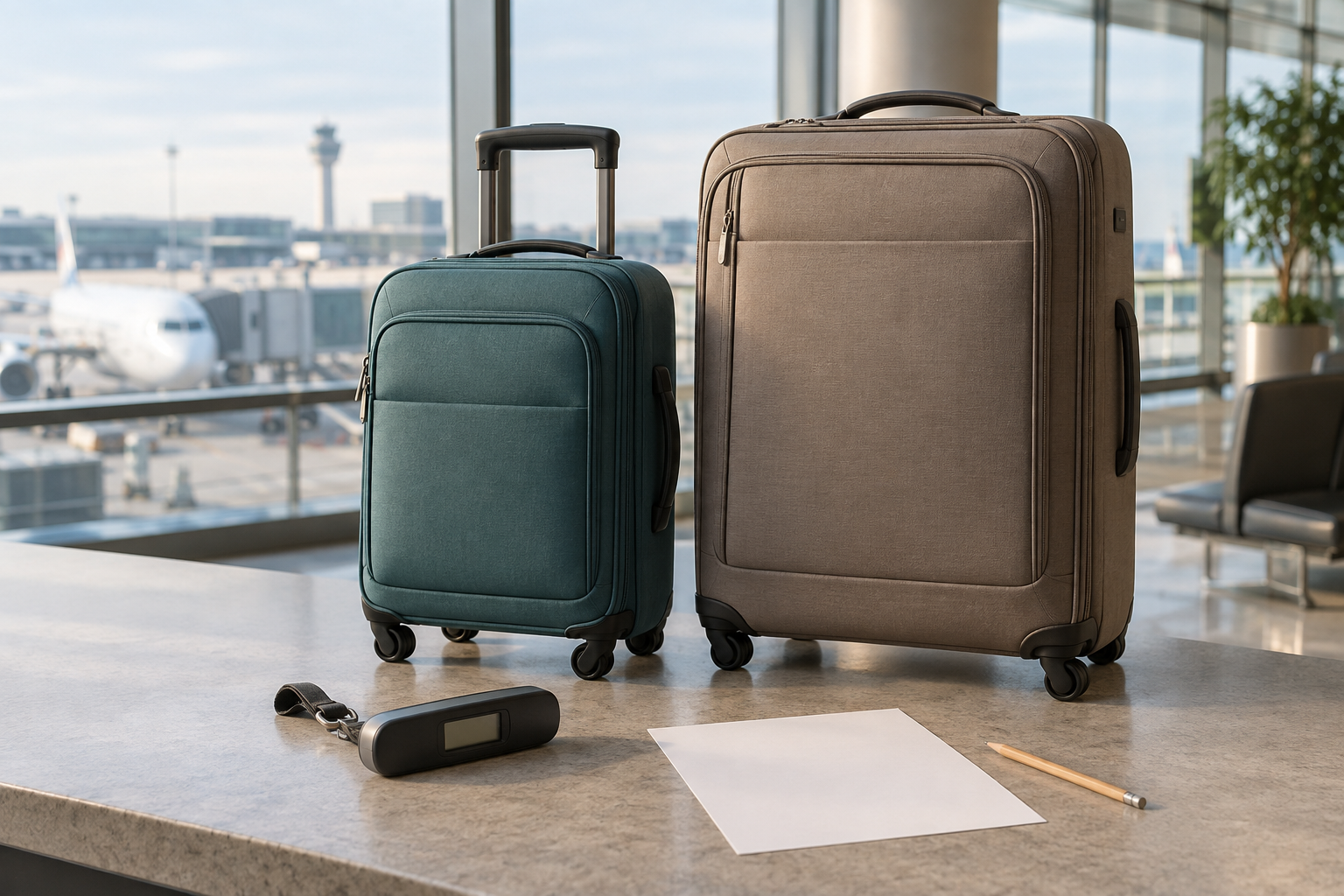
A low ticket price can be a good deal, but only if it covers the bags you will actually take. A baggage fee budget starts with your trip, not an airline’s headline fare. It puts the fare and likely bag charges in one comparison before you book, then leaves room for the choices you can still control.
This is a planning method, not a list of current airline prices. Allowances, dimensions, fees, and purchase deadlines depend on the carrier, fare, route, and sometimes the operating airline. Check the terms attached to your own itinerary before paying.
List the bags you need for this trip
Write down the number of travelers, trip length, and what each person must carry. Include items that make a smaller bag unrealistic: work equipment, weather layers, supplies for a child, or a special occasion outfit. Then decide whether each traveler can use a personal item, needs an overhead-bin bag, or needs checked luggage.
Do not assume that a bag called a “carry-on” in your closet qualifies on every fare. Compare its measured size and, where relevant, weight with the rules for the exact fare. A bag that does not qualify could change the cost at the airport. Leave a little space for things you expect to bring home.
Build a door-to-door fare comparison
For each flight option, note the ticket price and the cost of the bags you plan to bring in both directions. Check whether the displayed fare already includes a bag. If your outward and return legs have different fares or operators, review each leg separately. Also check how a connection or separately booked ticket treats your luggage.
A simple comparison note can contain:
- Base fare for every traveler.
- Included personal item, overhead bag, and checked-bag allowance on each leg.
- Extra bag charges at the time you expect to purchase them.
- Any size or weight limits that your packed bags may exceed.
- The total payable for the itinerary you would actually take.
For example, imagine two hypothetical round-trip choices. Fare A is 180 units and the bags you need add 60 units across the trip, for 240 units. Fare B is 215 units and includes those bags, for 215 units. The lower headline fare is not the lower trip total in this example. The units are illustrative, not airline prices.
Check the timing and the uncertainty
Some booking flows offer bag add-ons at different stages, and changing plans can affect what you pay. Read the current checkout terms: when must you add a bag, what happens if you add one later, and what are the rules if your itinerary changes? Record the amount shown at the point you intend to buy, not a remembered price from another trip.
If you do not yet know whether you need a checked bag, make two totals: a light-packing scenario and a checked-bag scenario. The difference tells you what the decision is worth. Avoid budgeting only for the best case if the checked bag is probable. If the route involves more than one airline, confirm whose bag rules apply rather than guessing from the first logo in the itinerary.
Decide whether sharing or packing lighter really works
Traveling together can sometimes reduce the number of checked bags, but only if your combined luggage fits the applicable allowance and you can manage it throughout the journey. Do not assume unused allowance on one ticket can be transferred to another traveler. Check the carrier’s rules and account for whether companions may return on different flights.
Packing lighter also has trade-offs. If leaving a bag behind means buying toiletries, doing laundry, or replacing something you already own at your destination, put those likely costs next to the fee you avoid. The cheapest luggage choice is not always the one with the fewest bags; it is the one that fits the trip without pushing expenses elsewhere.
Give the travel budget one all-in number
Set your flight-and-baggage ceiling before checkout. Keep the ticket and any separately charged bags within the same trip budget, even if the charges land on different days or cards. You can categorize the payments in Furt Money and review your travel spending pattern later; keep bag sizes, fare rules, and booking deadlines in your itinerary notes.
If the all-in total exceeds your ceiling, compare another fare, a different departure, or a realistic packing plan. Do not silently borrow from meals, ground transport, or the money reserved for getting home. Those are still part of the trip.
Recheck once before departure
A few days before leaving, weigh and measure the bags you intend to use and check the current itinerary details. Confirm what you purchased, whether the return leg is covered, and how the operating carrier handles your bags. Save the relevant booking confirmation where you can find it without searching at the airport.
For your next flight, start with one concrete step: write down the bags you will take and compare fare plus bags for the entire round trip on two realistic options. That small calculation is more useful than choosing by the first price you see.