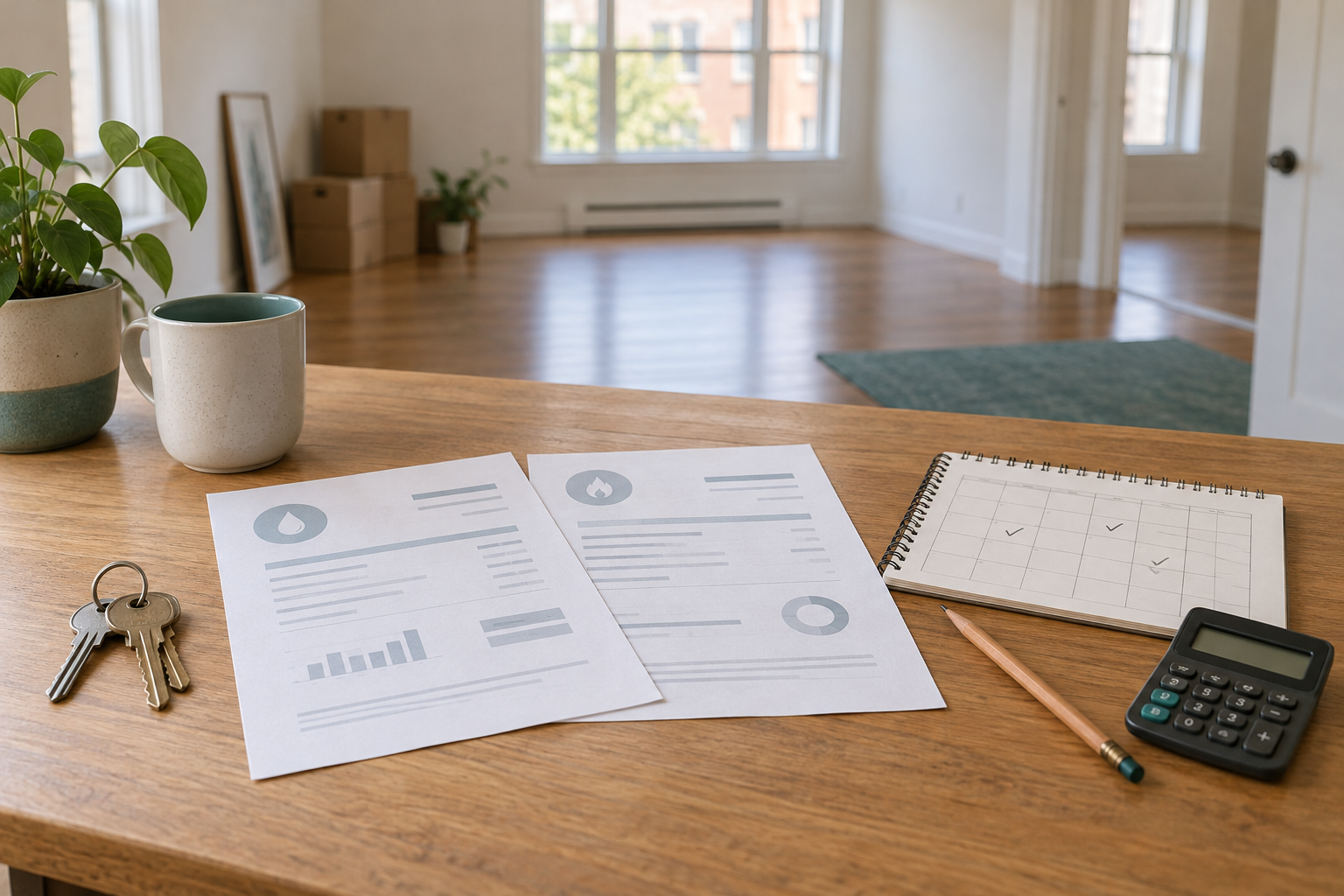
Moving out does not always end a utility bill on the day you hand over the keys. A final reading, a delayed statement, or an autopay already in progress can leave a charge on an account you thought was finished. Meanwhile, service at the new address may require its own first payment or deposit.
A final utility bill checklist keeps those separate moving parts visible. It is a record-keeping and cash-flow plan, not a claim about when a provider must close an account or return a deposit; those details depend on the provider, agreement, and location.
List every account tied to the old address
Start with the latest statements or account portal for electricity, gas, water, internet, waste collection, and any other service billed to you. Some charges may be included in rent or managed by a building rather than held in your name. Write down the provider, account identifier kept in a private record, service address, usual billing cycle, payment method, and who is responsible for arranging the stop or transfer.
For each account, mark one of three actions: stop, transfer, or confirm someone else handles it. A transfer may still result in a closing balance for the old address and a separate opening balance for the new one. If you share the home, agree who will contact the provider and how you will split a final charge. Do not put full account numbers or payment details into a shared budget note.
Set service dates against the actual move
Before changing anything, check your lease, handover plan, and provider instructions. Your last night in the home, key handoff, and last date you need electricity for cleaning or internet for work may differ. Ask each provider what date it can stop service, whether a final meter reading or equipment return is needed, and how it will confirm the change. Get a reference number or written confirmation where possible.
Avoid scheduling a shutoff simply because a moving truck arrives that day. Equally, do not assume the next resident opening an account automatically ends yours. If you need overlap at two addresses, write down its likely duration so the extra days are a planned move cost rather than a mystery charge. For the broader move, see the moving budget checklist.
Reserve cash for bills that arrive later
A regular monthly bill may cover an earlier period. Write the last paid-through date beside the intended service end date; the gap is the period you still need to budget for, even if the statement has not arrived. Add any known fixed fees or equipment obligations shown in your provider’s terms, but do not invent an exact final amount when usage has not been measured.
For a simple illustration, suppose you move on the 20th, and the most recent electricity bill covered usage only through the 5th. You still need room for usage from the 6th through the confirmed closing date. If the new address starts service on the 18th, you may be paying for two homes for a few days. These are example dates, not a billing rule or a prediction of the amount owed.
Keep the estimated old-address balance in your cash-flow calendar until the final statement is paid. Keep the new-address setup and first bill as separate lines. That separation stops a deposit refund you hope to receive from silently financing a bill due before the refund clears.
Track readings, equipment, and deposits separately
If a provider asks for a meter reading, follow its stated process and keep the confirmation and a dated photo where appropriate. A reading can help you compare the final statement with the account record, but the provider’s rules determine how it is used. For internet or other rented equipment, check what must be returned, by when, and how to retain a return receipt. A forgotten device can create a different charge from the final service bill.
If you paid a utility deposit, record its amount and the provider’s stated return process separately from the final balance. Ask whether it will be credited to that balance or returned through another method. Until a credit appears on a statement or money lands in your account, treat it as pending, not spendable cash. This is distinct from a landlord’s security deposit return.
Review autopay without paying twice
Check whether a payment is scheduled, pending, or posted before manually paying a final statement. Canceling autopay too soon could leave a balance unpaid; leaving it running without checking can make a manual payment a duplicate. Ask the provider how automatic payments behave after account closure and confirm the final balance and payment status in the official portal or statement.
If you see a charge that seems wrong, compare service dates, meter readings if relevant, fees, credits, and payments with your records. Contact the provider through its official channel with the exact line item and your closure confirmation. Keep a note of the answer and any adjustment promised, then verify that it actually posts. Do not assume a pending adjustment changes what is currently due unless the provider confirms it.
Close the loop in your move-out budget
Use a small list with one row per account: requested stop or transfer date, confirmed end date, final statement expected or received, balance paid, equipment returned, and deposit credited or received. Mark an account complete only when the final statement and payment or credit agree with your records. Save closing confirmations and receipts in a secure place you can find later.
If you use Furt Money to categorize expenses, keep old-address final utility charges, new-address setup costs, and any returned deposit distinguishable when reviewing move spending. Your bank and provider records remain the source for whether an account is actually closed.
Next step: open your most recent utility statements and list each service beside its intended stop or transfer date. Even before the final amounts are known, that one list gives delayed bills a place in your plan.