A power cut, storm warning, water issue, or short service disruption can turn ordinary household gaps into expensive last-minute decisions. You buy whatever is still on the shelf, pay delivery fees, replace food that spoiled, or realize the flashlight has no working batteries when you need it.
An emergency kit budget gives those boring-but-useful supplies a place in your money plan. It is not about preparing for every possible disaster. It is about making the first day or two of a disruption less chaotic, especially if you have kids, pets, medical routines, remote work, or limited transport options.
The calmer approach is to build the kit in layers. Start with the items that protect safety and basic comfort, then add replacements slowly as your budget allows.
Start with the disruptions you actually face
A useful emergency kit reflects your real life. Someone in a high-rise apartment, a rural house, a flood-prone area, or a neighborhood with frequent power cuts will need different supplies. Before buying anything, write down the situations you are most likely to handle.
Ask:
- Do power cuts happen often where you live?
- Do storms, heat, cold, smoke, or heavy rain affect normal routines?
- Would a payment outage, closed shop, or fuel shortage create problems?
- Do you need backup plans for medication, baby supplies, mobility needs, or pet care?
- How long could your household manage with what you already have?
- Which problems would become expensive if you waited until the last minute?
This keeps the budget practical. You do not need a shelf full of gear for situations that do not fit your home. You need a small plan for the interruptions that would actually stress your household.
Check what you already own
Most emergency kit budgets get cheaper once you inventory the house. You may already have spare batteries, a power bank, shelf-stable food, first-aid supplies, bottled water, a basic tool, blankets, or an old flashlight tucked away.
Walk through the home and group items into three lists:
- Ready now: useful items that are clean, working, and easy to find.
- Needs replacement: expired, broken, missing, leaking, or half-used items.
- Missing: essentials you do not currently have.
Be honest about “technically owned” items. A flashlight without batteries is not ready. A power bank that has not been charged in months is not ready. Food no one will eat is not ready. Supplies spread across five drawers may also fail when someone else needs to find them quickly.
The goal is not a perfect cabinet. The goal is a reliable set of basics with known locations.
Build the first layer before buying extras
The first layer should cover the most ordinary disruption: lights out, phone battery low, basic meals needed, information uncertain, and stores less convenient than usual.
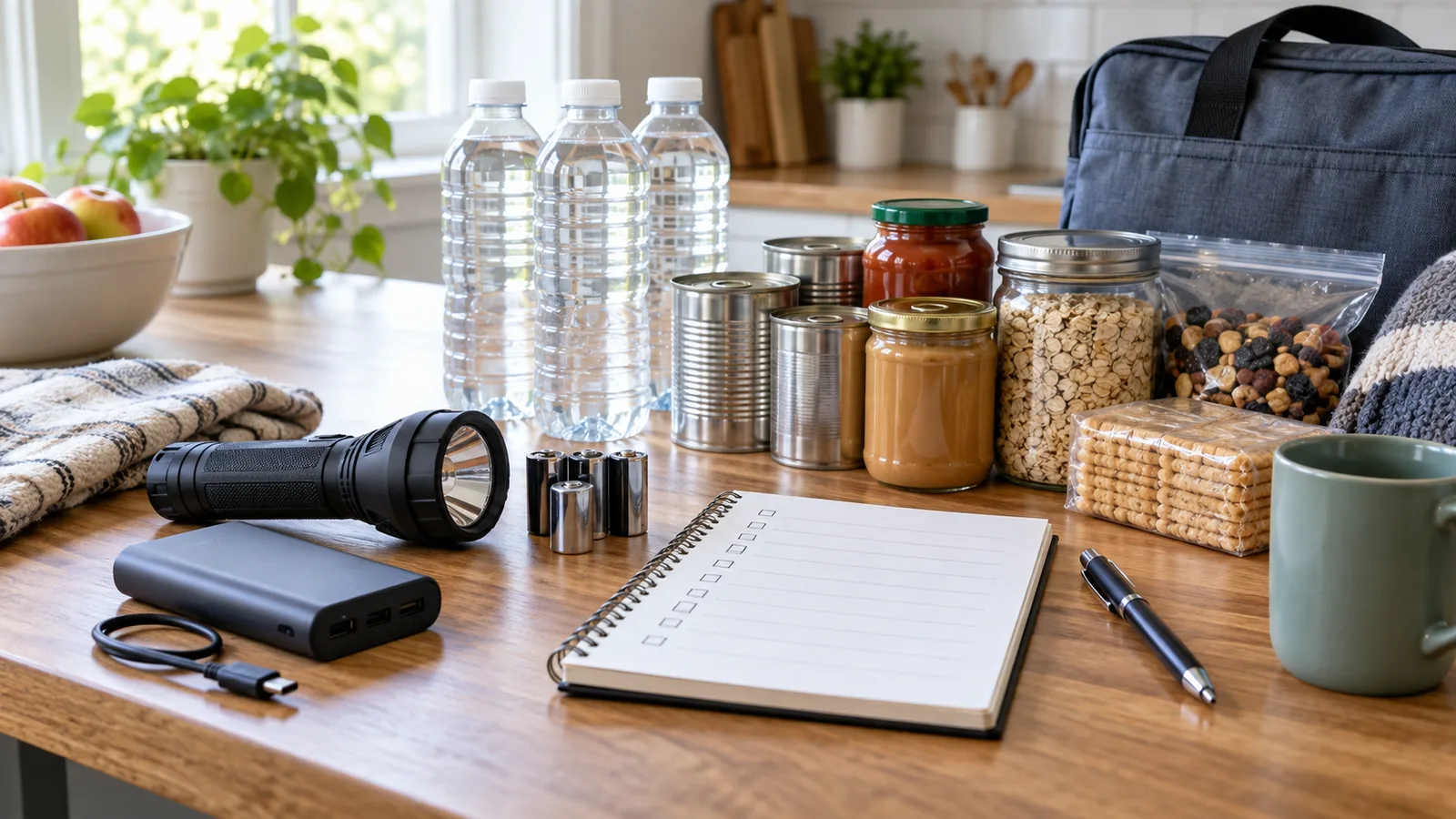
A starter kit might include:
- one working flashlight or lantern
- spare batteries if your light needs them
- a charged power bank and cable
- shelf-stable food your household will actually use
- drinking water or a clear water plan
- a small first-aid refresh
- basic hygiene supplies
- pet or baby essentials if needed
- a paper note with key phone numbers
- a little emergency cash if that is useful where you live
Do not buy the premium version of everything at once. A modest, working light beats a dream kit you delay for months. A small pantry shelf beats a big emergency food order that crowds the grocery budget.
If money is tight, choose the item that removes the biggest immediate risk first. For some households, that is light. For others, it is medication storage, baby supplies, water, transit cash, or a power bank.
Give the kit its own spending category
Emergency supplies often get buried inside groceries, home goods, electronics, or health spending. That makes it hard to know whether the kit is growing steadily or quietly competing with normal bills.
Create a small category such as “emergency kit,” “home backup,” or “preparedness.” Then decide how it will be funded.
Options include:
- a one-time starter amount this month
- a small monthly amount until the first layer is complete
- a seasonal refresh before storm, heat, or winter months
- a replacement-only category once the kit is built
- a shared household contribution if several adults benefit from the supplies
If you use Furt Money, an “emergency kit” category keeps these purchases separate from grocery or household spending and easy to review later. If you are building the kit slowly or saving for a seasonal refresh, set the money aside as a savings goal (“Emergency kit refresh 120 every year, due October”) so it is not counted as spending until you buy something, and the app shows what to put in each month. When you do buy, pay from the goal and record the purchase in one step so it stays out of the grocery budget. If spending grows too quickly, you can pause extras without losing track of what still matters.
Buy in a sensible order
When everything feels important, use a simple priority order. Start with items that keep people safe, reachable, fed, and able to manage the next day. Add comfort and convenience later.
A practical order can be:
- Light and phone power.
- Water, food, and basic hygiene.
- First-aid, medication, baby, pet, or mobility needs.
- Communication, documents, and key contacts.
- Home-specific tools, weather gear, and storage.
- Comfort items that make waiting easier.
This order helps prevent overspending on interesting gear while missing a basic need. It also makes the project easier to split across pay periods. You might buy a flashlight this week, batteries and pantry items next week, and a better storage bin next month.
Use normal shopping rhythms when possible. Add one shelf-stable item to a grocery trip. Replace batteries during a household restock. Watch for sales only on items already on your list. A discount does not help if it pulls money away from rent, utilities, debt payments, or food for the current week.
Plan for replacement costs
An emergency kit is not finished forever. Food expires. Batteries drain. Power banks lose charge. Kids outgrow supplies. Pet food changes. Contact numbers become outdated. The budget needs a maintenance rhythm, not only a buying phase.
Set a simple review schedule:
- Check lights and power banks every month or two.
- Review food, water, and medicine dates before seasonal risk periods.
- Replace used items immediately after a disruption.
- Update contact lists after a move, job change, school change, or provider change.
- Recheck size-specific items for babies, kids, pets, or medical needs.
Keep a small replacement amount in the category if your budget allows it. Even a modest cushion can prevent the kit from falling apart after the first time you use it.
If you have to use emergency supplies during a difficult week, note what was helpful and what was missing. That is better information than any generic checklist.
Store the kit where real people can find it
The best budgeted kit is useful only if someone can access it. Choose a location that is dry, safe, and obvious to the adults or older family members who may need it. Avoid hiding everything in a storage area that requires a ladder, key, or memory test.
Make the storage simple:
- Keep core items together.
- Label the container plainly.
- Put batteries beside the light if that is safe for the item.
- Keep charging cables with the power bank.
- Store food where heat and pests are less likely to damage it.
- Keep sensitive documents and medication secure, not casually exposed.
If your household includes roommates, a partner, relatives, or caregivers, tell them where the basics are. They do not need a lecture. They need to know which light works, where the backup charger is, and what food or supplies are saved for disruptions.
Keep the plan small enough to repeat
Emergency planning can expand quickly. There is always another item, another scenario, another upgraded tool. A budget keeps the project grounded by asking one question: what is the next useful purchase we can afford without weakening the rest of the month?
Start with a small list and a small category. Build the first layer, review it, then improve it slowly. The point is not to buy peace of mind in one shopping trip. The point is to remove a few avoidable problems before they become urgent.
Your next step can be simple: find one working light, one way to charge your phone, and one shelf-stable meal your household would actually eat. Put them in one visible place, then add the next item when the budget says yes.