Coffee spending rarely feels like a major money decision. It is one drink before work, one catch-up with a friend, one refill during errands, or one small treat after a long day. The problem is not the coffee. The problem is that frequent small purchases can become hard to see until the month is already tight.
A coffee budget gives those purchases a clear place in your plan. It lets you decide what is worth enjoying, what is just habit, and how much room cafe spending should have beside groceries, bills, savings, debt payments, and other flexible spending.
Start with your real coffee pattern
Do not start by deciding whether coffee is good or bad. Start by noticing when it actually happens.
Look back over the last few weeks and ask:
- Do you buy coffee on workdays, weekends, errands, dates, or travel days?
- Are the purchases mostly planned breaks or automatic stops?
- Do snacks, breakfast, bottled water, or tips usually come with the drink?
- Which payment method makes the habit easiest to miss?
- Does coffee spending replace breakfast, lunch, social time, or a quiet reset?
- Is the pattern steady, or does it spike during stressful weeks?
If you use Furt Money, review recent dining out, coffee, convenience, grocery, and workday food categories together. Coffee often hides inside several labels, especially when a cafe visit includes food or a friend pays you back later.
The goal is not to judge every cup. The goal is to see the rhythm clearly enough to make one useful decision.
Choose one weekly number
A monthly coffee limit can feel too distant. A weekly number is easier to manage because the habit usually repeats by day.
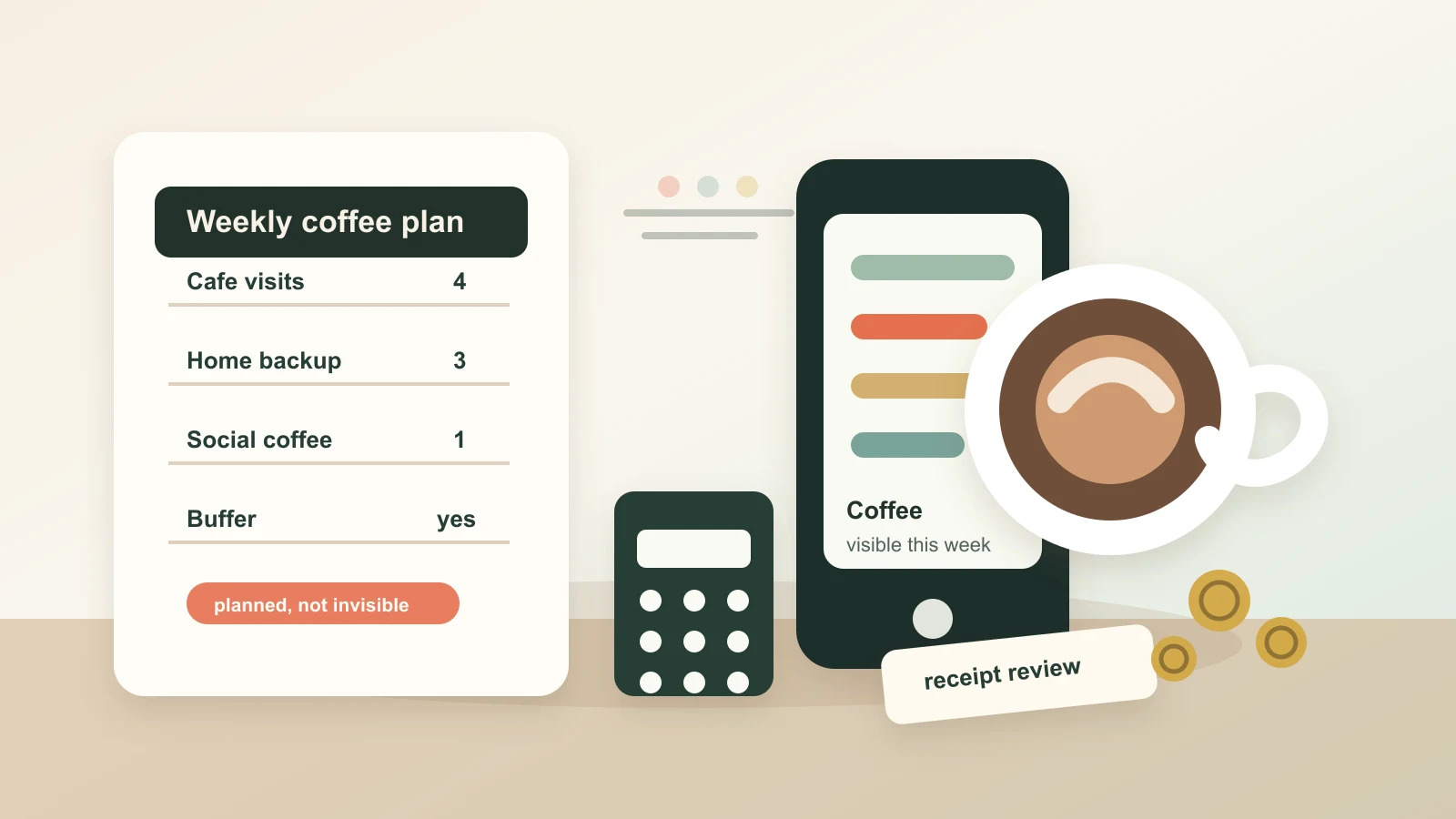
Pick a number that fits your actual budget after essentials are covered. Then translate it into choices. For example, if your weekly number is 20 and a usual cafe stop costs 5, that means four stops. If your preferred drink and snack cost 9, that means two full cafe visits with a little room left.
Use your own prices and habits. The point is not the example amount. The point is turning a vague category into a visible tradeoff.
Try one of these simple formats:
- A weekly coffee amount that resets every Monday
- A number of cafe visits per week
- One social coffee amount plus one workday amount
- A small daily cap on office or commute days
- A separate “busy week” amount for unusually packed weeks
Keep the rule simple enough to remember at the counter. If it needs a spreadsheet to follow, it will probably fail during a rushed morning.
Separate coffee from the costs around it
Coffee spending can grow because it rarely travels alone. A drink may become a pastry, sandwich, delivery fee, extra tip, parking meter, or ride to a cafe. Those costs may belong in different categories, but they still affect the same cash flow.
Decide how you want to track the full visit:
- Coffee only: useful if the drink habit is the main issue
- Cafe visits: useful if drinks and snacks usually happen together
- Workday food: useful if coffee, lunch, and vending machine spending blur together
- Social spending: useful if coffee is mainly how you meet people
- Convenience spending: useful if coffee is part of rushed errands and low-energy days
There is no perfect label. Choose the one that helps you make better decisions. If the category is too broad, the pattern disappears. If it is too narrow, tracking becomes annoying and easy to abandon.
Keep the coffee you actually value
A coffee budget works better when it protects the purchases you genuinely enjoy. Cutting the best part first can make the plan feel like punishment, and punishment-style budgets tend to be short-lived.
Look for the difference between value and autopilot:
- The relaxed Saturday cafe visit may be worth keeping.
- The coffee with a friend may be part of your social life.
- The rushed drink you barely taste may be habit.
- The second drink of the day may be fatigue, not preference.
- The expensive add-on may not matter as much as the break itself.
Once you know the difference, spend intentionally. You might keep two cafe visits you love and replace three automatic stops with coffee from home. Or you might keep workday coffee but skip the snack that usually gets added without thought.
This is not about becoming the person who never buys small pleasures. It is about making sure small pleasures are still pleasures, not invisible leaks.
Build a default for busy days
Many coffee budgets fail during busy weeks. A late morning, long meeting, bad sleep, or cold commute can turn a reasonable plan into a string of exceptions.
Create a default before the week gets crowded:
- Keep coffee, tea, or a ready drink option at home or work.
- Put a simple breakfast or snack where you can reach it.
- Decide which days are cafe days before the week starts.
- Carry a reusable bottle so thirst does not become a cafe stop.
- Make one lower-cost order your usual backup.
- Keep a small buffer for one rough day instead of pretending rough days never happen.
The best backup is easy, not perfect. If the home option takes too much effort, the cafe will win when you are tired. Make the lower-cost choice convenient enough to use.
Use a pause rule for impulse stops
Some coffee spending is planned. Some happens because the cafe is nearby, the app has a saved card, or the errand route passes your favorite place.
A pause rule adds a small decision point:
- If I already bought coffee today, I wait until tomorrow.
- If I want coffee because I am hungry, I eat first.
- If I want a cafe break, I check whether a walk would solve the same need.
- If the weekly number is gone, I use the home option until the reset.
- If I am meeting someone, I decide before arriving whether food is included.
The rule should be clear enough that you do not renegotiate it every time. You are not banning coffee. You are slowing down the automatic version of the habit.
Review the category without guilt
At the end of the week, spend five minutes reviewing what happened. Keep it factual.
Ask:
- How much did coffee and cafe visits cost?
- Which purchases felt worth it afterward?
- Which ones were mostly automatic?
- Did coffee spending push groceries, lunch, savings, or bills off plan?
- Did a stressful week need a better backup?
- Is the weekly number realistic, or does another category need a tradeoff?
If you track expenses in Furt Money, this review is easier when coffee purchases use consistent categories or notes. A clean category can show whether the issue is frequency, add-ons, social plans, or workday stress.
One week of overspending is information. Use it to adjust the rule, not to declare the plan ruined.
Let small treats stay small
A coffee budget is useful because it respects both sides of the truth: small treats can make life nicer, and repeated small purchases can still shape your month. You do not need to eliminate cafe spending to be good with money. You need to give it a clear limit, a purpose, and a review rhythm.
Your next step: look at the last two weeks of coffee or cafe purchases and choose one weekly number for the next pay cycle. Keep the visits you value most, make one easy backup for busy days, and review the pattern before changing the rule.