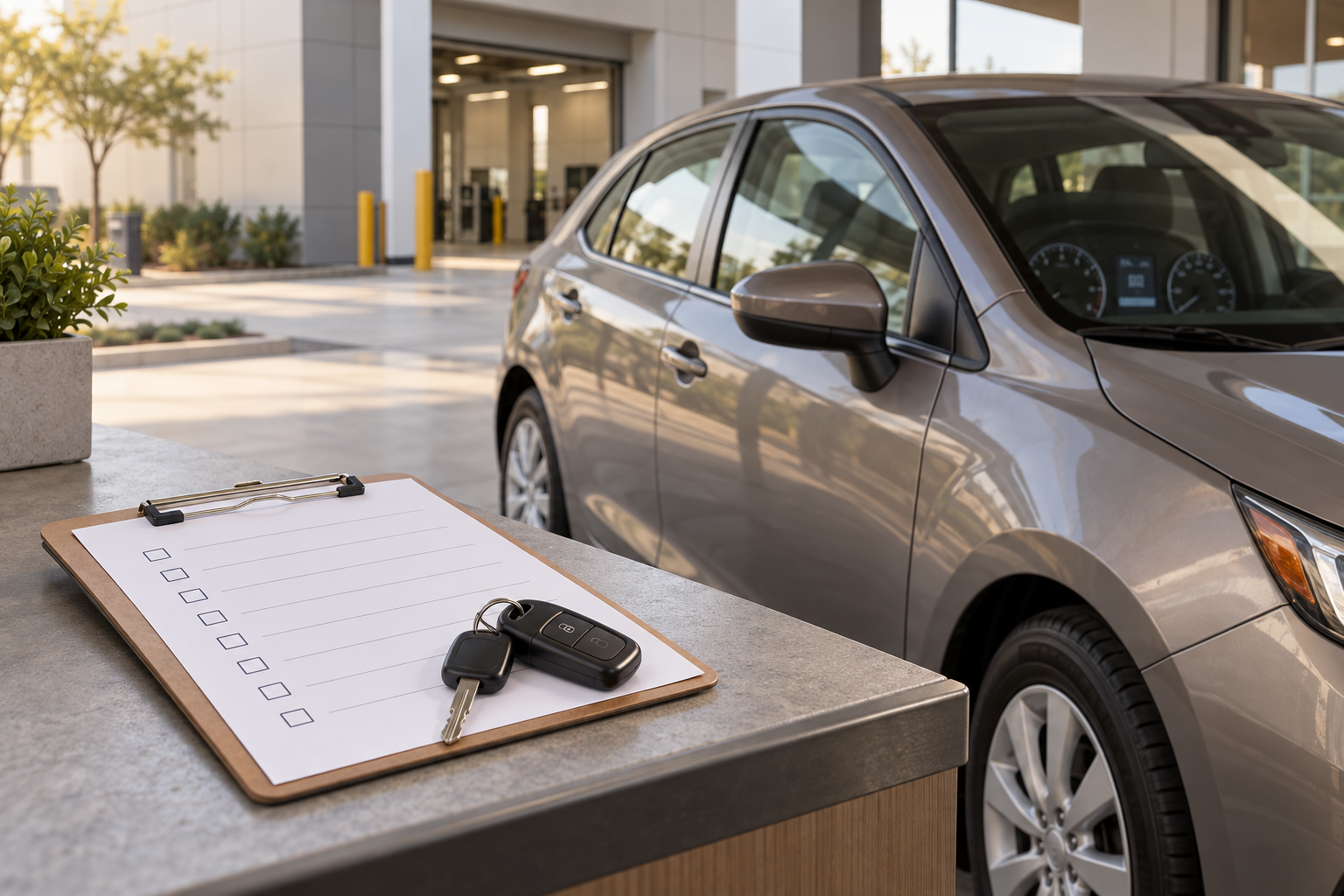
The last lease payment is not necessarily the last car expense. A return can involve mileage or condition charges, a final account balance, and the cost of getting around after you hand over the keys. A car lease end budget helps you see those pieces before the final month squeezes your cash flow.
Your signed agreement and the leasing company’s current instructions control the details. Use this as a planning worksheet, not a promise that any particular fee, waiver, inspection, or purchase option applies to your contract.
Put the dates and contract terms on one page
Find the lease end date, remaining payment dates, vehicle return instructions, and the contact details for the company that holds the lease. Do not assume that dropping a car at a dealership automatically closes your account. Ask the lessor where and how to return it, what proof of return you will receive, and when a final statement is expected.
From the agreement or your account, note the permitted mileage, how excess mileage is priced, condition standards, required equipment, and any end-of-lease or other charges. Also check the rules and deadlines for an early return, extension, or purchase option if you are considering one. Ask for written figures rather than relying on a remembered monthly payment.
Make two calendar reminders: one early enough to gather information and book any required inspection, and another for the return deadline. Keep documents and communications together, but do not put account numbers or personal identifiers in a shared budget note.
Estimate mileage with a conservative range
Write down the current odometer reading and the mileage allowed by your agreement. Add your likely driving until return, including commutes or planned trips. Then calculate:
Projected return mileage − contract allowance = possible excess miles.
If your projected mileage is under the allowance, use zero for possible excess miles; an unused allowance is not automatically a credit. If it is over, multiply the possible excess by the rate in your contract to make a planning estimate. For example, a projection of 20,500 miles against a 20,000-mile allowance leaves 500 possible excess miles. The amount due depends on the actual return reading and contract terms, not on a generic online rate.
Recheck the projection a few weeks before return. Changing a nonessential trip might reduce the estimate, but paying for another way to travel may cost more than it saves. Compare both costs instead of treating the mileage line in isolation.
Inspect the car before paying for repairs
Photograph the exterior, interior, wheels, tires, odometer, and any noticeable damage in good light. Gather keys, manuals, charging cables, and other items that came with the vehicle. Check the contract’s condition guide and ask whether an inspection is available or required, how its findings are communicated, and how disputes are handled.
Do not assume every mark is chargeable or that every repair will prevent a charge. If an issue is identified, compare a written repair quote with the documented potential charge and any insurance deductible or claim consequences that could apply. A repair only makes budget sense if it meets the return standard and its total cost is worthwhile. Keep receipts for work performed.
Plan a small, flexible condition reserve until the final statement arrives. Treat it as reserved money, not a prediction of a bill.
Build the return-month cash map
List amounts and dates separately instead of adding an unexplained “lease exit” number:
- Remaining scheduled payments and any amount already past due.
- Return-related charges stated in the agreement that may apply to your choice.
- A range for excess mileage and condition costs, based on your records.
- Necessary cleaning, transport to the return location, or time away from work.
- New transportation costs: transit fares, temporary rides, insurance overlap, or cash needed for a replacement vehicle.
Suppose your own worksheet shows one remaining payment of 240 currency units, an estimated mileage range of 0–80, a condition reserve of 100, and 60 for travel after return. Reserve 400–480 units for those lines, before any contract-specific return charge. These are illustrative amounts, not typical fees. Add applicable charges from your documents; remove lines that do not apply. Keep normal living bills and an emergency cushion visible beside this total.
Match the payment date, not just the estimated total, to your paydays. A later paycheck cannot cover a charge due this week. Ask the lessor for the current payoff or return process if timing is unclear; do not assume an estimated reserve is the final amount owed.
Compare return, extension, and purchase as separate paths
If your agreement offers choices, request the current written figures and requirements for each one. A return may involve mileage and condition assessment. An extension, if available, may mean more payments and a changed return timeline. A purchase may require a quoted amount plus applicable transaction costs, insurance changes, and future maintenance. Availability and terms vary.
Compare the total near-term cash needed, the monthly cost afterward, and what happens if the car needs repairs. Do not compare a purchase price with only one monthly lease payment. If you need another vehicle, prepare a separate all-in budget for that decision; the pressure of a return date is a poor substitute for checking affordability.
A practical decision rule: do not commit to the next transportation plan until you know the contract’s deadlines, have a written cost range for the current car, and can cover both the transition and your essential bills.
Record the handoff and close the loop
At return, follow the lessor’s instructions, record the odometer reading, take dated photos, and keep a receipt or written acknowledgment showing when and where you handed over the vehicle. Confirm what happens to automatic payments and insurance before changing either; do not cancel coverage or payment arrangements based on a guess. Watch for the final statement and compare each line with the contract, inspection information, payments, and return record. If a charge looks wrong, ask the lessor how to review it and keep a record of the response.
In your spending tracker, categorize actual return costs when they occur. If you had been reserving money in a separate bucket, moving it to pay a bill is not a second expense. Furt Money can help you see the transportation category’s before-and-after pattern, while your contract and receipts hold the evidence for any charge.
Start today with the lease end date, current odometer, and the contact for return instructions. Those three details turn a vague final-month worry into a workable cost and calendar plan.