An allowance budget is not only about giving a child spending money. It is a small practice system for choices, waiting, mistakes, generosity, and tradeoffs.
The useful part is the structure. When allowance is random, every store visit can become a negotiation. When it has a rhythm, a child gets clearer limits and the household budget gets fewer small leaks. The goal is not to make kids perfect with money. The goal is to make money decisions visible enough to learn from.
Decide what allowance is meant to teach
Start with the lesson before you choose an amount. Different families use allowance for different reasons, and the budget should match the purpose.
Allowance can help a child practice:
- Choosing between two wants
- Saving for something that takes several weeks
- Remembering that money runs out
- Giving or sharing in a way that feels intentional
- Separating needs from wants
- Handling disappointment without a rescue purchase
If allowance is tied to basic chores, be clear about what happens when chores are missed. If it is not tied to chores, explain that normal household responsibilities still matter. The money lesson should not turn every family contribution into a transaction.
Pick a weekly amount that fits the household
The right allowance amount is the one your household can repeat calmly. It should be small enough that you do not resent it and meaningful enough that your child can make real choices.
Before setting the number, look at your monthly budget and ask:
- How many children will receive allowance?
- Will the amount be weekly, every two weeks, or monthly?
- Which child expenses will allowance now cover?
- Will you still pay for school needs, gifts, activities, or snacks separately?
- Can you keep paying this amount during tighter months?
A simple test is to multiply the allowance by the number of children and payment dates in a month. If that total feels like a surprise, lower the amount before the habit starts.
Define what allowance covers
Allowance works best when the boundaries are plain. Without boundaries, kids may spend their money and then still ask parents to buy the same extras.
Choose a few categories that allowance covers, such as:
- Small toys, games, or collectibles
- Candy, snacks, or treats outside normal groceries
- App purchases or game credits, if allowed
- Souvenirs on family outings
- Extra accessories, stickers, or craft supplies
- Optional gifts for friends or siblings
Keep essentials outside the allowance unless your child is old enough for that responsibility. School supplies, weather-appropriate clothing, medical needs, and required activity fees should not become confusing tests of whether a child saved enough.
Use simple buckets: spend, save, and share
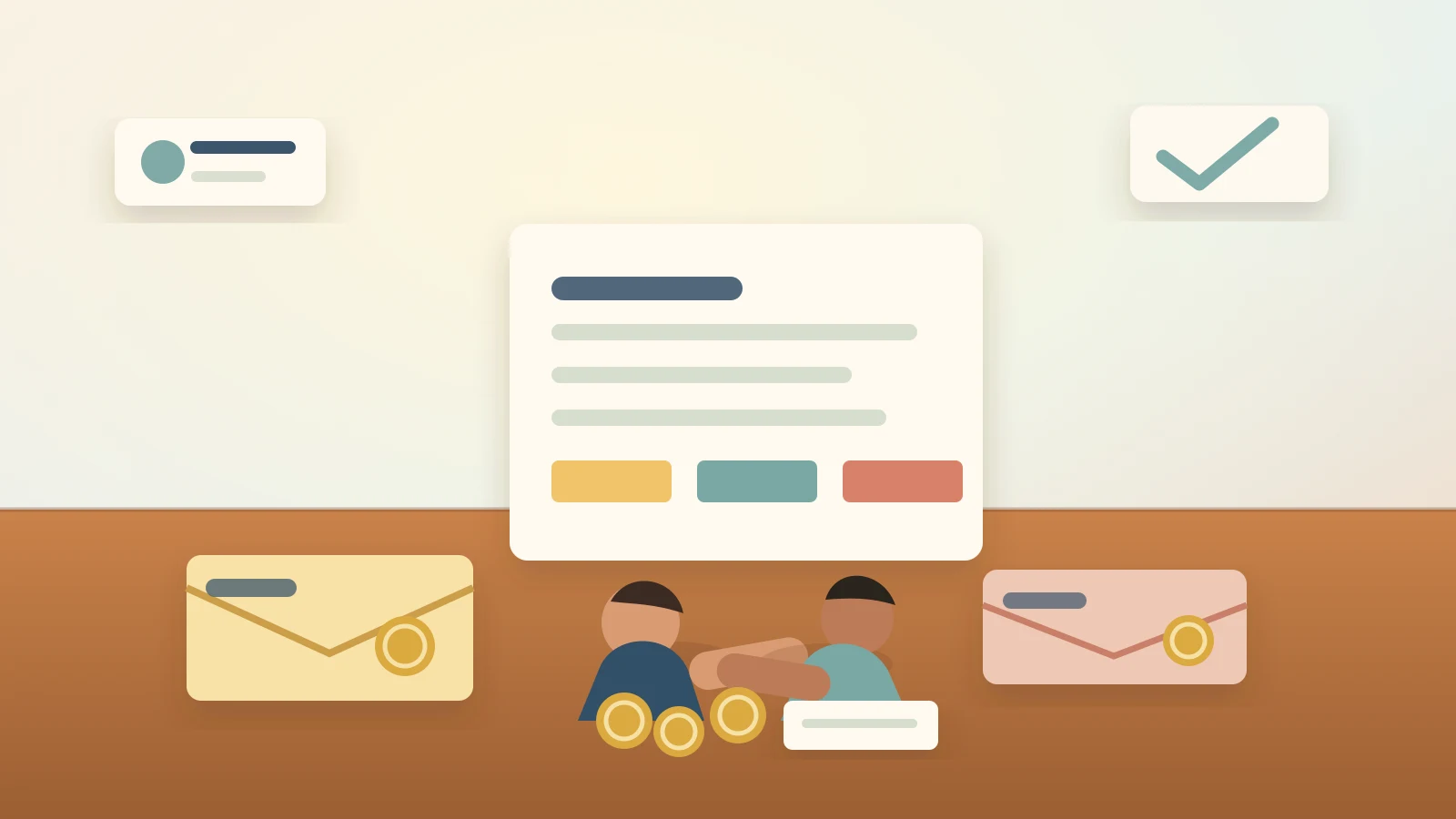
Buckets make allowance easier to understand. You can use envelopes, jars, a notebook, or a kid-friendly digital note. The format matters less than the repeatable habit.
A basic setup:
- Spend: money the child can use soon
- Save: money for a bigger goal
- Share: money for gifts, donations, or helping someone
You do not need strict percentages. For younger kids, a visible split can be enough. For older kids, let them choose the split and talk through the tradeoff. If they put everything in spend, the lesson arrives when a larger goal takes longer. If they put everything in save, the lesson may be that a tiny fun amount helps the habit feel sustainable.
Create a payday routine
Treat allowance payday like a short money check-in, not a lecture. Five minutes is enough.
Try this rhythm:
- Give the allowance on the same day each week.
- Ask what they want to do with it before they spend it.
- Add money to each bucket.
- Update one savings goal.
- Let the conversation end.
The routine is more important than the speech. A child who sees the same money steps every week learns that budgeting is a normal rhythm, not a punishment after overspending.
Let small mistakes stay small
Allowance is useful because the stakes are low. If a child spends everything on the first day and cannot buy something later, pause before fixing it. That uncomfortable moment is often the lesson.
You can still be kind without erasing the consequence:
- “That is frustrating. What would you do differently next week?”
- “Do you want to save for it over the next two allowance days?”
- “Would you rather use your spend money now or keep it for the bigger thing?”
- “Let’s put it on your wish list and check again in a week.”
Avoid turning every mistake into a long talk. A short reflection helps the lesson land without making money feel scary.
Connect allowance to the family budget
Allowance should protect the household budget, not add another blurry category. Add it as a recurring family line item so it is visible next to groceries, transport, school costs, and other child-related spending.
If you use Furt Money, you can create or review a family or kids category and check whether extra requests are still showing up elsewhere. That pattern is useful. If allowance exists but parent-paid treats keep rising, the boundary may need to be clearer.
Review the setup once a month:
- Did allowance reduce small surprise purchases?
- Did the amount feel sustainable?
- Did the child understand what it covered?
- Did you rescue too many spending choices?
- Does the savings goal still feel motivating?
Adjust the system without making it dramatic. Kids grow, prices change, and family routines shift.
Make the next step small
You do not need a perfect allowance philosophy to begin. Choose one amount, one payday, and one rule about what allowance covers. Try it for four weeks before changing anything.
The best allowance budget is boring in the right way: predictable for the child, manageable for the parent, and simple enough to repeat when life is busy.