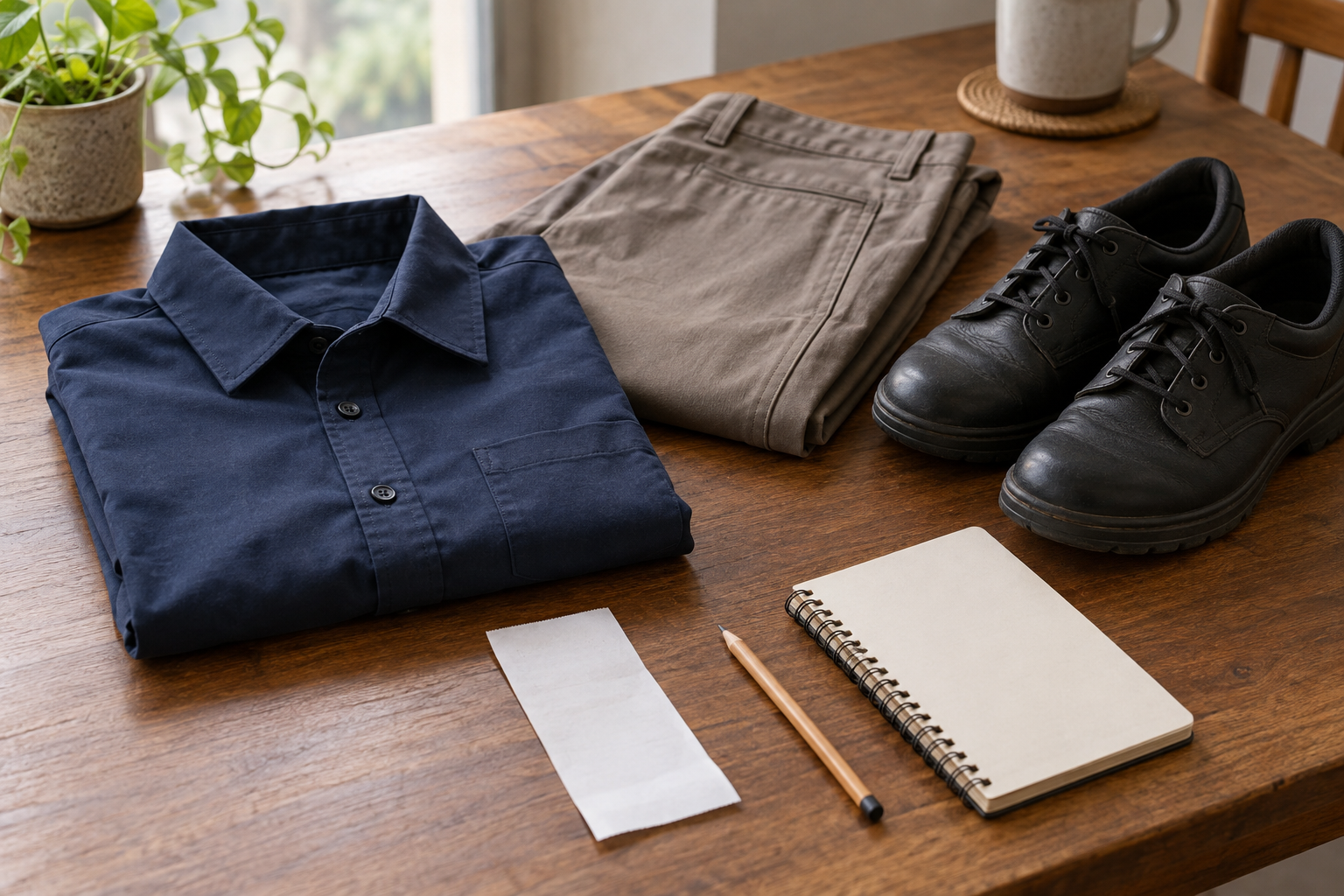
A new job can require spending before the first paycheck arrives. A uniform, approved shoes, or a particular layer may seem like a small detail until you need several clean sets for consecutive shifts. The same costs can return later through washing, wear, and changes in role or season.
A work uniform budget separates what you must have for the first shift from what you will need to maintain over time. It also keeps any employer-provided items or expected reimbursement from being mistaken for cash already in your account. This guide is about planning the expense, not deciding who is legally responsible for it; that depends on your workplace and location.
Confirm the actual requirement before buying
Ask for the current dress or uniform instructions in writing if possible. “Dark shoes” is not the same as a particular slip-resistant specification, and “plain shirt” may have a color, logo, or fit requirement. Check whether the workplace supplies the item, sells it, lets you buy elsewhere, or requires approval of a substitute.
A short list to clarify:
- Which pieces are mandatory on day one, and which are optional?
- How many clean sets are realistically needed for your shift pattern?
- Are footwear or protective items subject to specific standards?
- Are any items issued, loaned, or available secondhand through work?
- If the role or season changes, will the requirement change too?
Do not guess about protective equipment or replace a required safety item with a cheaper lookalike. Ask your employer about the correct item and any applicable provision or payment policy. You can save the budget from a mistaken purchase without compromising safety.
Split the first purchase from the repeat costs
Write two lists. The start-up list covers items needed before work begins: required tops and bottoms, footwear, name badges if you must buy them, and any alteration needed for a workable fit. The repeat list covers laundering, replacement, and items that wear out faster in your actual role. If you already own an approved item, count its new cost as zero, but note when it may need replacing.
For each purchase, record the item, acceptable specification, quantity, expected amount, and deadline. Include delivery or alteration costs only when they apply. Keep optional extras separate from required pieces so a convenient second set does not silently become a supposed day-one requirement.
This is narrower than a general wardrobe budget: the question is not how much you want to spend on clothing overall, but what the job requires and when cash leaves your account. If you are weighing an offer, add this to the other commuting and job-related costs in a job offer budget.
Calculate for your shift pattern, not a generic wardrobe
Suppose, purely as an example, that a workplace requires two shirts at 25 units each, trousers at 40 units, and shoes at 70 units. Your initial outlay would be 2 × 25 + 40 + 70 = 160 units. If you already own approved trousers, the immediate amount falls to 120 units. These are illustrative numbers, not typical prices.
Now test the schedule. If you work several shifts in a row and cannot wash a shirt between them, two may not be enough. A third shirt might reduce rushed laundry or the risk of arriving without a clean uniform. On the other hand, do not buy five sets before you know what fits, what the employer provides, or how often you will actually work.
Choose the smallest practical starter kit, then revisit quantities after a few weeks. Buy to meet a real schedule, not an imagined ideal. If the purchase does not fit the money available before payday, ask the workplace what is provided or whether there is an approved way to phase the purchase; do not assume reimbursement is immediate.
Keep reimbursements separate until they arrive
An employer may provide items directly, reimburse a purchase, offer an allowance, or use another arrangement. Policies and local obligations differ. Confirm which items qualify, any approval or receipt requirement, and the expected payment process before you spend. An allowance may be paid on a different date from the store charge, and an item you choose outside the policy might not qualify.
Track three amounts separately: what you paid, what has been approved for reimbursement, and what has actually been received. For example, a 70-unit shoe purchase remains a 70-unit cash outflow today even if a later 50-unit reimbursement is expected. After that 50 arrives, the net cost is 20 units; until then, the missing cash still matters for rent and groceries. Keep receipts and any approval record where you can find them.
If a deduction from pay or a required purchase seems unclear, ask payroll or the employer for the policy and seek qualified local guidance if necessary. A budget cannot resolve a workplace rights question.
Give laundry and replacement a realistic place
The purchase price is only the first layer. Laundry may add detergent, machine fees, drying time, or an extra trip if you do not wash at home. Shoes and frequently washed clothing also wear out. You do not need a perfect forecast: note what you actually spend for the first month and use it to revise the next one.
For replacement, estimate the cost of one worn item and divide it by the number of pay periods you expect before replacing it. If a 60-unit item lasts about six pay periods, setting aside 10 units each period would cover the next one if that estimate holds. Adjust after observing actual wear; do not treat an example lifespan as a guarantee. If you receive a replacement through work, revise the reserve downward rather than continuing to budget for a purchase you will not make.
Keep required clothing care separate from optional clothing shopping. That makes it easier to see whether a change in shifts, season, or workplace rules is increasing the real cost of the job.
Review the budget after the first few shifts
Once you have worn and washed the items, check what the original list missed:
- Did every item meet the actual requirement and fit well enough for work?
- Did the number of sets work with your shifts and laundry schedule?
- Which costs were reimbursed or supplied, and which are still pending?
- Is anything wearing out faster than expected?
- What must be ready before the next payday or schedule change?
If you track expenses in Furt Money, categorize actual uniform purchases and care costs consistently, then review that category after a few pay cycles. Use the employer’s policy and your receipts for eligibility and reimbursement details; expense categories alone cannot establish what is owed to you.
Start with one concrete action: write the required day-one items beside their payment dates. Once the first shift is covered, add a modest replacement line based on what your work and laundry routine actually demand. A useful work uniform budget is not about buying the cheapest kit at any cost; it is about meeting the requirement without letting the next purchase surprise you.