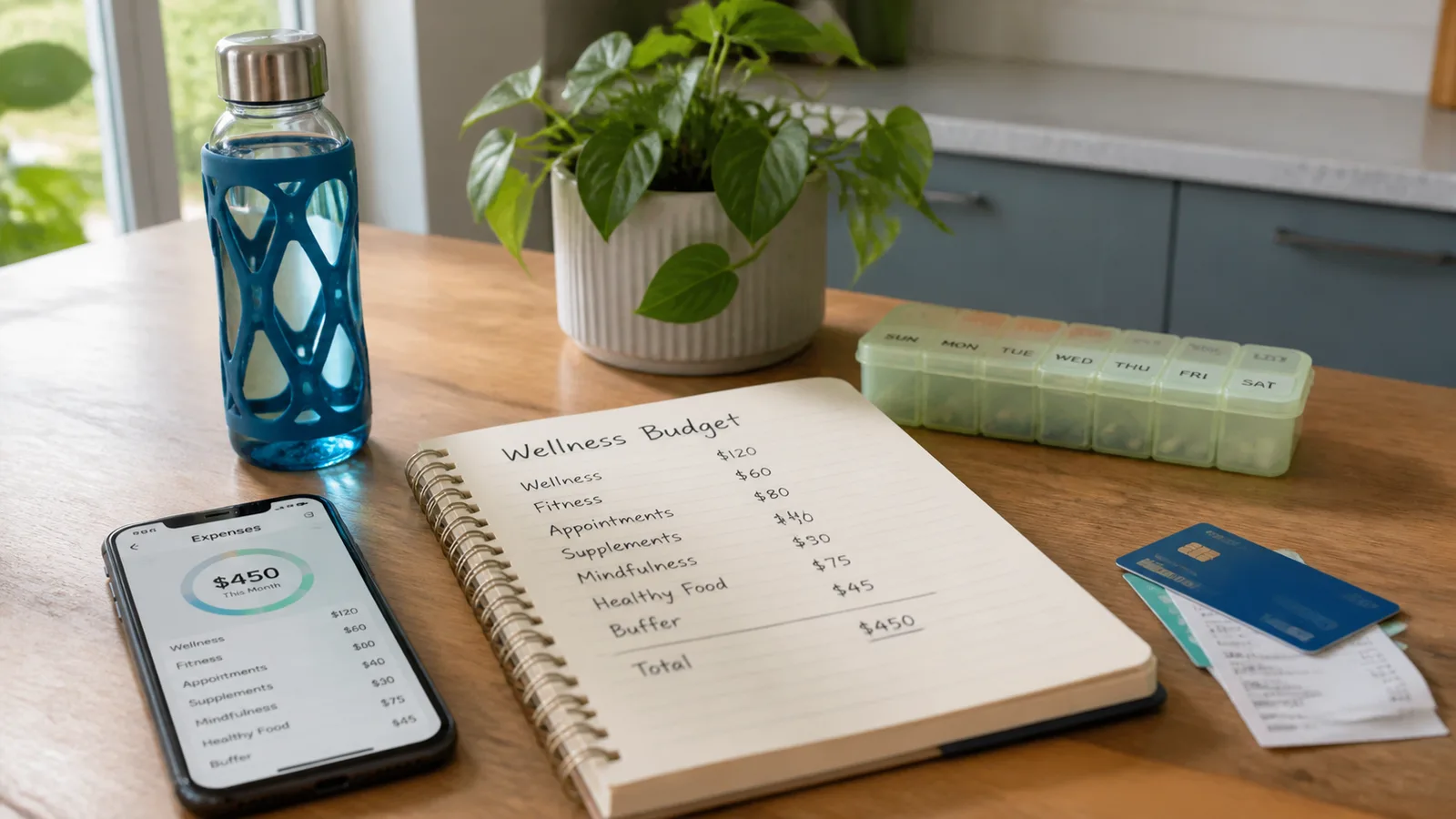
Wellness spending can be hard to budget because it sits between “necessary” and “nice to have.” Some costs protect your health. Some help your energy, sleep, movement, or stress. Some are enjoyable but easy to justify long after they stop helping.
A wellness budget gives those decisions a clearer home. It does not tell you what care, routine, or habit is right for your body. It simply helps you plan the money side with less guilt and fewer surprises.
The goal is not to turn self-care into another strict rule. The goal is to make room for the things that genuinely support your life while keeping everyday cash flow honest.
Define what wellness means in your real life
Start with your actual routines, not a perfect version of yourself. A useful wellness budget reflects what you already do, what you are trying to maintain, and what you reasonably want to add.
Your list might include:
- Routine appointments
- Prescriptions, vitamins, or basic health supplies
- Gym, classes, sports, or home workout gear
- Therapy, coaching, or support groups
- Dental, vision, or personal care costs
- Sleep, recovery, mobility, or stress-reduction tools
- Outdoor time, hobbies, or activities that keep you steady
Not everything on the list needs to stay. The point is to see the full picture before deciding. A scattered set of charges can feel like random spending. A written wellness list helps you ask which costs are essential, which are seasonal, and which are optional.
If you use Furt Money, review the categories where these expenses currently land. You may find wellness charges hiding inside shopping, subscriptions, pharmacy, household, or personal spending. Moving similar costs into clearer categories can make the pattern easier to review.
Separate fixed, flexible, and occasional costs
A wellness budget works better when every cost is not treated the same way.
Fixed costs repeat on a schedule. These might include a membership, appointment plan, regular prescription, or monthly class pass. They belong in the same review rhythm as other recurring bills.
Flexible costs change with use. Examples include drop-in classes, supplements, toiletries, sports fees, recovery tools, or occasional personal care. These need a monthly limit because they can expand quietly.
Occasional costs show up a few times a year. Think eye exams, dental visits, running shoes, sports equipment, annual checkups, or replacing a worn-out item. These are not always emergencies. Many are irregular expenses that can be planned with a small set-aside.
Once the costs are sorted, the budget becomes less emotional. You are not asking, “Do I deserve this?” You are asking, “Is this fixed, flexible, or occasional, and where does it fit?”
Build a baseline before adding more
Before signing up for a new membership, class, product, or routine, know your baseline wellness cost. Look back over the last two or three months and add up what you actually spent.
Include the ordinary costs that are easy to forget:
- Appointment copays or visit fees
- Pharmacy and basic supplies
- Fitness subscriptions or class packs
- Personal care appointments
- Equipment replacements
- Paid apps, programs, or wellness memberships
- Transportation or parking connected to appointments
The number may be higher or lower than expected. Either way, it gives you a real starting point.
If the baseline already strains the month, focus on organizing it before adding anything new. If the baseline is affordable but chaotic, create clearer categories. If the baseline is lower than you want, decide which one addition would help most instead of adding several at once.
Use a one-in, one-review rule
Wellness spending often grows through good intentions. You buy a course, join a gym, try a meal service, download an app, book a package, and tell yourself each one is an investment. Some may be worth it. Together, they can crowd the budget.
Use a one-in, one-review rule: before adding a new recurring wellness cost, review the current ones.
Ask:
- What am I already paying for?
- Do I still use it?
- Does it support a real routine, or only an imagined one?
- Is there a lower-cost way to meet the same need?
- What category will this new cost reduce if income stays the same?
This rule is not about saying no to care. It is about preventing overlap. If you already pay for a gym you rarely use, a second paid fitness app may not solve the problem. If a class helps you show up consistently, it may deserve room even if something else needs to pause.
Create a small wellness buffer
Some wellness costs are predictable in category but not in timing. You may not know exactly when you will need a new pair of walking shoes, a dental cleaning, replacement contacts, a specialist visit, or a home care item. You can still plan for the category.
Create a small wellness buffer inside your budget. This can be a separate savings bucket, a sinking fund, or a line item that rolls forward when unused.
Start with an amount that does not make the rest of the month fragile. Even a modest buffer can reduce the chance that a routine expense lands on a credit card or crowds groceries.
Use the buffer for costs that support health and maintenance, not every impulse with a wellness label. A helpful test is:
- Did I expect this type of cost eventually?
- Does it replace, maintain, or support something I already use?
- Would I still choose this if it came from my normal spending money?
If the answer is unclear, pause before using the buffer. The pause protects the money for the moments it was meant to handle.
Decide what is worth paying for twice
Sometimes the cheapest option is not the best budget decision. A free workout plan you never follow may be less useful than a paid class you attend weekly. A lower-cost product that needs constant replacement may cost more over time than a durable one. A faraway appointment may save money on the bill but cost extra in transport, time, and stress.
That does not mean expensive is better. It means the decision should include real-life use.
For each meaningful wellness cost, ask:
- How often do I actually use this?
- Does it reduce a bigger cost, stress, or problem later?
- Is it helping a current priority or an old version of my life?
- Would a simpler option work nearly as well?
- Can I try it for one month before committing longer?
This helps you keep spending aligned with behavior. The best wellness budget is not the most impressive one. It is the one you can repeat.
Review the category without guilt
At the end of the month, review wellness spending like any other category. Look for information, not shame.
You might notice that appointments were higher because you caught up on care. You might see that fitness spending is fine, but personal care is drifting. You might find unused subscriptions, duplicate products, or one-off purchases that belong in a separate category next time.
Use three simple labels:
- Keep: it supports your life and fits the budget.
- Adjust: it matters, but the amount or timing needs work.
- Pause: it is not useful enough right now.
If you track expenses in Furt Money, compare the category with other flexible spending. Sometimes wellness feels expensive only because it is visible, while dining out, shopping, or convenience spending is less organized. Seeing the full pattern makes tradeoffs calmer.
Start with one practical change
A wellness budget does not need a complete life overhaul. Start with one step that makes the next month clearer.
You could list every recurring wellness charge, create a small buffer, schedule one overdue appointment, cancel one unused plan, or move health and self-care purchases into cleaner categories.
The useful question is simple: what would make this part of your budget easier to see next month?
Pick that change first. When wellness spending is visible, planned, and reviewed without guilt, it becomes less like a vague promise to take care of yourself and more like a practical part of your money plan.