A water bill that suddenly looks too high can make the entire month’s plan feel unreliable. Before cutting other spending to cover it, find out what changed. A higher total might reflect more water used, a longer billing period, a different charge, or a correction from an earlier estimate. A water bill spike checklist turns the surprise into a few questions you can actually answer.
Check what the bill is measuring
Put the new statement next to the previous one. Note the service dates, number of days covered, meter readings, usage units, total due, and each separate charge. Compare like with like: a bill covering more days may be larger even if daily use stayed steady. Divide the billed usage by days covered for each period to get a rough daily comparison.
Look for labels such as estimated, actual, or adjusted readings, if your provider uses them. A catch-up bill after estimated readings can look like a sudden jump without all the extra use happening this month. Do not assume that is the explanation; ask the provider what dates and readings the correction covers. Also check for a previous balance, late charge, or one-time fee before treating the full total as new water use.
Separate usage changes from price changes
If the bill lists water usage separately from fixed service, wastewater, taxes, or other charges, compare those lines one at a time. Did the amount of water increase, did a charge change, or both? Your statement and provider’s published rate information are the sources to check for the rules that apply to your address; charges vary by provider and location.
For example, suppose one 30-day bill shows 9 usage units and the next 30-day bill shows 13 units. The change is 4 units, about 44% above the earlier usage. That does not prove a leak or tell you how much of the price difference comes from usage. It simply tells you where to investigate next. If the billing periods differ, compare usage per day instead, and make sure the units are the same.
Reconstruct the household’s recent use
Think back over the dates on the statement rather than only the day it arrived. Extra guests, more time at home, outdoor watering, cleaning, or a change in household routine can alter water use. Write down any plausible changes and their dates. A small note now is more useful than relying on a vague memory during a call later.
If you track expenses with Furt Money, categorize the bill consistently and review it beside previous utility spending. That shows the cash-flow impact, but an expense total alone cannot tell you whether the meter or provider’s calculation is right. Keep the actual bills handy for that comparison.
Check for an unexplained flow safely
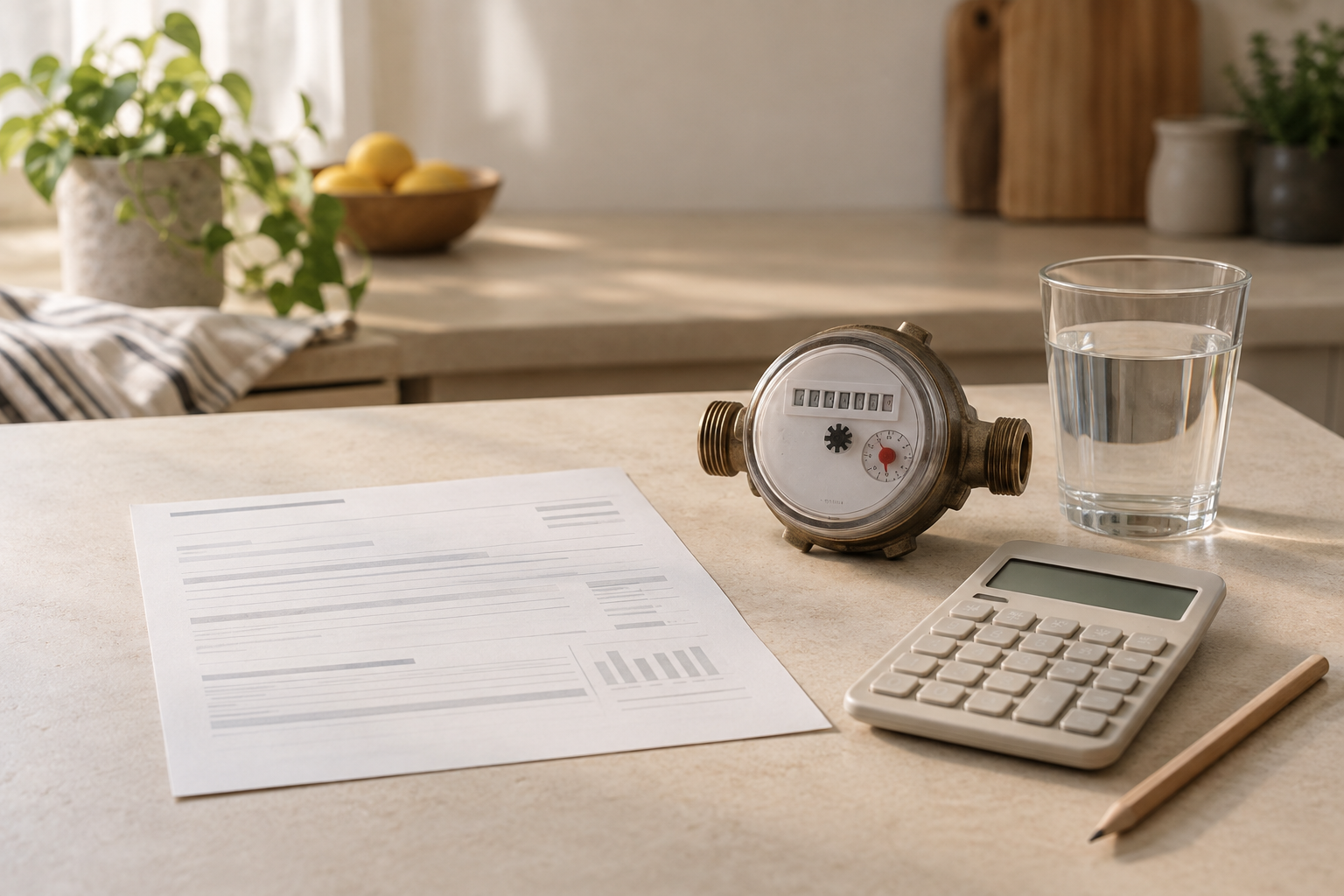
If usage rose and you cannot account for it, look for obvious running taps, toilets that keep refilling, damp areas, or equipment left on. If your meter is safely accessible and you know how to read it, note the reading and check it again after a short period with no intentional water use. Avoid touching equipment you are not authorized to handle. A changing reading may warrant a closer look, but meter displays and shared building systems differ; do not diagnose a leak from one quick check alone.
Report suspected building or plumbing problems to the responsible landlord, property manager, or qualified professional as appropriate. If water is actively causing damage, prioritize the immediate safety and repair issue over the budget exercise. Keep dated photos and notes when useful for follow-up.
Ask the provider a specific question
If the figures still do not add up, contact the water provider through a verified channel shown on a statement or its official site. Have the account’s billing dates and readings in front of you. Ask which reading was used, whether it was estimated or corrected, how the usage and charges were calculated, and what the provider’s process is for reviewing a possible error. Request a case or reference number if one is offered.
Do not assume a dispute pauses a due date or guarantees an adjustment. Ask explicitly what amount is due while the question is reviewed and what options exist if you cannot pay the full bill on time. Rules and assistance differ by provider; use the answer you receive for your account, not a generic promise from a checklist.
Protect cash flow while you investigate
Place the bill on your cash flow calendar with its actual due date. Separate the amount you can cover now from any amount under review; do not count a possible credit as available cash until it is confirmed and posted. If the bill is genuinely higher because household usage changed, revise the next budget with the new evidence rather than assuming every future bill will match this one.
A small utility cushion can help absorb variable bills over time. Estimate it from several of your own past statements, including high-use periods, and adjust gradually as you learn your pattern. Keep planned bill money separate from an emergency fund, and avoid a rigid savings target that would squeeze essential payments today.
Make the next bill easier to understand
Save the two statements and a short note of what you found: usage, days, reading type, new charges, and any provider response. When the next bill arrives, compare the same fields again. If the spike disappears, your notes can help explain whether it was a one-off correction or a change you addressed. If it continues, you have a clearer record to bring to the next conversation.
Start with one action: compare the current and previous billing dates and usage units. That small check tells you whether to investigate household use, ask about a charge, or question a reading—before you rewrite the whole month’s budget.