A road trip can make food spending hard to notice. A drink at the first stop, a quick lunch because everyone is hungry, snacks for the car, dinner after a late arrival, and extra groceries at the destination can all come from different places in your budget. None has to be extravagant to add up.
A road trip food budget is not a rule that you must pack every meal. It is a plan for which meals you will bring, which ones you will buy, and how much flexibility you want on the road. Make those choices before hunger and fatigue are doing the planning.
Count meals, not just travel days
Start with the trip schedule. A three-day trip can contain very different food costs depending on when you leave, when you return, and whether your lodging has a kitchen.
For each travel day, note:
- how many people are eating and whether anyone needs different food
- which meals happen at home, in transit, or at the destination
- whether you can store or prepare food safely
- where a restaurant meal is part of the experience
- long stretches when an unplanned stop is likely
For example, leaving after breakfast and arriving before dinner may mean packing one lunch and buying one evening meal. Leaving at dawn and arriving late may mean planning for every meal plus a snack. Count the actual meals first; a daily allowance becomes more useful once you know what it has to cover.
Separate the food plan into four buckets
A single “food on the road” number makes it easy to spend the grocery money on convenience stops. Give each type of spending a place:
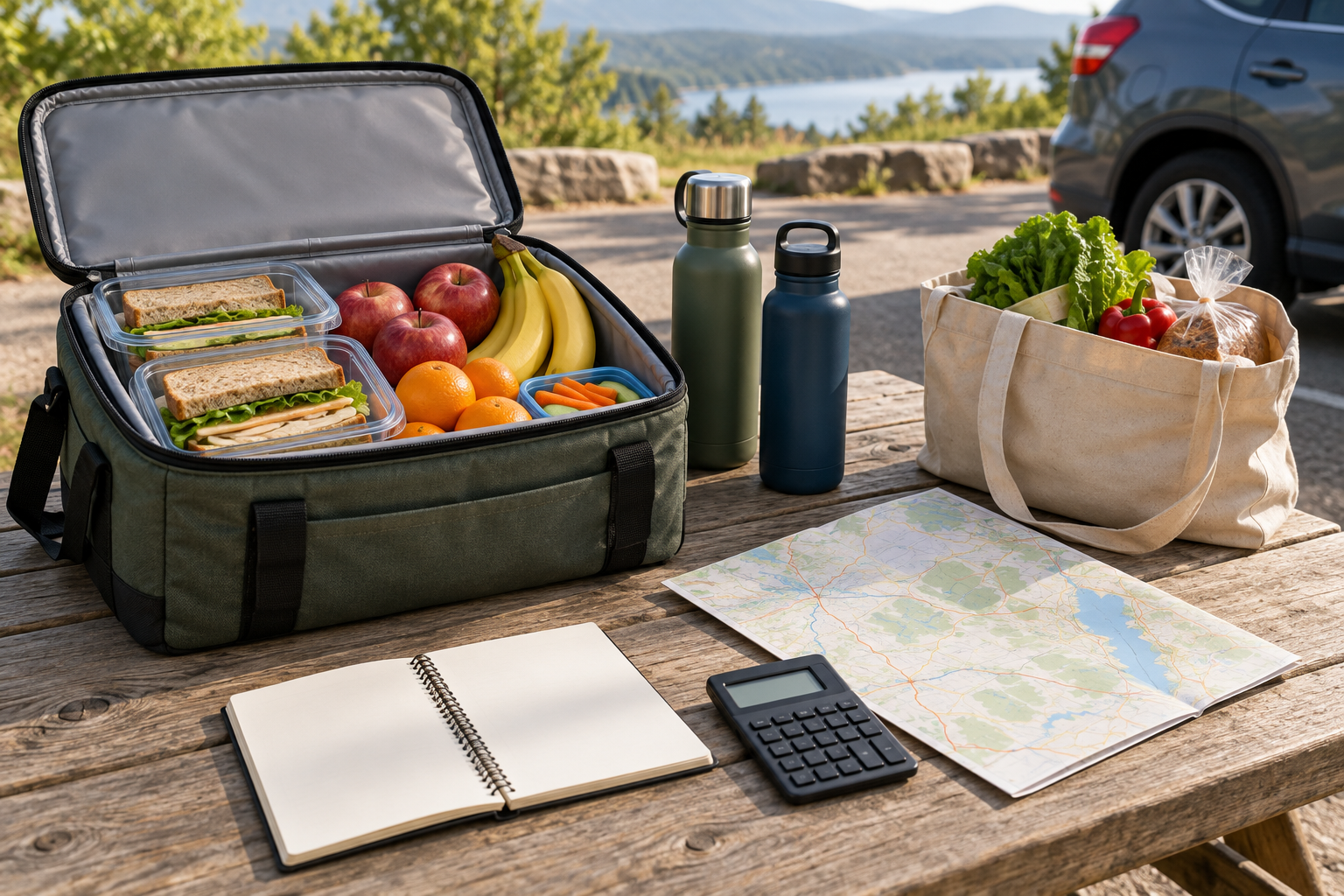
- Packed food: ingredients or prepared items you can bring from home without buying more than you will use.
- Roadside purchases: drinks, snacks, coffee, and quick meals at stops.
- Planned meals out: a restaurant, local specialty, or meal when cooking would be impractical.
- Arrival and return food: groceries for the first night, a meal after a late arrival, or something simple when you get home.
Do not count groceries twice. If you would normally buy the same ingredients for meals at home, decide whether the trip replaces ordinary grocery spending or adds to it. A separate list for trip-only items—such as ice, disposable supplies, or food that will not be used later—helps you see the real extra cost.
Set a working limit with one example
Use numbers that fit your own prices and group size. Here is a fictional example in money units, not a price guide: two travelers plan a two-day drive and set aside 120 units for food. They assign 35 to packed groceries, 25 to roadside stops, 45 to two planned meals out, and 15 as a buffer. The categories add up to 120.
Before committing, ask what happens if a planned meal costs more. Could you use some of the buffer, replace a restaurant meal with groceries, or choose a simpler stop? If not, the starting limit may be too tight. The buffer is there for a delay or a genuinely different day, not as permission to ignore the other buckets.
For a longer journey, multiply the meals you expect rather than blindly multiplying a daily number. A day with a cooler and a kitchen will probably have a different plan from a day spent on the highway. Refresh the estimate when the route, number of travelers, or lodging changes.
Pack food that will actually get eaten
Packing saves nothing if the food spoils, is awkward to eat in the car, or comes home untouched. Choose food around the route and your storage options, not an idealized version of the trip.
A short packing check can include:
- drinking water and refill opportunities
- easy-to-eat snacks that fit your group
- one reliable meal for the first long stretch
- a cooler or suitable storage if you are carrying perishable food
- napkins, reusable utensils, and a way to handle waste
- dietary needs that may be difficult to meet at an unfamiliar stop
Follow appropriate food-safety guidance for anything perishable; do not keep it simply because it is cheaper than buying another meal. If safe storage is limited, plan to purchase a meal instead. Budgeting should make the trip easier, not create another problem.
Make a rule for stops without removing the fun
Road trips often include the pleasure of stopping somewhere unexpected. Reserve room for that on purpose. You might plan one restaurant meal each day, one favorite bakery stop, or a fixed roadside-snack allowance for the whole journey. Pick the version that matters to your group.
Before buying at a stop, ask whether the purchase replaces a meal already in the plan or adds another one. If lunch is packed but a café looks worthwhile, the café can become the planned meal and the packed food can be saved for later if it remains safe to eat. The question is not “Am I allowed to buy this?” It is “Which part of the plan pays for this, and what changes afterward?”
Agree on shared purchases before one person pays. If travelers have different budgets, not every coffee, snack, or restaurant order needs to be split equally. Decide which food costs are shared and which are personal so the food budget does not turn into a reimbursement argument.
Watch the first day and adjust early
The first travel day reveals whether your assumptions were realistic. Keep the review light: note what was packed, bought, and left uneaten. Then compare it with the remaining food money and remaining meals.
If the roadside bucket is nearly gone, you might refill water where practical, bring snacks from the next grocery stop, or swap a planned meal out for a simpler option. If the packed food was not used, buy less for the return drive rather than repeating the same grocery list. If a delay creates a real extra meal, use the buffer and update the rest of the trip.
You can categorize trip groceries, roadside snacks, and meals out in your expense tracker and review the pattern afterward. Furt Money can help you see where spending went; it cannot know which stops were worth it to you. A short note beside a surprising purchase makes the next road trip estimate more useful.
Close the trip without hiding the last meal
Once home, add the return-day food, leftover groceries, and any shared amounts still owed. Compare the total with the four buckets, not just the original limit. Maybe you spent less at restaurants but more on stop snacks; maybe the cooler kept the first day simple but was unnecessary on the return. Those are useful observations, not grades.
For your next trip, keep one practical note: which meal or stop did you underestimate? Then adjust that one line before reusing the plan. A road trip food budget works best when it leaves room for a good meal and still lets you come home knowing what the journey cost.