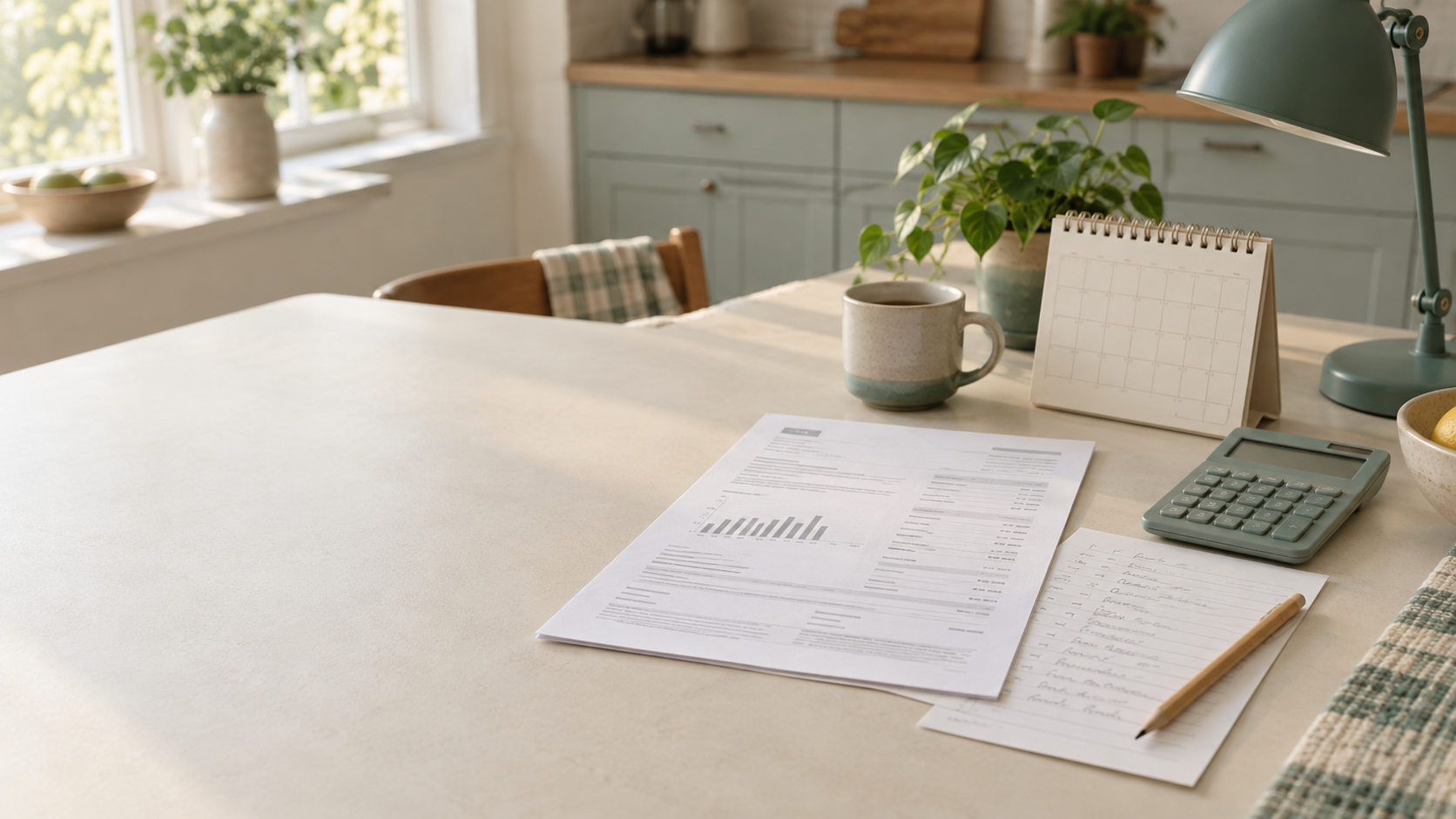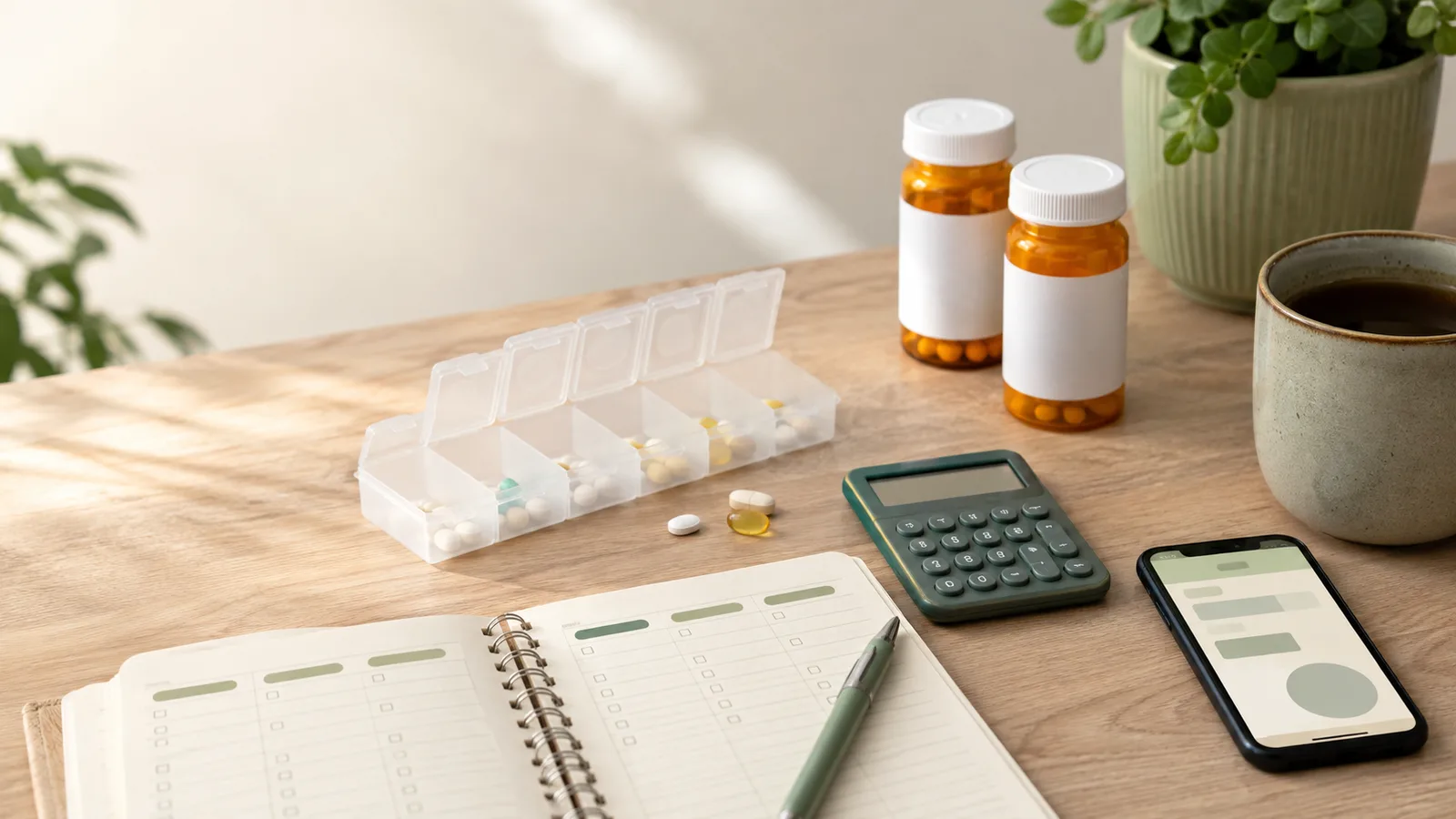
Prescription costs can be hard to budget for because they rarely feel like one clean monthly bill. One refill renews every 30 days, another comes in a larger supply, a family member needs something unexpected, and the pharmacy trip also includes small health items you did not plan to buy.
A prescription budget gives those costs a clear place before they blend into groceries, card spending, or vague “health” expenses. It does not replace medical guidance, insurance information, or advice from a pharmacist. It simply helps you see the money side of recurring medication and pharmacy spending with less stress.
The goal is practical: know what refills are coming, keep enough cash available, separate predictable costs from surprises, and review the pattern often enough that pharmacy spending stops catching you off guard.
Start with your refill list
Begin by listing the prescriptions, recurring over-the-counter items, and health supplies your household already uses. Keep the list simple and practical. You do not need sensitive medical details in a budget if you do not want them there. A nickname, category, or initials may be enough.
For each item, write down:
- Who the item is for
- How often it is usually refilled or replaced
- The usual pickup, delivery, or mail-order timing
- The payment method normally used
- The approximate amount you actually pay
- Any item that changes often or needs extra attention
This list is not about tracking health conditions. It is about preventing a common budgeting problem: forgetting a predictable cost until the pharmacy says it is ready.
If you manage money with another adult, decide what level of detail feels comfortable. Some households may want a shared refill calendar without naming every medication. Others may want one complete list because one person handles pharmacy logistics. Choose the version that protects privacy and helps the bill get paid on time.
Separate predictable refills from pharmacy extras
Many people underestimate pharmacy spending because prescriptions are not the only thing bought at the pharmacy. A planned refill may sit in the same receipt as pain relievers, cold medicine, first-aid supplies, skincare, snacks, greeting cards, or household items.
That can make the budget messy. If the full receipt gets recorded as medication, health costs look inflated. If it gets recorded as groceries or shopping, prescription costs disappear.
Create two simple buckets:
- Prescription and planned health needs
- Pharmacy extras
The first bucket is for refills, regular supplies, and expected health items. The second bucket is for everything else purchased during the same trip. You do not need perfect detail for every receipt, but separating these two buckets helps you see whether the pressure is coming from recurring care or from convenience purchases around it.
If you use Furt Money to review categories, this is a useful place to keep labels consistent. A recurring refill should land in the same category each time, while a snack or household purchase should not hide inside the healthcare line just because it was bought at a pharmacy.
Build the monthly baseline
Once you have the refill list, turn it into a monthly baseline. This is the amount you expect to spend in a normal month before anything unusual happens.
Start with the refills that happen every month. Then add items that arrive less often by spreading their cost across the months they cover. For example, if something usually costs 60 and lasts three months, the monthly baseline is 20. You may still pay the full 60 when the refill happens, but the budget has been making room for it along the way.
Do the same for predictable supplies such as test strips, contact lens solution, allergy items, first-aid restocks, or regular supplements if they are part of your household spending. Keep the categories broad enough that the plan stays usable.
Your first baseline does not have to be exact. It only has to be more realistic than guessing. After one or two months of actual spending, adjust the number based on what happened.
Plan for timing, not just totals
A monthly prescription budget can still fail if the timing is awkward. Three refills might land in the same week, or a larger refill may hit right before rent, childcare, or a credit card due date.
Make a refill calendar for the next month or pay cycle. Add:
- Expected refill dates
- Delivery or pickup windows
- Card or account used for payment
- Large refills that need cash set aside early
- Appointments that may create new prescriptions
- Any travel dates that require planning ahead
The timing view is especially helpful for households with multiple prescriptions or irregular income. It lets you decide whether to move money into a healthcare category after payday, keep a small checking account buffer, or shift other flexible spending before the pharmacy charge arrives.
Do not wait for every amount to be final. If a refill is likely, place a conservative estimate in the calendar and update it when the charge is clear.
Create a small pharmacy buffer
Even a careful prescription budget needs a buffer. Medications can change, a refill can cost more than expected, a pharmacy may not have the usual supply, or a short-term illness can add extra health purchases.
Choose a small amount that sits inside your healthcare budget for pharmacy surprises. This is separate from a large emergency fund. It is for ordinary bumps that are too small to be treated like a crisis but too common to ignore.
A useful buffer rule might sound like this:
“Keep one modest pharmacy cushion available for unexpected refills, short-term medicine, delivery fees, or health supplies. Refill the cushion after it gets used.”
The exact amount depends on your household, income rhythm, and recurring needs. The important part is the habit. A visible buffer helps you avoid pulling every surprise from groceries, savings, or a credit card balance.
Review insurance and discount details carefully
Prescription prices can depend on insurance rules, pharmacy networks, discount programs, generic availability, refill timing, mail-order options, and other details that vary by person and location. Because those details change and can be plan-specific, avoid building your budget around assumptions.
Instead, build a review step:
- Check the amount you paid last time.
- Keep receipts, app records, or pharmacy account history where you can find them.
- Ask the pharmacy or insurer about unclear charges.
- Compare options only when you can verify the actual terms that apply to you.
- Revisit the budget when your insurance, doctor, dosage, or pharmacy changes.
This is also where a note can help. If a refill usually costs one amount but sometimes changes, record what caused the change if you know it. Over time, the notes may show whether the issue is timing, supply, insurance processing, a one-time medication, or a recurring pattern.
Keep the budget private but usable
Health spending can be personal. A good budget should help without exposing more information than necessary.
If you share a household budget, you can use privacy-friendly labels such as:
- Monthly prescriptions
- Pharmacy refills
- Health supplies
- Family medication
- To review
The label should make the spending easy to manage, not turn the budget into a medical record. If a more detailed note is needed, keep it somewhere appropriate and secure rather than placing sensitive information in a shared money category.
For solo budgeting, the same idea applies. You may know exactly what every item is, but future-you still needs a clear category. Use names that make review easy without adding clutter or anxiety.
Make refills part of the regular money routine
Prescription spending becomes calmer when it joins the normal budget rhythm. You do not need a separate financial system for it. Add a few repeatable steps to the routine you already use.
Once a week, check:
- Which refills are due soon
- Whether any pharmacy charge is pending
- Whether a receipt needs to be split into health and non-health spending
- Whether the pharmacy buffer needs to be rebuilt
- Whether a new recurring item should be added to the baseline
Once a month, compare planned prescription spending with what actually happened. If the gap was small, leave the budget alone. If the gap keeps repeating, adjust the baseline instead of treating the same surprise as new every month.
This is where expense tracking earns its place. The value is not in judging every purchase. It is in noticing which costs are predictable enough to plan for.
Give the next refill a job
A prescription budget is a practical way to bring recurring healthcare costs into the same calm plan as rent, groceries, savings, and bills. Start with your refill list, separate planned health needs from pharmacy extras, build a monthly baseline, and keep a small buffer for ordinary surprises.
For your next step, choose one upcoming refill and give it a clear place in the budget today. Add the expected date, the usual cost, and the category it should land in. One planned refill is enough to start making the whole pattern easier to see.