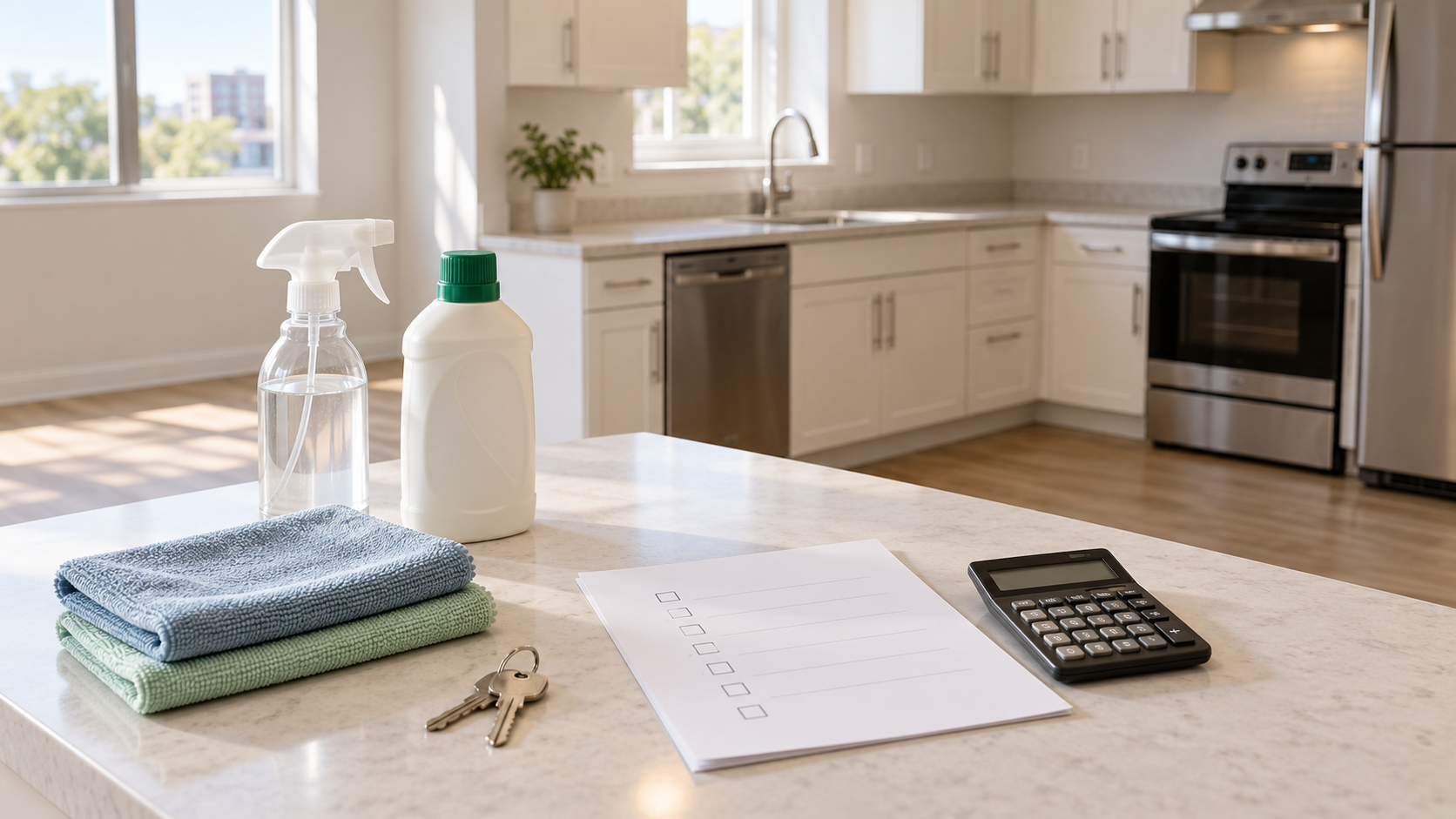
A move has a way of turning cleaning into a last-minute expense. You might need supplies, a rented machine, an extra day of access, or help with the work—at the same time that you are paying for transport and a new place. A move-out cleaning budget helps you compare realistic options before the final week gets crowded.
Cleaning well does not guarantee a particular security-deposit refund. Your agreement and local rules determine what is expected and how charges are handled. This guide is about planning the work and its cash cost, not deciding what a landlord may deduct.
Start with the actual handover requirements
Read your lease, move-out instructions, and any written checklist from the property manager. Note the handover date, access hours, areas you are responsible for, and whether an inspection is offered. Ask for clarification in writing if a request is vague. Do not buy a specialty service because someone else’s move-out checklist says every renter needs it.
Walk through the home before moving day and list the jobs you can see: appliances, cabinets, bathroom fixtures, floors, windows you can safely reach, and any storage space included in the handover. Separate ordinary cleaning from damage or repairs. They may involve different work, different people, and different costs. Keep any move-in condition record handy so you can compare rather than guess.
Put DIY and hired help on the same footing
For a do-it-yourself plan, add the supplies you do not already own, equipment rental if needed, transport for supplies, safe disposal where applicable, and enough time after furniture is gone. If the property is large or you cannot safely do part of the work, name that limitation instead of assigning your time a fictional zero cost.
For professional help, request a written quote that identifies rooms, tasks, exclusions, estimated duration, supplies, travel charges, cancellation terms, and the payment date. Ask whether an empty property or a particular access window is required. A general clean, an appliance deep clean, and carpet work are not necessarily the same service. Compare like with like, and check the provider’s actual terms rather than assuming a quoted package covers your entire list.
A hybrid plan may be the best fit: handle routine surfaces yourself and hire help for a clearly defined job. Avoid paying twice for the same room because two separate providers assumed the other was covering it.
Make a simple cost ceiling before booking
Suppose your own supplies would cost 25 units, equipment rental 30, and a reachable one-off job quoted by a specialist 75. That hybrid plan totals 130 units before any transport or access cost. A whole-home quote of 160 units is only 30 units higher if it includes the same work and no required add-ons. These numbers are illustrative arithmetic, not typical prices.
Use your own quotes and receipts. Set a cleaning ceiling that leaves room for the rest of the move, then list each option’s included tasks, due date, and any extra you would still do yourself. If the ceiling is too tight, prioritize the written requirements and the work you can do safely; ask the relevant property contact about unclear expectations rather than buying an unnecessary package.
Schedule cleaning around an empty space
A cleaning plan can fail on timing even when its price fits. Decide when large items leave, when the cleaner or equipment can arrive, and when keys must be returned. Check whether utilities will still be available if the work requires water or electricity. If you are hiring, confirm access arrangements and what happens if the movers run late.
Leave a short buffer for a final walk-through and photos. Keep personal documents and valuables out of the work area. Do not attempt unsafe high-reach cleaning or use unfamiliar chemicals just to avoid a small charge; use an appropriate professional where needed.
Keep the deposit and the cleaning bill separate
Pay for cleaning from cash you can actually use, not from an expected deposit return. A refund can arrive later, be smaller than expected, or remain under review. Record the cleaning invoice and payment now; track the deposit’s status separately. If a provider charges after the move, reserve that amount in the next pay cycle rather than treating it as free money in the current one.
Save your quote, itemized receipt, written instructions, and dated photos of the finished space. These records help you reconcile what you paid and respond to questions, but they do not promise a refund. For a dedicated refund workflow, see the security deposit return checklist.
Close the move-out category after handover
Once keys are returned, compare your planned cleaning ceiling with actual payments. Include supplies, hired labor, equipment, and any extra transport once—do not count a credit-card payment as a second cleaning expense after you have recorded the purchase. If you use Furt Money, categorize the posted expenses and review the moving-related pattern; keep quotes and condition photos in a separate private folder.
Write down one useful lesson for the next move: the amount of time you needed, the tasks that required help, or a service that was not worth booking. Your next step today is to read the move-out instructions and price only the tasks they and a walk-through show you actually need. That small list makes the last week easier to budget.