Food spending is one of the easiest parts of a budget to underestimate. Groceries feel responsible, takeout feels temporary, snacks feel small, and a few tired weeknights can turn a reasonable plan into a confusing total.
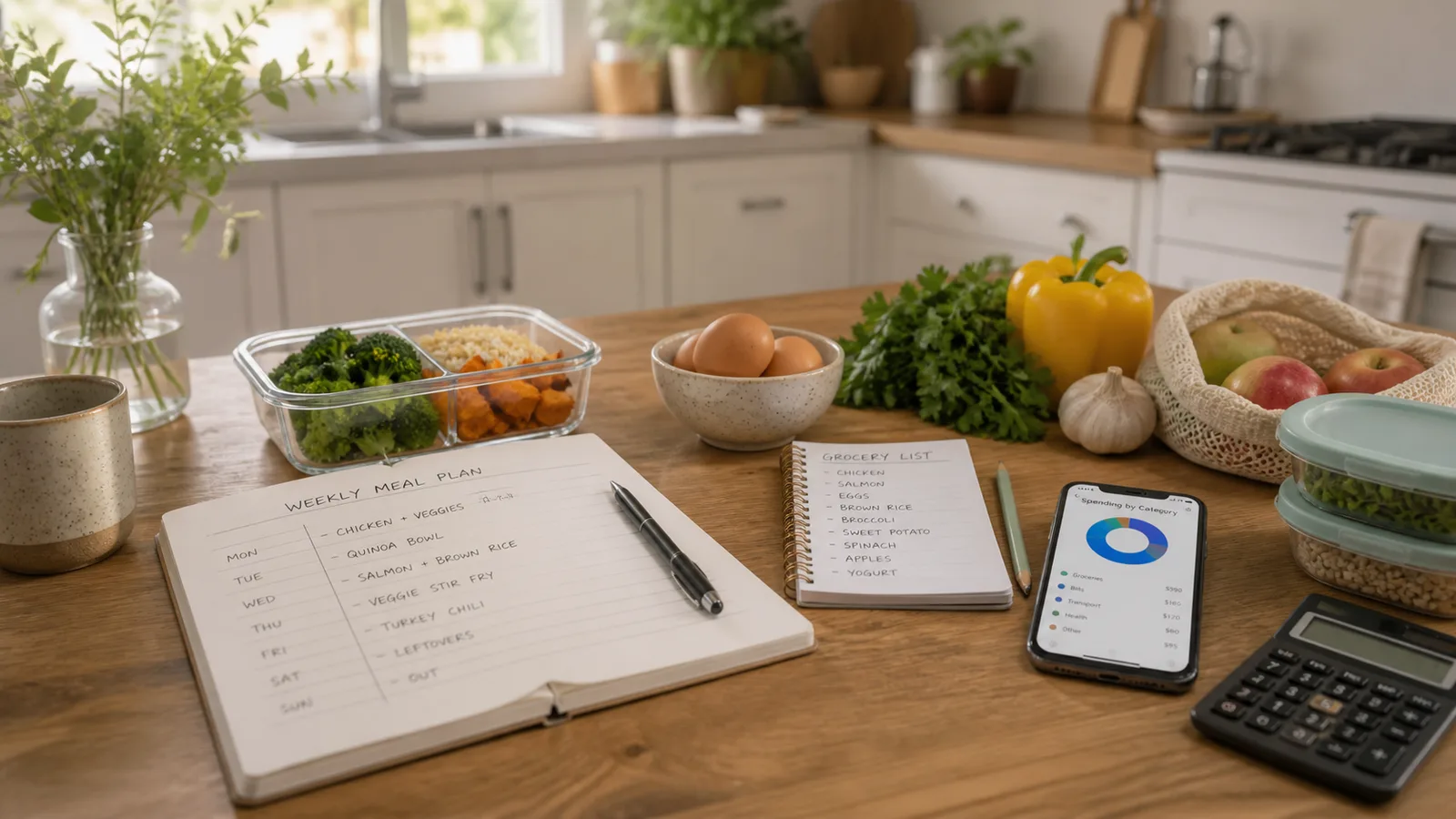
A meal plan budget gives food spending a structure without turning every dinner into a rule. The goal is not to cook perfectly or never order in. The goal is to make groceries, leftovers, convenience meals, and restaurants work together instead of competing for the same money.
Start with your real food week
Before making a new plan, look at how food actually happens in your life. A useful meal plan budget starts with your schedule, energy, and habits, not with an ideal version of the week.
Ask:
- Which nights are usually rushed?
- Which days do you already have food at work, school, or home?
- How many meals do you realistically cook?
- When do groceries spoil or get forgotten?
- Which takeout or restaurant meals are planned, and which happen because there was no backup?
- What meals do people in your home reliably eat?
This step prevents the most common meal planning mistake: building a plan for a person with more time, energy, storage, or cooking interest than you actually have. A plain, repeatable plan beats a beautiful one that collapses by Wednesday.
If you track spending in Furt Money, review groceries, dining out, delivery, coffee, and convenience purchases together. The pattern may show that the food budget problem is not one expensive grocery trip. It may be the gap between groceries bought and meals actually used.
Set one food number before splitting it up
Many people budget groceries and dining out separately, which can be helpful. But first, choose one total food number for the pay cycle or month. This keeps the categories from quietly borrowing from each other.
Your food number should cover:
- Groceries for meals at home
- Household food basics such as coffee, snacks, packed lunches, or breakfast items
- Takeout, delivery, and restaurant meals
- Convenience food bought during errands, commutes, or busy evenings
- Small hosting or shared-meal costs, if they are normal for your month
Once the total is clear, split it into smaller parts. For example, you might give most of the money to groceries, keep a smaller amount for planned takeout, and leave a tiny buffer for a rushed day. The exact split matters less than making it visible before spending starts.
Plan meals around pressure points
You do not need to plan every bite. Focus on the moments when money usually leaks.
Common pressure points include:
- The night after a long commute
- The evening before grocery day
- Lunches when leftovers are gone
- Weekends with several social plans
- Late workdays when cooking feels impossible
- Mornings when there is no easy breakfast
For each pressure point, choose a default answer. It can be very simple: soup and toast, eggs and rice, frozen leftovers, a planned sandwich, a grocery-store rotisserie meal, or one budgeted takeout night. A realistic backup meal is part of the budget, not a failure of the budget.
The best meal plan budget usually has a few “too tired to cook” options on purpose. When convenience is planned, it is easier to keep it affordable.
Shop from what you already have
Before writing a grocery list, check the kitchen. Look for ingredients that need to be used soon, staples that are running low, and items you keep buying because you forget they are already there.
Use this quick scan:
- Fridge: produce, dairy, leftovers, sauces, cooked grains, open packages
- Freezer: proteins, vegetables, bread, frozen meals, batch-cooked portions
- Pantry: rice, pasta, beans, lentils, oats, canned goods, spices, snacks
- Counter: fruit, bread, items that need to be eaten first
Then build two or three meals from what is already available. This lowers the grocery list and reduces waste. It also helps you avoid buying a full set of new ingredients while older food quietly expires.
If your categories are messy, keep groceries for food separate from household supplies when possible. Cleaning products, toiletries, paper goods, and pet supplies can make the grocery category look high even when food spending is reasonable.
Use a short list of repeat meals
Meal planning gets easier when you stop trying to invent a new menu every week. Keep a small list of meals that fit your budget, schedule, and taste.
A good repeat-meal list includes:
- One fast breakfast
- Two packed or work-from-home lunches
- Two low-effort dinners
- One meal that uses pantry staples
- One meal that turns leftovers into something different
- One emergency option for a tired night
These meals do not need to be exciting. They need to be dependable. The more decisions you remove from busy days, the less likely you are to spend because the plan is unclear.
You can still try new recipes, but treat them as extras. If every dinner depends on a long ingredient list and perfect timing, the budget has too many chances to fail.
Give takeout a job
Takeout is not automatically the problem. Unplanned takeout that replaces unused groceries is usually the problem.
Decide what takeout is allowed to do in your budget:
- Cover one late work night
- Replace cooking during a social plan
- Help during a travel day or family event
- Give one planned break from cooking
- Stay available only after groceries have been used
Then set a simple limit. You might choose one takeout meal per week, a fixed amount per pay cycle, or a rule that delivery fees come from the same dining-out category as the meal. The point is to make the tradeoff visible.
If you order takeout after buying groceries for that same meal, note why. Maybe the recipe was too ambitious. Maybe the evening was overloaded. Maybe the ingredients needed more prep than expected. That information helps the next plan become easier.
Build a leftovers plan before cooking
Leftovers save money only when they are actually eaten. Before cooking a large meal, decide where the extra portions will go.
Choose one:
- Lunch tomorrow
- Freezer meal for a busy night
- Second dinner with a different side
- Shared meal for someone else in the household
- A smaller batch next time if leftovers usually sit untouched
Labeling leftovers may sound fussy, but it solves a real problem. Food that has no purpose is easy to ignore. Food assigned to Tuesday lunch or Thursday dinner is much more likely to protect the budget.
Also be honest about how long leftovers stay appealing. If your household dislikes eating the same meal three times, cook smaller batches and save money by choosing flexible ingredients instead.
Review the food budget weekly
Food spending changes quickly, so a short weekly review works better than waiting until the end of the month.
Check:
- How much of the food number is left?
- Did groceries turn into actual meals?
- Did takeout replace a planned meal or solve a real pressure point?
- Which ingredients were wasted?
- Which meal was easiest to repeat?
- Does next week need fewer recipes and more backup options?
Do this review without blame. The goal is to learn your food rhythm. A week with extra takeout may show that the schedule was too full. A week with spoiled produce may show that the grocery list was too ambitious. A week with a calm food budget may reveal two or three meals worth repeating.
The next step
For your next grocery trip, try a one-page meal plan budget. Write down your total food number, the nights that usually create pressure, two meals from food you already have, and one planned backup for a tired day.
You do not need a perfect menu to spend less on food. You need a plan that matches real life closely enough to repeat.