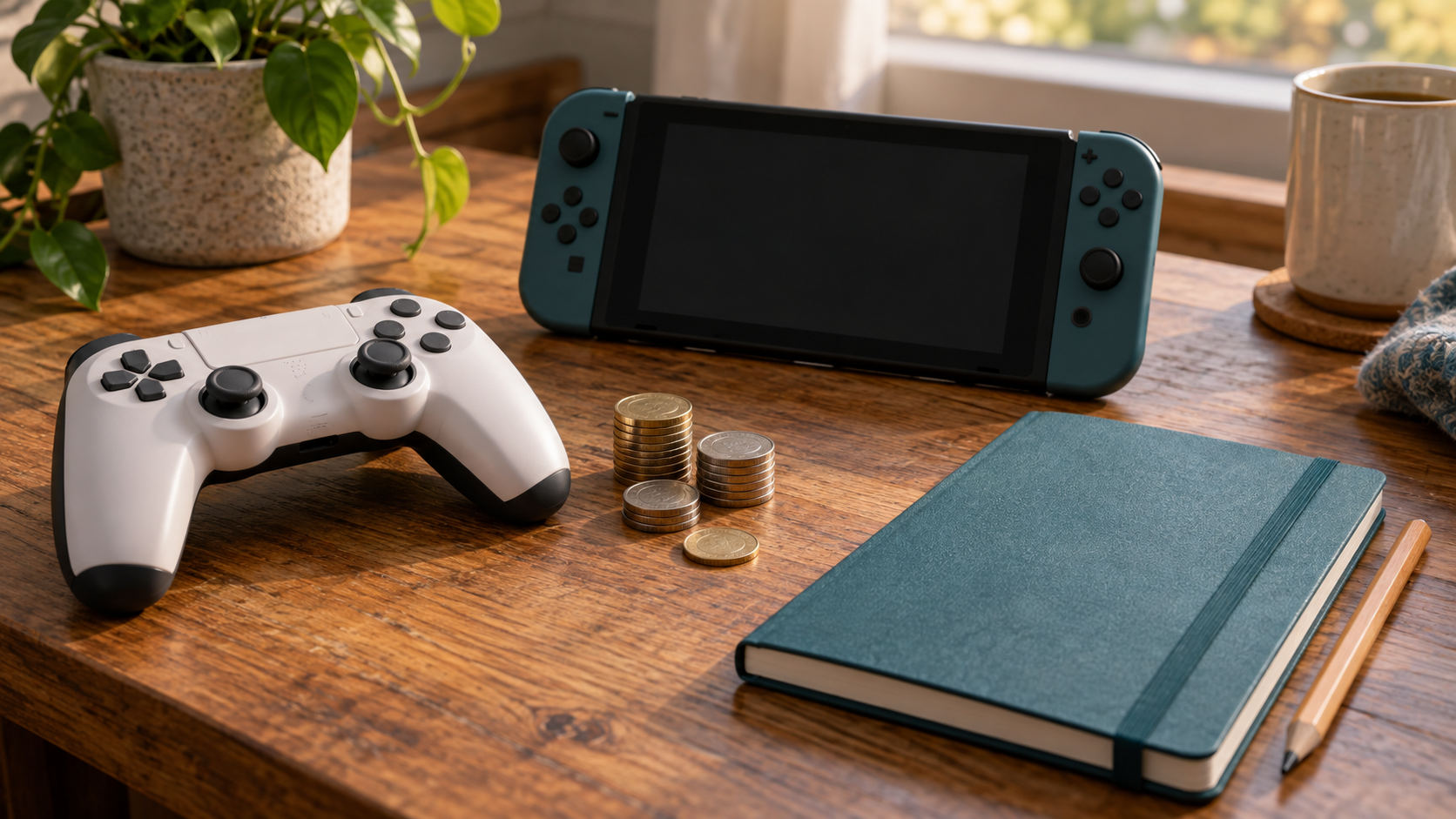
A game can fit comfortably into your entertainment budget until the extras begin arriving one at a time. A small purchase for a new look, a season pass, extra content, or a bundle of virtual currency can feel separate from the price of the game. Your bank account sees them together.
An in-game purchase budget is not a rule against playing or a judgment about what is fun. It is a way to give digital extras a clear place in your money plan, especially when a store is designed to make the next purchase feel effortless.
Count the whole cost of playing
Look back through a month or two of transactions and group game-related charges in one place. Include purchases made inside games, but also the surrounding costs:
- Games and downloadable content
- Platform or game subscriptions
- Season passes, cosmetics, boosts, and virtual currency
- Hardware, controllers, repairs, and accessories
- Related purchases on a phone, console, or computer
Do not count a top-up and the later use of that same virtual currency as two cash expenses. Record what actually left your account when you bought the currency. If several people use the same payment method, separate their purchases so the total does not become a mystery.
This review gives you a starting point, not a reason to feel bad about a past month. Some months include a one-time game purchase; others mostly contain little add-ons. Those patterns call for different limits.
Separate the base game from optional extras
A useful gaming budget has at least two parts: the cost of access and the cost of extras. Access can mean buying a game or paying for a subscription. Extras are purchases you can usually skip while still enjoying what you already have.
For example, suppose you have 40 in your currency available for games this month. If a subscription takes 12 and a planned game purchase takes 20, only 8 remains for optional add-ons. The numbers are illustration, not a suggested budget. If that 8 is too small for what you want, you can postpone the game, skip an add-on, or change the overall entertainment plan deliberately. The important thing is not to promise the same money twice.
Make room for irregular releases as well. A game you buy once every few months may fit better in a small savings bucket than in a monthly extras allowance. Keep that bucket separate from money reserved for bills or an emergency.
Choose a cap that works at checkout
Choose an extras limit for the next pay cycle after covering essentials, required payments, and other priorities. A good cap is one you can check quickly before buying, not only after reviewing a statement. Decide whether unused money rolls into the next cycle or simply stays unspent; either can work if the rule is clear.
If you play several games, one shared extras cap is often simpler than a separate allowance for each title. A purchase in one game then leaves less for another. For a larger planned release, consider its full price and decide in advance what you will pause to make room.
Try not to use a credit limit, stored card, or available bank balance as the cap. A card may have room even when that cash already belongs to rent, groceries, or another bill. If the planned limit is zero this month, that is still a valid plan: enjoy games and content you already own.
Put a pause between the prompt and the payment
Games may present limited-time offers, bundles, or a small currency shortfall just as you are about to play. You do not have to decide on the same screen that asks for money. Write down the item, its real-money cost, and why you want it. Return at a later time or the next budget review.
Before paying, ask:
- Would I choose this if it were not framed as an offer?
- Does it improve how I actually play, or only solve a brief feeling of missing out?
- What is the smallest cash amount I must pay to get it?
- Will I still value it if I stop playing this game soon?
A virtual currency pack deserves an extra check. Compare the cash paid with the specific item you want, and notice any leftover currency. An apparently small in-game price can require a larger top-up. Treat unused currency as money already spent, not as a discount on the next purchase.
Make household purchases easy to recognize
If children or other household members use a shared device or account, agree on the rules before anyone reaches a store screen. Who can approve a purchase? Which payment method may be used? What is the limit for the month? What happens when it is used up? Keep the conversation about clear boundaries rather than blame.
Review the purchase and payment settings available on the specific device or store you use. Consider whether a saved payment method, purchase confirmation, or separate account fits your household. Settings vary, so check what is actually enabled instead of assuming a password or approval step is already in place. Record any agreed purchase in the same budget, even when someone else taps the button.
For adults sharing a payment method, a simple note with the game, purchaser, and amount can prevent confusion at statement time. Avoid turning each small charge into an argument by setting the process together first.
Check renewals and the next month’s pattern
Some gaming costs repeat while others are one-off. Put renewal dates for subscriptions or passes on a calendar and decide before renewal whether you still use them. If you pause a game, review its related recurring charges too. Do not assume deleting an app or stopping play automatically changes a payment arrangement; check the relevant account and confirmation.
At the end of the month, compare your planned cap with posted transactions. Look for charges spread across different stores or devices, and separate game spending from unrelated entertainment. If you track expenses in Furt Money, categorize those charges and review the pattern alongside your broader entertainment budget. Adjust next month’s cap using what actually happened, not an idealized week of restraint.
Start with one small action: total the last month’s game purchases in real money. Then set a single extras limit for the next pay cycle and write it somewhere you will see it before checkout. You can keep the fun while giving every digital extra an honest price.