Household supplies rarely feel like a major budget category until several things run out in the same week. Laundry detergent, paper towels, soap, trash bags, cleaning products, batteries, and basic toiletries can quietly turn one normal grocery trip into a much larger bill.
A household supplies budget gives these small restocks a place to land. Instead of treating every replacement as a surprise, you build a simple routine for noticing what gets used, deciding what deserves backup stock, and keeping home basics from crowding groceries, savings, or debt payments.
The goal is not to count every sponge or make your home feel like a warehouse. The goal is to make ordinary restocks visible before they become urgent.
Separate supplies from groceries
Many people underestimate household supplies because they buy them at the same stores where they buy food. A grocery receipt might include vegetables, shampoo, dishwasher tablets, snacks, medicine, cleaning wipes, and pet supplies. If everything lands in one grocery category, the food budget looks confusing and the supplies budget stays invisible.
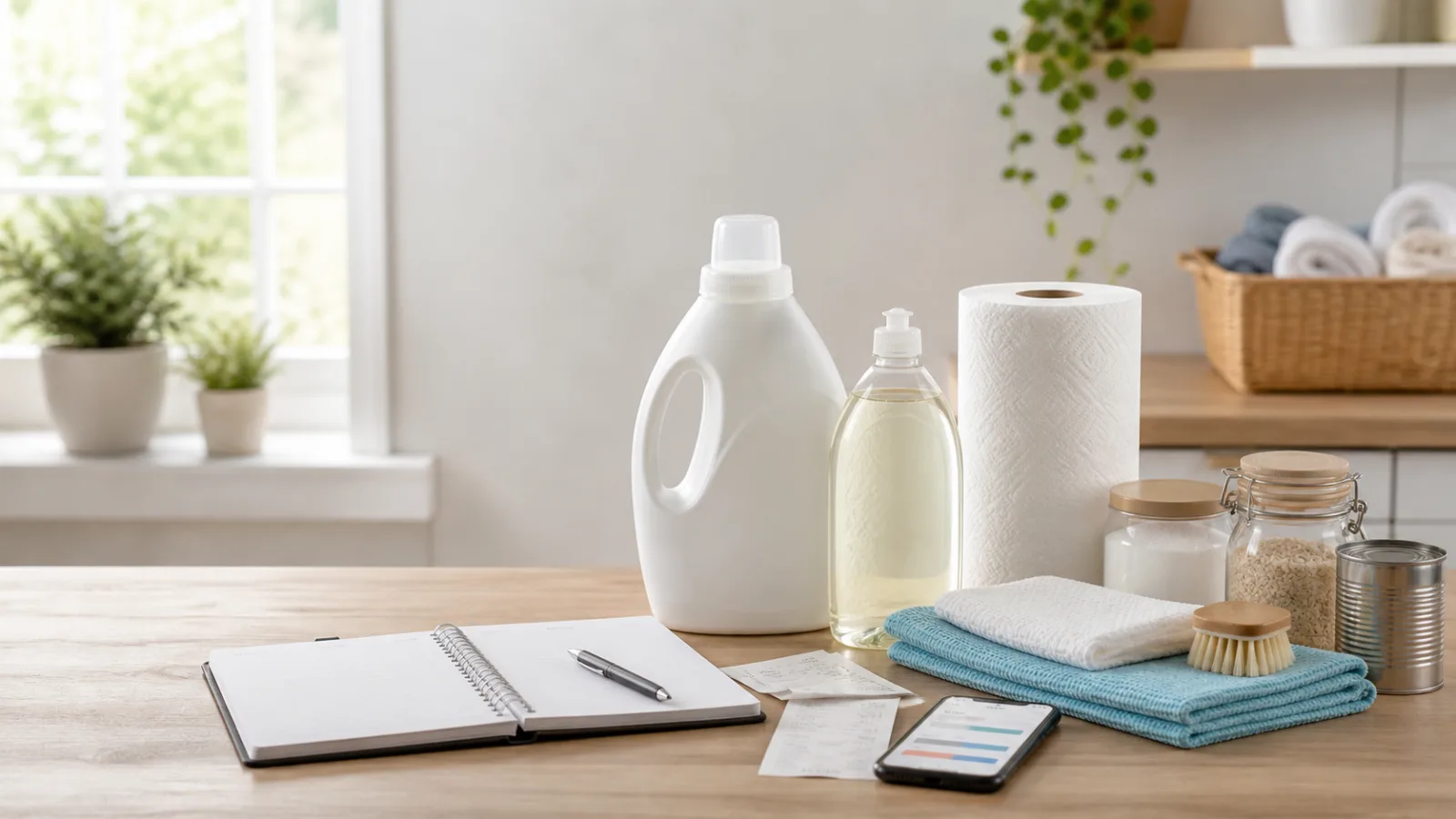
Start by deciding what belongs in household supplies. Common examples include:
- Laundry detergent, stain remover, and dryer sheets
- Dish soap, dishwasher tablets, and sponges
- Toilet paper, tissues, paper towels, and trash bags
- All-purpose cleaner, bathroom cleaner, and disinfecting products
- Basic toiletries such as toothpaste, soap, shampoo, and deodorant
- Light bulbs, batteries, filters, and small home basics
You can keep the list broad. The important part is consistency. If paper towels count as household supplies this month, count them the same way next month so the pattern becomes easier to see.
If you use Furt Money, review recent grocery, shopping, pharmacy, and household categories together. A few minutes of cleanup can show whether your grocery budget is actually high or whether household restocks are hiding inside it.
Look back before setting a number
A household supplies budget should come from real use, not from a perfect guess. Pull the last one to three months of receipts or tracked expenses and mark every supply item you can find.
Do not worry if the first pass is incomplete. You are looking for a useful baseline:
- Which items appear every month?
- Which items appear every few months?
- Which stores or orders mix supplies with food?
- Which purchases were urgent because something ran out?
- Which items were bought in bulk and will not repeat soon?
After that review, choose a starter monthly number. If spending changes a lot, use a range instead of one exact amount. For example, you might plan a normal month, a restock month, and a tight-month minimum.
This keeps the budget realistic. Some months only need dish soap and toothpaste. Other months need detergent, paper goods, filters, and several replacements at once.
Sort items by rhythm
Household supplies become easier to budget when you sort them by how often they actually run out.
Fast-use items are the things your home reaches for constantly. This might include toilet paper, trash bags, dish soap, laundry detergent, or hand soap. These need regular room in the monthly budget because running out creates immediate friction.
Slow-use items last longer but still need a plan. Examples include light bulbs, batteries, vacuum bags, air filters, cleaning tools, and specialty products. They may not appear every month, but ignoring them can make one future month feel unusually expensive.
Occasional setup items are things you buy when routines change. A new apartment, baby, pet, guest room, health need, or work schedule can create new supply habits. These costs should not be forced into the old monthly number without a quick review.
Once you know the rhythm, you can stop treating every supply purchase the same way. Fast-use items need steady money. Slow-use items need a small reserve. Setup items need a one-time adjustment.
Make a restock rule
A restock rule helps you avoid both extremes: buying too late and buying too much.
Try one of these simple rules:
- Buy one backup only for items your household uses every week.
- Restock when the last unopened item is opened.
- Wait for a planned shopping day unless the item affects health, hygiene, or safety.
- Keep no more than one month of bulky items unless storage is easy.
- Do not stock up on a product you have not used before.
The best rule depends on your space, cash flow, and household size. A small apartment may not need bulk paper goods. A large family may benefit from one backup of essentials. A tight month may require smaller packages even if the unit price is not perfect.
The point is to make the decision before you are standing in the aisle tired, rushed, and guessing.
Watch bulk buys carefully
Bulk buying can help when the item is useful, the price is truly better, and the purchase does not create cash-flow pressure. It can also backfire when the upfront cost crowds the rest of the month or when you buy more than your home can comfortably store.
Before a bulk purchase, ask:
- Will we definitely use this before it expires, dries out, leaks, or gets damaged?
- Do we have storage space that will not create clutter?
- Does this purchase fit the current pay cycle?
- Is the unit price meaningfully better, or does the package just feel like a deal?
- Would buying this today delay a bill, debt payment, or planned savings transfer?
If the answer is unclear, buy the smaller size and make a note for next time. A deal is only useful when it fits both your household and your budget timing.
Build a small supplies cushion
A household supplies cushion is different from a full emergency fund. It is a small amount inside the budget that handles uneven restock months.
For example, if your normal supply spending is modest but every few months you need several larger items, set aside a little during quieter months. When the larger restock arrives, you are not stealing from groceries or putting basics on a credit card without a plan.
Keep the cushion simple:
- Choose a small monthly amount.
- Use it only for household supplies and small home basics.
- Refill it after a heavier restock month.
- Review it when household routines change.
This is especially useful for shared households. When one person keeps buying the supplies nobody notices, the cushion makes the cost visible and easier to discuss.
Review the category once a month
You do not need a complicated inventory system. A short monthly review is enough.
Ask:
- What did we run out of unexpectedly?
- Which supplies were bought alongside groceries or pharmacy items?
- Did any bulk purchase strain the month?
- Are we carrying too much backup stock?
- Did a new routine create a new recurring supply cost?
- Should the monthly number change for the next pay cycle?
Use the answers to adjust one thing. Maybe the grocery category needs to exclude toiletries. Maybe the supplies budget needs a slightly higher baseline. Maybe a subscription order should be paused. Maybe a shared household needs clearer repayment rules.
Small reviews keep the category practical. You are not trying to make the perfect home system. You are trying to notice the pattern early enough to make a calmer decision.
Keep the plan flexible
Household needs change with seasons, guests, moves, health routines, work schedules, pets, and family size. A good supplies budget can bend without disappearing.
When life changes, do a quick reset:
- Add new repeat items to the supply list.
- Remove products you no longer use.
- Decide which items deserve backup stock.
- Update the monthly number if the old one no longer fits.
- Keep one note about expensive restock months so they are easier to plan next time.
Household supplies are ordinary, but ordinary costs still need a place in the budget. Separate them from groceries, set a realistic restock rhythm, and give uneven months a small cushion. The next time several basics run out together, the bill will feel less like a surprise and more like something you already planned for.