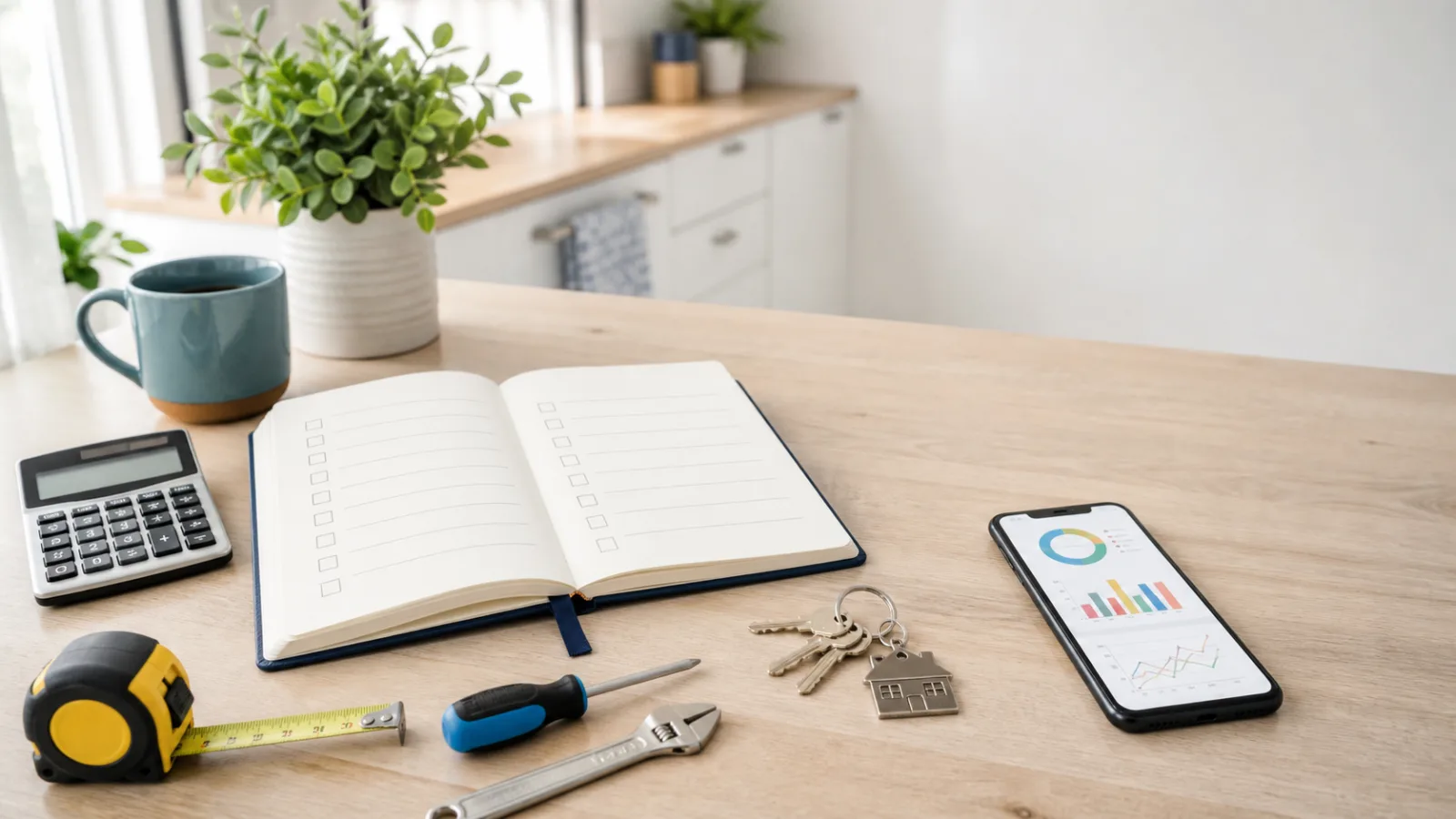
Home maintenance rarely arrives as one neat monthly bill. It shows up as a dripping tap, a filter that needs replacing, a gutter that cannot wait, a loose handle, a service visit, a paint touch-up, or a weekend trip to buy supplies you did not expect to need.
A home maintenance budget checklist gives those costs a normal place in your money plan. Instead of treating every small repair as an emergency, you create a repeatable way to notice what needs attention, set money aside, and decide what gets handled first.
The goal is not to predict every repair. The goal is to make home upkeep less surprising, less reactive, and easier to fit around rent, mortgage payments, utilities, savings, and everyday spending.
Define what maintenance means for your home
Start by separating maintenance from upgrades. Maintenance keeps your home usable, safe, clean, and functioning. Upgrades improve comfort, style, or resale appeal. Both can matter, but they should not compete in the same budget line without a clear rule.
Maintenance may include:
- Basic plumbing fixes
- Light electrical repairs
- Filters, bulbs, batteries, and small parts
- Appliance servicing
- Pest prevention
- Yard, balcony, or exterior upkeep
- Cleaning supplies for deeper seasonal jobs
- Minor paint, sealant, or hardware repairs
- Service call fees
Upgrades may include new furniture, nicer fixtures, decor, remodels, or replacing something that still works because you want a better version.
This distinction helps when money is tight. If the sink leaks, the maintenance line gets attention before a cosmetic project. If everything essential is working, an upgrade can be planned more slowly.
Walk through the home by area
A checklist works best when it follows the way your home is actually laid out. Walk through each area and write down anything that needs repair, cleaning, replacement, or monitoring.
Use simple zones:
- Kitchen
- Bathroom
- Bedrooms
- Living areas
- Laundry area
- Entryway
- Storage spaces
- Outdoor areas
- Parking, garage, or shared spaces where relevant
Do not price everything during the first pass. Just capture what you see. A missing screw, slow drain, cracked caulk, noisy fan, worn doormat, loose shelf, or overdue filter belongs on the list.
If you rent, include the items you are responsible for and mark anything the landlord or property manager should handle. If you own, include both small jobs and larger items you need to watch over time.
Sort tasks by urgency
Once the list exists, sort it before you start spending. Home projects feel endless when every task has the same priority. A simple urgency filter gives the budget a fair order.
Try four groups:
- Now: issues that affect safety, access, water, electricity, heating, cooling, security, or basic use
- Soon: problems that could get worse if ignored for a few weeks
- Routine: predictable upkeep that keeps the home in good shape
- Later: nice-to-have improvements that can wait
This keeps a small maintenance fund from being drained by the loudest or most visible task. It also helps you avoid spending on supplies for a weekend project while a more important repair waits.
For shared households, agree on the urgency labels before money is spent. One person may see a repair as cosmetic while another sees it as daily friction. The checklist gives you something concrete to discuss.
Build a monthly maintenance number
Your monthly number does not need to be perfect. It needs to be repeatable. Start with what you can comfortably set aside without weakening essentials, minimum debt payments, or other savings goals.
If you have past spending records, review the last six to twelve months of home-related transactions. Look for hardware store runs, repairs, service calls, cleaning supplies, replacement parts, and household basics that did not fit neatly into groceries.
If you track expenses in Furt Money, check home, utilities, household, and shopping categories together. Maintenance spending often hides across several categories because the purchases happen in different places.
Then choose a starter amount that matches your cash flow. You can adjust it after one or two months. A modest line that stays funded is better than an ambitious number you keep raiding for groceries or bills.
Separate routine upkeep from repair surprises
Some home costs are predictable. Others are not. Your checklist becomes more useful when you separate these two rhythms.
Routine upkeep includes items you can plan on a calendar:
- Replacing filters
- Testing smoke or safety devices
- Deep cleaning appliances
- Clearing drains
- Servicing equipment
- Checking seals, hinges, locks, and fixtures
- Seasonal outdoor or balcony tasks
Repair surprises include things that break, leak, jam, crack, or stop working before you expected.
If your budget allows, give routine upkeep a normal monthly line and keep a separate small reserve for repairs. If that feels too complicated, use one home maintenance category but note whether each purchase was routine or unexpected. Over time, that detail tells you whether your monthly amount is realistic.
Keep supplies from crowding the repair fund
Home maintenance often starts with small supplies: batteries, bulbs, tape, caulk, cleaner, screws, hooks, gloves, filters, or a basic tool. None of these feel expensive alone, but they can crowd out the money you meant to keep for actual repairs.
Create a short supplies rule:
- Keep a small list of items you use repeatedly.
- Buy replacements before you are completely out when they are essential.
- Avoid buying specialized tools until a real task needs them.
- Do not let one project consume the whole monthly maintenance amount unless it is urgent.
This is where a home maintenance budget checklist protects you from shopping momentum. You can buy what supports the next task without turning a repair errand into a full home improvement spree.
If household supplies already have their own budget line, keep maintenance supplies separate only when it helps you see the pattern. The best category setup is the one you will actually review.
Plan for service calls before they are urgent
Some jobs need a professional. Even if you handle many small tasks yourself, there may be repairs where time, safety, tools, lease rules, warranty terms, or local regulations make outside help the better path.
Before something breaks, keep a simple service note with:
- The type of repair
- Who you would contact
- Any warranty, lease, or building rules
- Photos or details of the issue
- The date you first noticed it
- What you already tried
This note saves time when a problem becomes urgent. It also helps you compare the cost with the rest of the budget without relying on memory.
Do not delay serious safety, water, electrical, gas, heating, cooling, or security problems just because the maintenance fund is not full. The budget is there to create options, not to turn urgent home issues into a waiting game.
Review the checklist once a month
A maintenance checklist is only useful if it gets revisited. Add a short review to your monthly budget reset or a quiet weekend routine.
During the review:
- Add new issues you noticed.
- Remove anything already handled.
- Move tasks between now, soon, routine, and later.
- Check how much is left in the maintenance category.
- Decide the next one or two tasks.
- Note any larger repair that needs a longer savings plan.
Keep the review short. You are not trying to inspect the entire home every month. You are keeping the list current enough that repair decisions do not start from scratch.
If you live with someone else, this review can prevent small frustrations from becoming arguments. The question becomes “What does the checklist say we handle next?” instead of “Why has nobody dealt with this yet?”
Make the next repair less disruptive
Home maintenance will never be perfectly predictable, but it can become less chaotic. Walk through your space, name the tasks, sort them by urgency, and give maintenance a monthly place in your budget.
Start with one small action: write down three repairs or upkeep tasks you already know about. Price only the first one. Then decide whether it fits this month, needs a few pay cycles, or belongs in the later list.
That simple habit turns home maintenance from a string of surprises into a set of decisions you can return to calmly.