A home inventory checklist is one of those money tasks that feels easy to postpone because nothing is wrong today. Then a theft, fire, leak, storm, move, warranty issue, or insurance claim suddenly asks a hard question: what did you own, what condition was it in, and what proof do you have?
The goal is not to catalog every spoon in your kitchen. The goal is to create enough evidence and organization that a stressful situation does not turn into a guessing game. A simple inventory can also help you understand whether your emergency fund, insurance coverage, and replacement plans match the life you actually live.
Start with the rooms, not the prices
Begin with a room-by-room walk-through. This is faster than trying to remember your belongings from a blank page.
Use broad areas such as:
- Bedroom
- Living room
- Kitchen
- Bathroom
- Entryway or storage closet
- Home office
- Garage, balcony, or basement if you have one
For each room, list the items that would be annoying, expensive, or slow to replace. Furniture, electronics, appliances, tools, bicycles, instruments, luggage, work equipment, and collections deserve attention before low-cost everyday items.
Do not stop because you do not know the exact value. Write the item down first. You can refine replacement estimates later.
Capture photos and video while things are normal
Photos make a home inventory more useful because they show what existed before a problem happened. Take clear pictures of each room from multiple angles, then take closer photos of higher-value items.
A short video walk-through can also help. Open drawers, closets, cabinets, and storage bins while narrating what is inside. Keep the tone practical: “winter coats in hallway closet,” “laptop and monitor on desk,” “cookware in lower cabinet.” You are building memory support, not a documentary.
For items with serial numbers, model numbers, or unique marks, take a close-up photo. This can include laptops, phones, cameras, bikes, watches, appliances, musical instruments, and tools.
Save the photos somewhere you could still access if your phone or laptop were damaged. A cloud folder, external drive, or trusted backup system is better than keeping the only copy on the device in the photos.
Record the details that make replacement easier
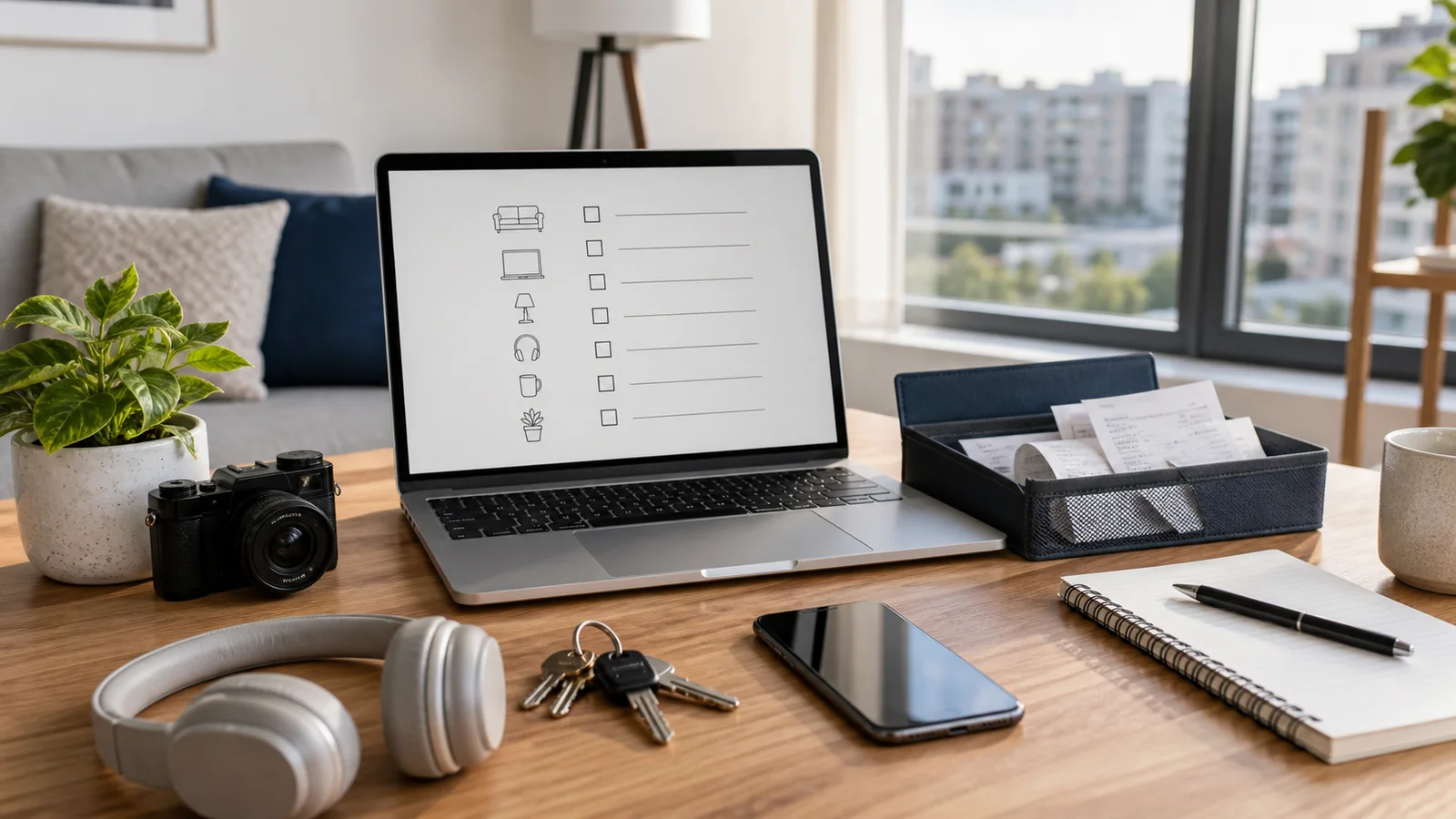
A useful home inventory checklist does not need to be complicated. For each important item, capture the details that would help you identify or replace it.
Helpful fields include:
- Item name
- Room or location
- Brand, model, or size if relevant
- Serial number if available
- Approximate purchase date
- Approximate replacement cost
- Receipt, order confirmation, or warranty location
- Notes about condition or special features
Use estimates when exact records are missing. If you bought a desk years ago and cannot find the receipt, write a realistic replacement range and move on. An incomplete inventory today is more useful than a perfect one you never finish.
If you track spending in Furt Money, your past categories can help jog your memory. Review home, electronics, furniture, work, and shopping expenses to spot bigger purchases that should be added to the list.
Keep receipts without creating clutter
Receipts, order confirmations, warranty cards, and repair records can support your inventory, but they need a home. Otherwise they become scattered across inboxes, drawers, photo albums, and download folders.
Create one folder for household proof. It can be digital, paper, or both. Use plain names like:
home-inventorymajor-receiptswarrantiesinsurance-documentsrepair-records
For digital files, rename important receipts so they are searchable. A name like 2026-08-laptop-receipt.pdf is easier to find than a random download name. For paper receipts, keep only the ones that matter for claims, warranties, returns, taxes, reimbursements, or expensive replacements.
Avoid storing sensitive identity documents or passwords in an ordinary folder. Use safer storage for private information and follow the rules that apply to your accounts, employer, insurer, and location.
Connect the inventory to your insurance review
An inventory helps you ask better questions about insurance. It does not replace reading your policy, and it does not guarantee a claim outcome. It simply gives you a clearer view of what you may need to protect.
During your next renters, homeowners, or contents insurance review, compare your inventory with the policy language. Look for:
- What kinds of belongings are covered
- What limits apply to categories such as electronics, jewelry, bikes, tools, or collectibles
- Whether replacement cost or actual cash value wording applies
- What deductible or excess you would owe
- What proof is requested during a claim
- Which events or situations are excluded
If any wording is unclear, ask the insurer, broker, landlord, employer benefits team, or another qualified source before relying on assumptions. Policies vary, and a calm question before a problem is easier than a rushed question afterward.
Use the checklist to plan replacement priorities
A home inventory is also a budgeting tool. When you see your belongings in one place, you can separate essential replacements from items that can wait.
Create three rough groups:
- Must replace quickly: phone, work laptop, bed, basic cookware, essential clothing, medical devices, school supplies, or transportation items
- Replace soon: furniture, tools, small appliances, home office upgrades, or seasonal items
- Replace later: decor, duplicate items, hobby gear, and nice-to-have upgrades
This helps you think clearly about your emergency fund and sinking funds. If a device is essential for work, you may want a stronger replacement plan than you need for a decorative item. If several important items are old, a small monthly household replacement fund may be more useful than waiting for everything to fail at once.
Update it after purchases and life changes
The best home inventory checklist is the one you keep current. Do not wait for a full weekend cleanup every time. Add a small update step to routines you already have.
Good update moments include:
- Buying or selling a major item
- Moving homes
- Changing roommates
- Renovating or furnishing a room
- Starting remote work
- Getting new insurance
- Filing a claim or learning new policy rules
- Doing a monthly or quarterly money review
When you add a new item, save the receipt, take one photo, and note the location. That is enough for most ordinary purchases. Once or twice a year, do a quick room-by-room refresh and delete items you no longer own.
Make the first version small enough to finish
If your home inventory feels too big, shrink the first version. Pick one room, one closet, or the ten items you would most hate to replace from memory.
A simple first pass might look like this:
- Photograph each room.
- List your ten highest-impact belongings.
- Save receipts for new major purchases.
- Write down policy numbers and claim contact details.
- Back up the inventory outside the device you use every day.
You can improve the list over time. The value comes from reducing chaos before you need the information.
Give your belongings a paper trail
A home inventory checklist protects more than stuff. It protects your time, your budget, and your ability to make decisions when something has already gone wrong.
Start with one room today. Take a few photos, write down the important items, and save the list somewhere you can find later. A clear first version is enough to make the next insurance review, move, warranty claim, or emergency plan a little calmer.