Free trials are useful when they help you test something before paying for it. They become expensive when the trial ends quietly, the first charge lands on a busy week, and the subscription joins the budget without a real decision.
A free trial budget is a simple way to put a pause between “try it” and “keep paying.” It does not mean avoiding every trial. It means treating each trial like a temporary spending commitment that needs a start date, an end date, and a review before money leaves again.
Decide why you are starting the trial
Before you enter payment details, name the job the trial is supposed to do. A trial for a work tool, a fitness app, a streaming service, a learning platform, or a meal-planning service should have a reason beyond “maybe this will be useful.”
Ask:
- What problem am I testing this for?
- What would make it worth keeping?
- What would make it an easy cancel?
- When will I have enough experience to decide?
This protects you from trials that start because of a discount, a recommendation, or a bored scroll. The clearer the reason, the easier the end-of-trial decision becomes.
Capture the details immediately
The best time to track a free trial is the moment you start it. Waiting until later is how trials disappear into email, app stores, card statements, and memory.
Write down:
- service name
- start date
- trial end date
- first paid billing date
- expected price after the trial
- payment method used
- cancellation path or account page
- reason you started the trial
If the exact cancellation path is hard to find, that is useful information too. Add a note while you still remember where the settings live. Future you should not have to search through menus while a charge is already pending.
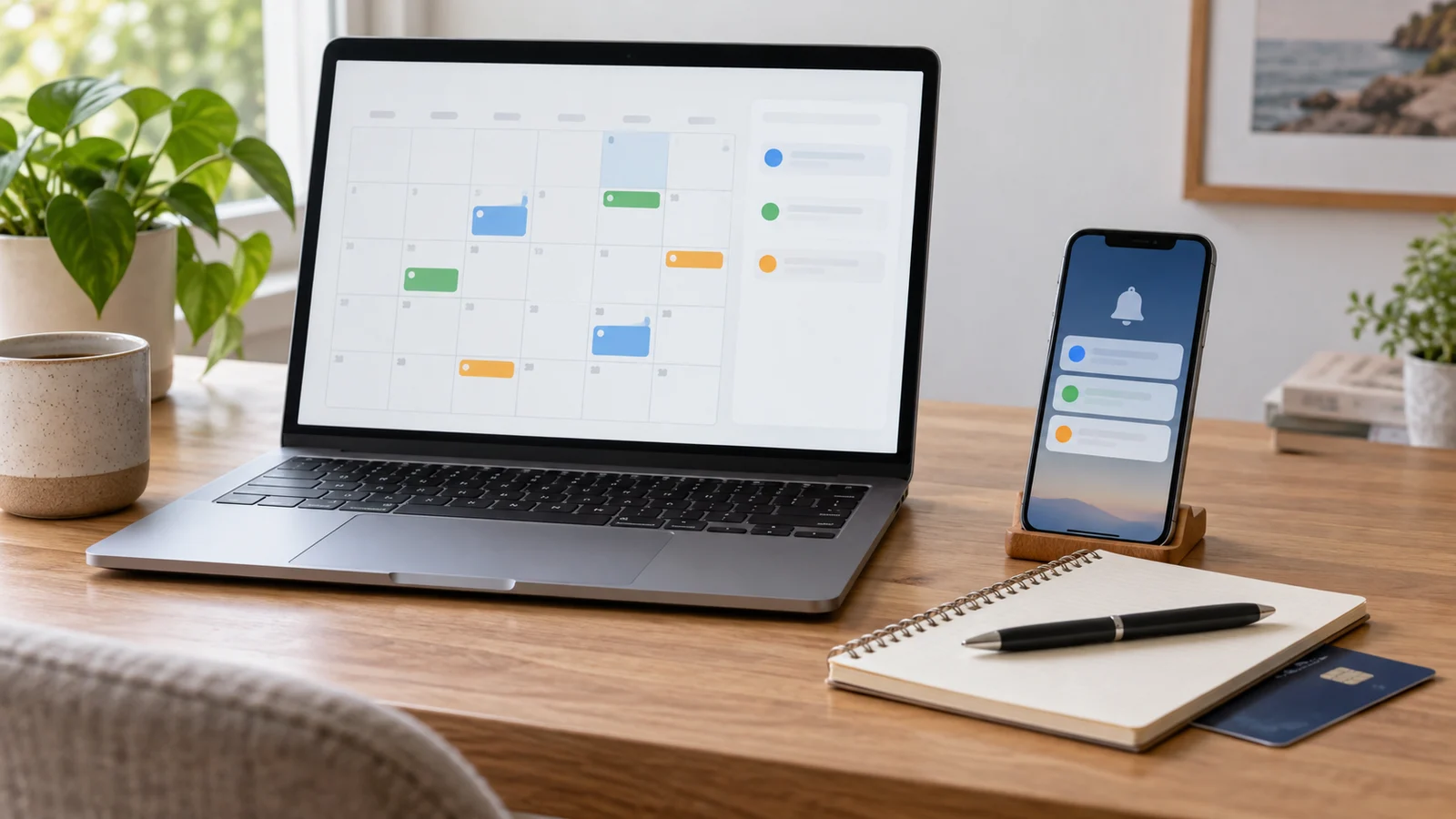
Set two reminders, not one
One reminder on the final day is better than nothing, but it can still fail. You may be busy, traveling, waiting on a password reset, or unsure whether you used the service enough to decide.
Set two reminders instead:
- one reminder a few days before the trial ends
- one reminder on the final safe cancellation day
The first reminder is for judgment. The second is for action. If a service requires cancellation before a certain time or through a specific platform, leave extra room. The goal is to avoid rushed decisions and avoid paying only because the window was too tight.
Keep trials out of the regular budget until they earn a place
A free trial should not automatically become part of your normal monthly spending. Keep it in a temporary list until you decide it belongs.
Use three simple labels:
- Testing
- Cancel
- Keep
“Testing” means you have not decided yet. “Cancel” means the trial does not deserve a paid spot. “Keep” means it needs an actual category in your budget, not a quiet charge hiding in general spending.
If you use Furt Money to review categories, this is where the pattern becomes visible. A new subscription should land somewhere meaningful, such as entertainment, work tools, fitness, education, or household services. A clear category makes it easier to review later.
Test the service before the trial expires
Many people start a trial and then forget to use it. That creates a strange decision at the end: keep paying for something you still have not really tested, or cancel without knowing whether it helped.
Build a short test plan:
- Use it once during the first 24 hours.
- Try the feature or content that made you sign up.
- Compare it with something you already pay for.
- Notice whether it saves time, reduces friction, or only adds another login.
- Decide what would need to happen before renewal.
The point is not to squeeze maximum value from every free offer. The point is to gather enough evidence to make a calm decision.
Watch for duplicate subscriptions
Free trials often overlap with things you already have. A new streaming service may duplicate another entertainment subscription. A productivity app may repeat a feature built into your phone, bank, calendar, or workplace tools. A fitness or learning trial may compete with a membership you already pay for but barely use.
Before keeping a trial, ask:
- Does this replace something else?
- Does it solve a problem better than the current option?
- Would I cancel an existing service to make room for it?
- Would I still choose it if the free period had never existed?
If the answer is no, the trial may be interesting without being worth a recurring bill.
Build a monthly trial review
Trial tracking works best when it becomes part of your normal money routine. Once a month, review anything labeled “Testing” and anything that recently moved to “Keep.”
Look for:
- trials ending in the next two weeks
- first paid charges that already happened
- subscriptions kept by accident
- services you kept but have not used
- payment methods with too many small recurring charges
This review does not need to be long. Ten minutes can catch the charges that usually slip through. It also helps you notice whether trials are becoming a spending habit of their own.
Make your default decision intentional
Some trials are worth keeping. A tool that saves real time, supports your health, helps your household, or replaces a more expensive service can earn a place in the budget.
But the default should be a decision, not drift. If you are unsure, cancel before the paid period starts. You can usually resubscribe later if you miss it. Paying for another month because you forgot is not the same as choosing to keep it.
Try this rule: a trial can renew only if you can name the budget category, the monthly cost, and what it replaces or improves.
Keep the next trial under control
A free trial budget turns a small signup into a manageable decision. Start with a clear reason, record the end date, set two reminders, test the service, and make it earn a place before it becomes a regular bill.
For the next trial you start, write down the cancellation date before you use the service. That one step can keep a free offer from becoming another charge you did not mean to keep.