Your first steady paycheck can feel like permission to finally breathe. It can also disappear faster than expected if every small upgrade becomes part of normal life before you decide what the money is supposed to do.
A first paycheck budget is not about making your new income feel smaller. It is about giving that income a job before lifestyle creep chooses the job for you. The goal is simple: cover the basics, protect your next few weeks, enjoy some of the progress, and start one habit your future self will thank you for.
Start with take-home pay, not salary
The number that matters for your first budget is the amount that actually lands in your account. Salary, hourly rate, or offer letter pay can be useful for planning, but your day-to-day choices depend on take-home pay after taxes, deductions, retirement contributions, benefits, and any other payroll items.
When the first paycheck arrives, write down:
- The deposit amount
- The pay period it covers
- The next expected payday
- Any deductions you do not understand yet
- Any reimbursements or one-time items that may not repeat
If the first check is partial because you started mid-cycle, do not build your permanent budget around it. Use it to cover immediate needs, then wait for a full normal paycheck before locking in monthly numbers.
Separate fixed bills from flexible spending
Before planning fun purchases, list the bills that already have a due date. These are the expenses that can create stress if you forget them.
Common fixed bills include:
- Rent or housing contributions
- Utilities
- Phone and internet
- Transport passes, fuel, parking, or rides
- Insurance premiums
- Minimum debt payments
- Subscriptions you already use
Then make a second list for flexible spending: groceries, meals out, clothes, hobbies, personal care, gifts, and small convenience purchases. Flexible does not mean optional. It means the amount can move when the month changes.
This split helps you see the real room in your paycheck. If fixed bills are already using most of the deposit, the first priority is stability, not upgrades.
Build a starter buffer before upgrading everything
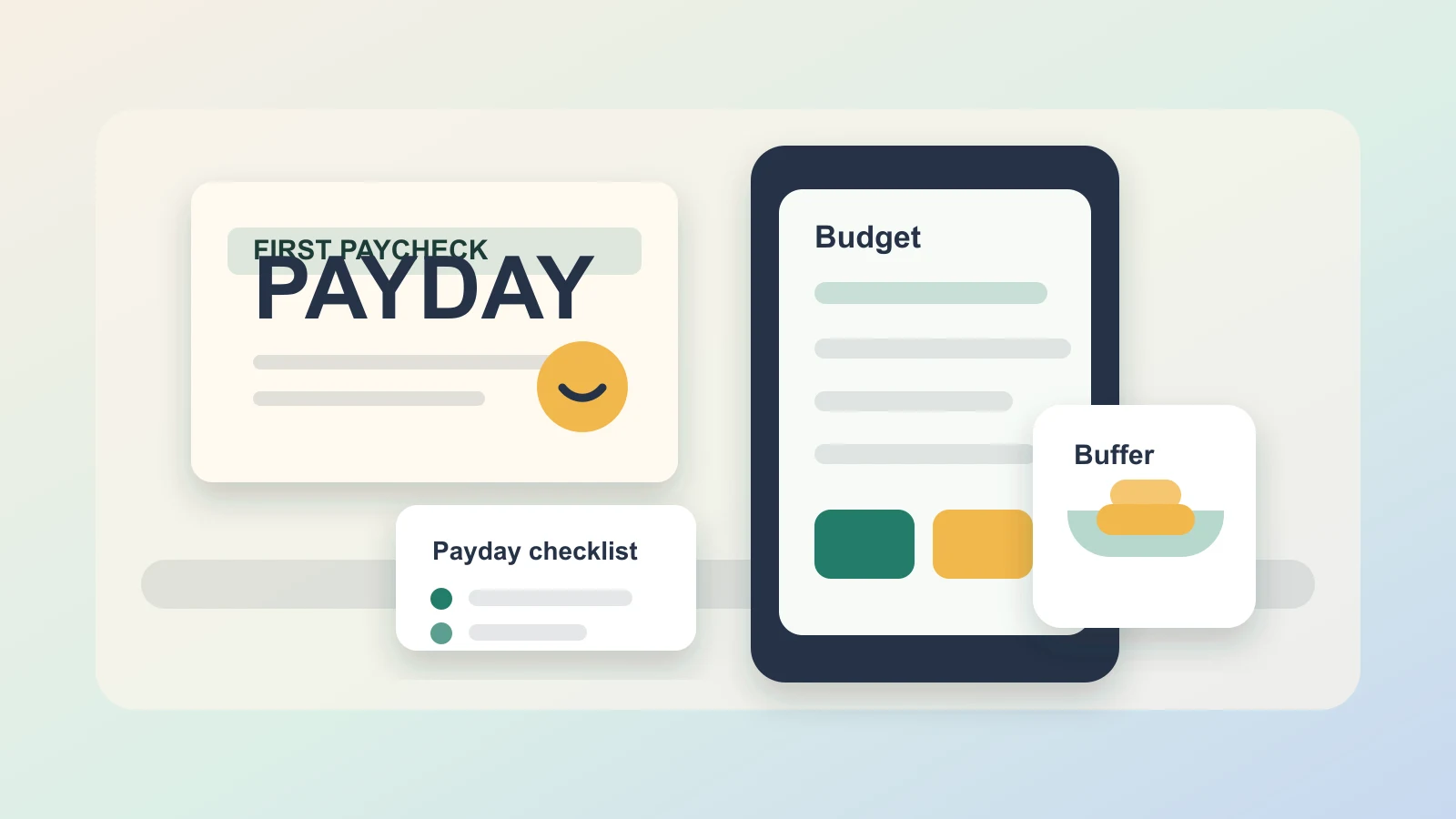
One of the most useful first-paycheck moves is creating a small checking account buffer. This is money that stays in your everyday account so bills, card swipes, and delayed transactions do not collide at the worst moment.
Start with a modest target you can reach quickly. The right number depends on your life, but the first layer should be enough to reduce panic between paydays. It might cover a grocery run, a small bill timing mismatch, or an unexpected transport cost.
Do not confuse the buffer with free spending money. Give it a name in your budget or notes. If you track expenses in Furt Money, review the categories that usually spike near payday and decide how much room you want to keep untouched.
Once the buffer exists, the rest of your budget gets easier because you are no longer starting each pay cycle at zero.
Choose one upgrade on purpose
Lifestyle creep often starts with reasonable choices. Better groceries, a cleaner commute, new work clothes, more meals with friends, and replacing worn-out items can all make sense. The problem is adding many upgrades at once without noticing the total.
Pick one upgrade that genuinely improves your week and give it a clear limit. For example:
- A weekly meal out with friends
- A better transit option on late workdays
- One work wardrobe purchase per pay cycle
- A fitness or hobby expense you will actually use
- A small personal allowance that needs no explanation
Choosing one upgrade makes the budget feel humane. Setting a limit keeps the upgrade from quietly becoming every category at once.
Start one automatic savings habit
You do not need an impressive savings rate on your first paycheck. You need a repeatable habit. A small automatic transfer is powerful because it teaches your budget that saving happens before money becomes available for everything else.
Choose one first savings target:
- A basic emergency fund
- A move-out or rent deposit fund
- A device replacement fund
- A travel fund
- A debt payoff cushion
- A professional development fund
Make the first transfer small enough that you will not reverse it. If the amount feels almost boring, that can be a good sign. You can raise it later when you understand your real bills.
The first habit matters more than the first amount.
Watch the first 30 days closely
Your first month with new income is a learning period. You may discover costs you forgot: lunch near work, commuting gaps, birthday gifts, work supplies, laundry, service charges, or the simple cost of being out of the house more often.
Review spending once a week for the first month. Look for:
- Categories that are higher than expected
- Bills that arrived earlier than expected
- Cash withdrawals or card charges you forgot
- Subscriptions you no longer need
- Purchases that felt good once but would not be worth repeating
This is where an expense tracker helps. Categorizing the first month gives you a realistic baseline before you decide what a normal month should cost.
Avoid promises your future paychecks have to keep
New income can make long commitments look easy. Be careful with anything that turns into a fixed monthly payment before your budget has settled.
Pause before adding:
- Car payments or large financing agreements
- Premium subscriptions bundled together
- A rent increase based on best-case income
- Buy now, pay later plans
- Expensive routines that depend on constant overtime
- Shared costs you would struggle to cover alone
The test is simple: if next month were slightly tighter, would this commitment still feel calm? If not, wait until you have a few normal pay cycles behind you.
Make a payday checklist
A short checklist can keep the first paycheck budget from becoming a one-time exercise. Use it every payday until the routine feels natural.
Your checklist might be:
- Confirm the deposit amount.
- Set aside money for bills due before the next payday.
- Move the planned amount to savings.
- Check the buffer balance.
- Update spending categories.
- Choose the one flexible upgrade you are allowing this pay cycle.
- Leave a small amount unassigned for real life.
The checklist should take minutes, not hours. The point is to give each paycheck direction before the easy spending starts.
Give your new income a calm first job
A first paycheck can carry a lot of emotion: relief, pride, pressure, and the urge to catch up on everything at once. A simple budget turns that energy into a plan.
Start with take-home pay. Cover fixed bills. Build a small buffer. Choose one upgrade on purpose. Start one savings habit. Then review the first month honestly. You do not need a perfect financial life on payday one. You need a system that helps the next paycheck go a little further.