Event spending has a way of feeling smaller than it is. The ticket price gets your attention first, but the real cost often includes fees, transport, food, drinks, parking, clothes, childcare, merch, and a late-night ride home. By the time the event is over, one fun night can spill into several budget categories.
An event ticket budget gives the whole plan a number before you click buy. It does not mean skipping every show or saying no to fun. It means knowing which events are worth the money, what the real total might be, and how to enjoy the night without borrowing from bills, savings, or next week’s groceries.
Start with the event, not the ticket
Before comparing seats or refreshing resale pages, write down what the event is actually for. A once-in-years concert, a friend’s birthday plan, a sports rivalry game, a school performance, and a casual Friday night all deserve different money decisions.
Ask three quick questions:
- Is this event rare, meaningful, or easy to repeat later?
- Am I going alone, with one person, or with a group?
- Will saying yes create costs before or after the event day?
This step helps you avoid treating every invitation as equally urgent. Some events belong in the budget because they connect to people, memories, or a long-standing interest. Others are simply nice to have. When the reason is clear, the spending limit becomes easier to set.
If you use Furt Money to review spending categories, look at the last few months of entertainment and dining before choosing the limit. Your past pattern can show whether this event fits your normal rhythm or needs its own short-term plan.
Price the full night
The ticket is only the first line. Build a total event estimate before you buy, even if some numbers are rough.
Include:
- ticket price for each person you are paying for
- service fees, taxes, or delivery charges shown at checkout
- transport, fuel, parking, tolls, or rideshare costs
- food and drinks before, during, or after the event
- childcare, pet care, or extra household help
- clothing, weather gear, or venue-required items
- merch, photos, programs, or small souvenirs
- a small cushion for timing changes or group plan changes
You do not need exact predictions. You need a number that is honest enough to protect the rest of the month. A ticket that looks affordable at 60 may become a 140 night once the surrounding costs are included. Seeing that early lets you choose cheaper seats, skip merch, eat at home first, or wait for another event.
Set a yes number before checkout
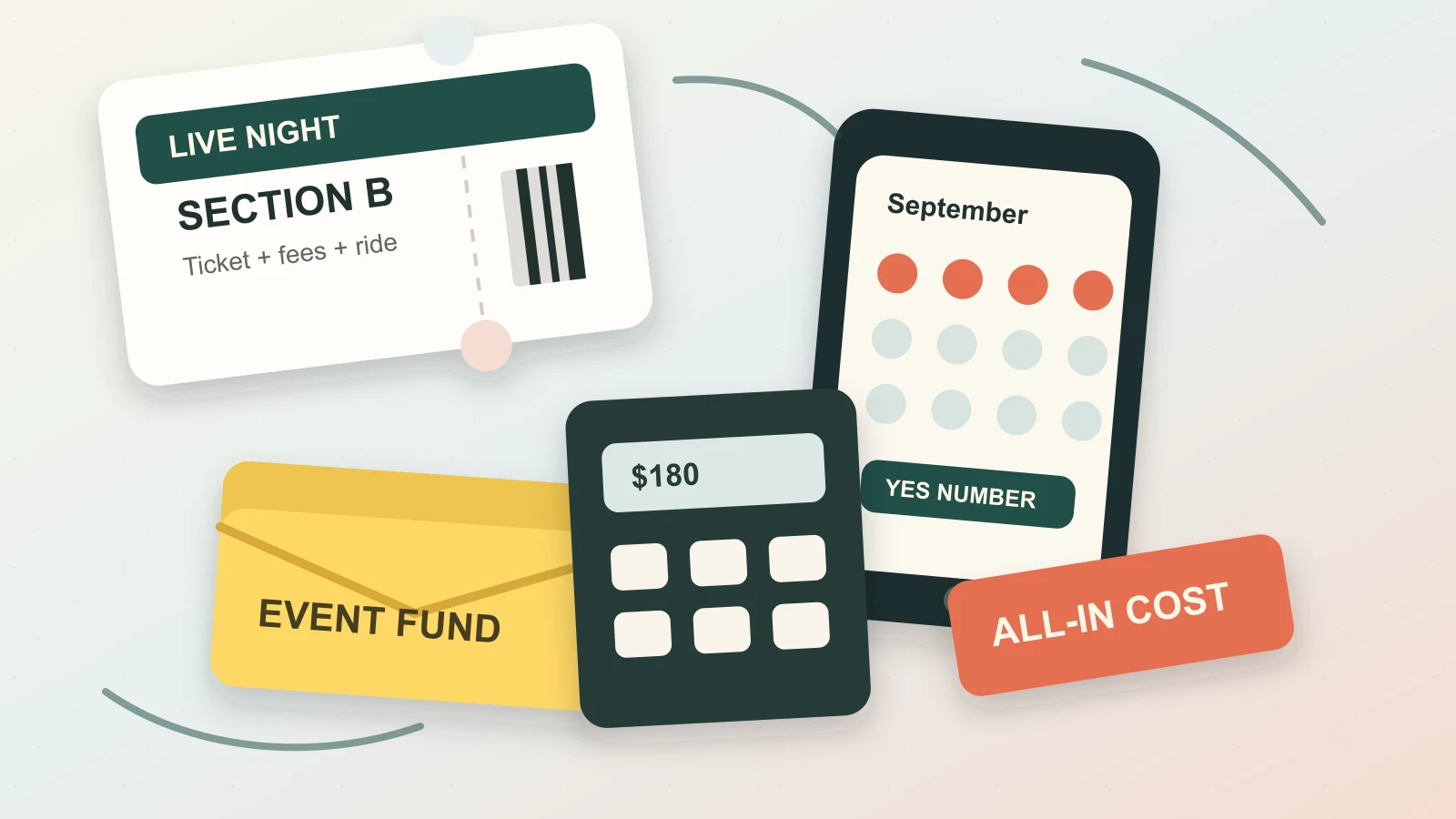
A yes number is the maximum total you are willing to spend on the whole event. It should include the ticket and the extras, not just the seat.
Try this simple rule:
- Pick the total amount that fits your current budget.
- Subtract the non-ticket costs you cannot avoid.
- Use the remainder as your ticket ceiling.
For example, if the full night can reasonably cost 180 and you expect 40 for transport and food, your ticket ceiling is 140. If fees push the ticket over that number, the event is asking for more than the plan allows.
This is especially useful when buying under pressure. Presales, countdown timers, group chats, and resale listings can make a purchase feel like a now-or-never decision. Your yes number gives you something steadier than mood. If the price fits, you can buy without guilt. If it does not, you already made the decision before the pressure started.
Separate planned fun from impulse fun
Entertainment spending is easier to manage when planned events and spontaneous outings are not fighting for the same small pile of money.
Create two simple lanes:
- planned events, such as concerts, games, theater, festivals, or special dinners
- impulse fun, such as last-minute movies, drinks, local events, or casual meetups
If all entertainment spending sits in one category, a big ticket can quietly use up the money you expected to have for the rest of the month. Separating the lanes helps you see the tradeoff. You might still buy the ticket, but then you can choose a quieter weekend later instead of wondering why the month feels tight.
This does not require a complicated system. You can use a note, a calendar, a savings bucket, or a category review in your expense tracker. The point is to make the big yes visible before the smaller yeses keep happening.
Plan group costs before money gets awkward
Group events often create budget stress because one person books first and everyone sorts out money later. That can work when costs are small. It gets harder when tickets, fees, transport, food, and lodging are involved.
Before anyone buys, agree on:
- the ticket price range everyone is comfortable with
- whether fees are included in that range
- who is paying upfront
- when repayment is due
- whether transport or food will be shared
- what happens if someone backs out
Keep the tone practical, not dramatic. A simple message like “I can do up to 90 all-in for the ticket including fees” is clearer than saying “anything is fine” and resenting the final price.
If you are the person booking, avoid covering costs you cannot comfortably float. Paying for several people can distort your own budget, even when everyone intends to repay you. If repayment would matter for rent, bills, or card payments, ask people to send money before checkout or buy separately.
Use a short sinking fund for bigger events
Some events are too expensive to absorb in one pay cycle but reasonable if you plan ahead. A short sinking fund turns the event from a surprise charge into a scheduled goal.
Start with the full estimated cost, then divide it by the number of pay periods before the event. If a festival weekend might cost 600 and you have six paychecks before it happens, the event needs about 100 per paycheck. If that amount does not fit, you can adjust early by changing ticket level, shortening the trip, skipping extras, or choosing a different event.
For annual or seasonal interests, keep a standing event fund. This works well for people who regularly attend concerts, sports, conventions, comedy shows, theater, or cultural events. Instead of rebuilding the decision from scratch each time, you already have a boundary: the event fund can say yes only when money is there.
Protect the day-after budget
The event is not finished financially when the lights come on. The next day still needs groceries, transport, bills, and normal life.
Before the event, check what happens in the next seven days:
- Are rent, utilities, insurance, or loan payments due?
- Is a credit card payment coming up?
- Do you need grocery money before the next paycheck?
- Will travel or late-night plans affect workday spending?
- Are there pending charges that have not cleared yet?
If the week after the event is already crowded, build a stronger cushion or choose a smaller plan. This is not about ruining the fun. It is about avoiding the specific feeling of enjoying Saturday and regretting Monday.
A quick Furt Money category review can help here. If entertainment is fine but dining out is high, you may keep the event and trim food around it. If transport is already stretched, you may choose public transit, carpooling, or a closer venue instead of pretending the extra cost will disappear.
Make the event feel worth it
The best budget is not the one that makes every event cheap. It is the one that helps you spend on the things you will actually value.
After the event, take two minutes to review:
- What was the final all-in cost?
- Which extras were worth it?
- Which costs surprised you?
- Would you make the same choice again?
- What would you set as the yes number next time?
This turns one event into better information for the next one. Maybe floor seats were worth saving for. Maybe parking was the real problem. Maybe merch did not matter once you left. Maybe the cheaper local show was more fun than the expensive arena night.
Keep the lesson simple. Add the real total to your notes, update your entertainment category, and use that number the next time an invitation appears.
Give fun a number you can trust
An event ticket budget is not a rule against concerts, games, festivals, or nights out. It is a way to make fun spending honest before the charge hits your account.
Pick one upcoming event and write the all-in estimate: ticket, fees, transport, food, extras, and a small cushion. If the number fits, enjoy it with less background stress. If it does not, adjust the plan before checkout. Either way, your budget gets to support your life instead of cleaning up after it.