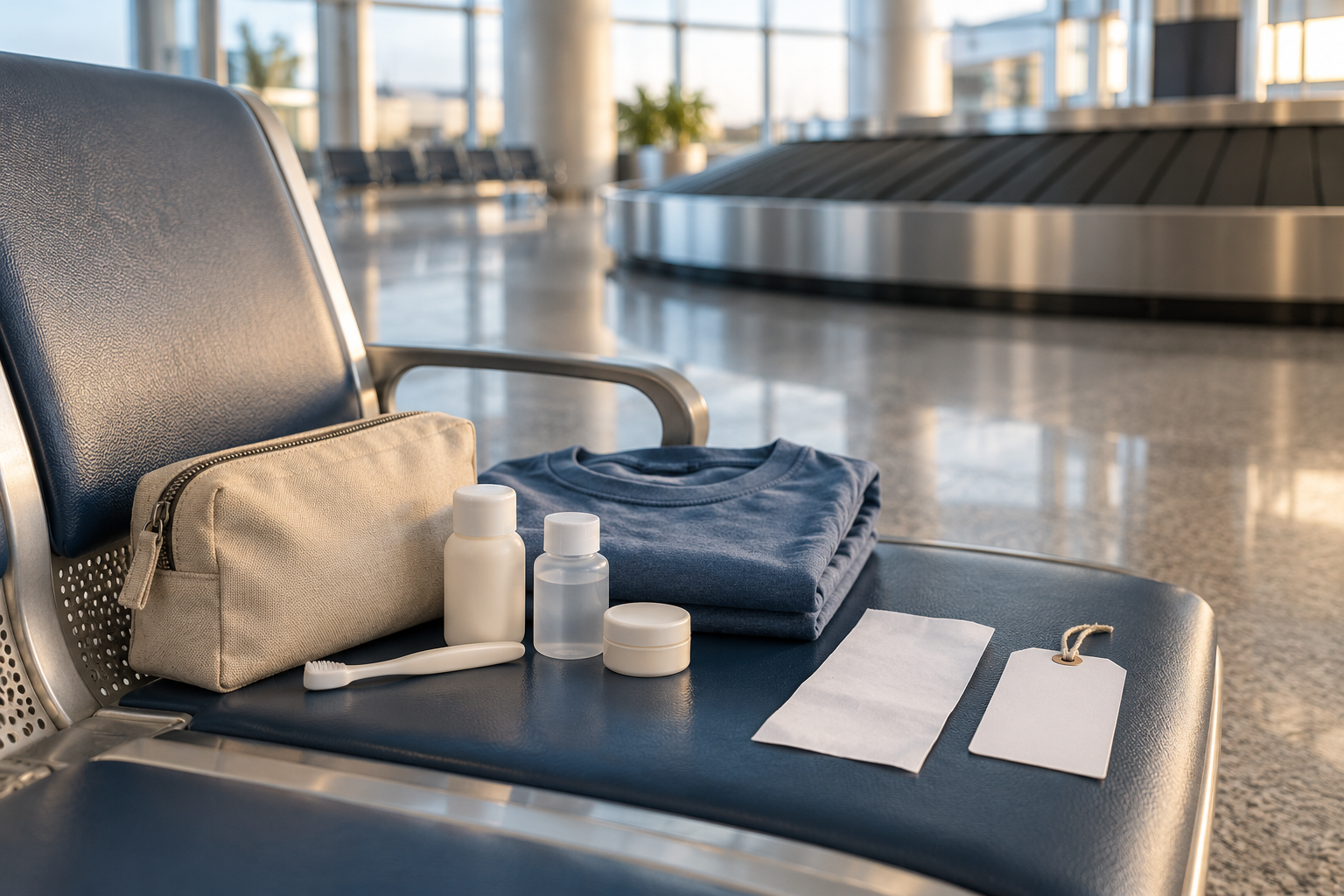
The carousel stops, but your checked bag has not arrived. You may need a toothbrush and a change of clothes before you know where the bag is. A delayed luggage budget gives those immediate purchases a limit without assuming an airline or insurer will repay them. It also keeps the replacement spending separate from the rest of your trip.
Policies, reporting steps, deadlines, and possible reimbursement vary by airline, itinerary, coverage, and location. Use the current instructions for your booking and any insurance policy rather than treating a general checklist as a promise of payment.
Report the bag before shopping
Check the airline’s official baggage desk, app, or website for its missing-bag process. Give the bag tag and booking details, describe the bag, and confirm how to receive updates. Keep the case reference, report confirmation, and a record of when and where you reported it. Ask which carrier handles the report if more than one airline operated your itinerary.
Confirm the delivery address and a way to contact you while traveling. Ask how the airline wants you to document essential purchases and where its current guidance on delayed-bag expenses is published. If the bag’s status changes, follow its instructions for collection or delivery. Do not wait for a reimbursement decision before reporting the missing bag.
Keep the claim reference in a private trip note, not in a public post. If a third party contacts you about the bag, verify the request through the airline’s official channel before sharing payment or identity details.
Define what you need before the next update
List what is actually in the missing bag, then check what you already have in your hand luggage, hotel, or accommodation. Focus on the period until the next realistic bag-status check, not the entire trip. Your first-pass list might be basic toiletries, medication access, one clean outfit, or an item needed for a fixed activity. Some needs cannot wait; others can.
Put each candidate purchase into one of three groups:
- Needed now: you cannot reasonably do without it before the next check.
- Can wait: you can borrow, wash, use an existing item, or decide after an update.
- Full replacement: a larger purchase to reconsider only if the delay continues or the bag is confirmed lost.
If essential medication or specialist equipment is missing, contact the appropriate provider or local professional for safe replacement steps rather than improvising from a shopping list. This article is about the money plan, not medical advice.
Set a small cash limit that fits the trip
Start with the cash or available card space you can use without jeopardizing accommodation, meals, onward transport, and the journey home. Set a first-day ceiling for essentials and leave a little room for a new need. Do not treat a possible claim as available money. Check your card’s payment date as well as today’s balance: a reimbursement might arrive after the bill is due, or not be approved.
For example, suppose your trip has 100 illustrative units of flexible cash after committed costs. You plan up to 40 for basic toiletries and a simple outfit, 25 for laundry or another essential if the bag stays away, and leave 35 untouched for transport or later decisions. These are example budget amounts, not typical prices or amounts anyone is entitled to recover. If you only need 18 now, spend 18; the limit is not a target.
When traveling with others, keep each person’s necessary items visible in the plan. A shared room does not make a missing child’s clothes or a companion’s work supplies interchangeable. If you must move money from another trip category, note which purchase or activity you are giving up.
Buy deliberately and keep evidence together
Before checkout, ask whether the item solves a need created by the delay, whether a lower-cost suitable option exists, and whether you already have a substitute. Avoid buying a whole new wardrobe because the eventual claim outcome is uncertain. A reasonable personal spending limit and a provider’s reimbursement rules are different things; consult the provider’s current policy for the latter.
Save itemized receipts, not just card notifications. Put them with the baggage report, bag tag photo, itinerary, and a short note explaining why and when an item was needed. Record the purchase amount and payment method. If a receipt includes sensitive details, store it privately. Ask the airline or insurer which evidence it needs before submitting anything through an unfamiliar link.
If a bag arrives after you buy an essential, keep the receipt and note the delivery time. Do not assume arrival automatically determines the claim outcome; let the provider review it under its terms.
Track a possible claim separately from your spending
Make a short ledger with purchase, claim status, and money received as separate fields. A submitted form is not a refund; an email promising review is not cash. Check whether any travel insurance, card benefit, or airline process might apply, but read its own coverage, exclusions, evidence requirements, and submission steps. Do not assume you can recover the same expense twice.
For instance, if you paid 40 units for essentials, the trip has spent 40 even while a claim is pending. If 25 is later paid back, the net cash cost becomes 15 after that payment actually posts. Until then, plan as though the full 40 has left your available funds. If a payment is denied or only partly approved, update the ledger rather than leaving a hoped-for amount in your budget.
You can categorize the purchases in Furt Money and review how they affected your travel spending. Keep the claim reference and provider messages in a separate private note; reconcile any repayment against the original expense so it does not look like unrelated new income.
Recheck the bag and close the budget
Use the airline’s stated update channel and follow-up interval. Record the latest status, whom you spoke with, and what happens next. If the delay stretches on, reset your essentials list and cash limit for the next period; do not repeat the first day’s shopping by default. If the bag is declared lost, ask the provider about the applicable next process, evidence, and timelines rather than assuming the delayed-bag report covers everything.
When the bag arrives, compare your receipts with any claim decision and the payments that actually reach your account. Note any unrecovered amount in the trip total and restore a savings cushion if you used one. For a future trip, consider which small essentials are worth keeping in hand luggage, subject to the rules for your route.
Next step: file or confirm the bag report, then write a short needed-now list and a first-day spending ceiling based on money you already have. That is enough to make the next purchase calmer while the bag is still in motion.