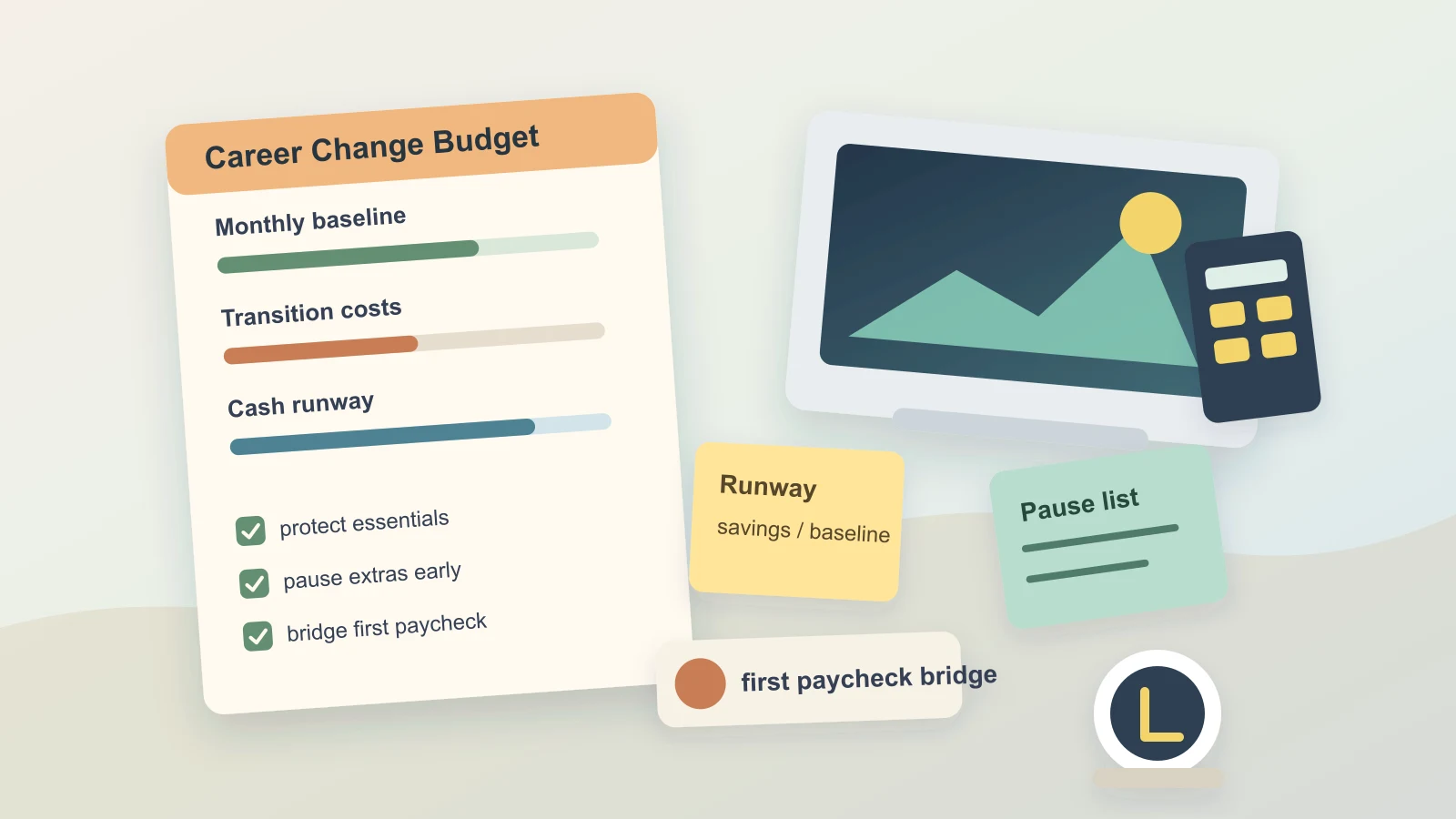
Changing careers is exciting, but it can also make your money feel temporarily unclear. You may be dealing with interview travel, course fees, a lower starting salary, a delayed first paycheck, or a stretch between roles. A career change budget gives that transition a shape before stress starts making every decision feel urgent.
The goal is not to predict every detail. The goal is to know what you can afford, what needs a pause, and what would make the move feel calmer.
Start with the change you are actually making
“Career change” can mean several different money situations. A planned move from one full-time role to another is different from quitting to retrain, starting freelance work, going part-time, or taking a lower-paid role for better long-term fit.
Write down the version you are considering in plain language:
- moving directly from one paycheck to another
- taking time off to search, study, or recover
- paying for a course, certificate, portfolio, or equipment
- accepting a temporary income drop
- moving cities or changing commute costs
- losing or replacing employer-provided benefits
This step matters because the budget should match the risk. A two-week gap may need a small cash buffer. A six-month retraining period needs a much more deliberate plan.
Build your baseline monthly number
Before you price the change, find the monthly amount your life needs to keep running. This is not your ideal budget. It is the practical baseline you must protect while you transition.
Include:
- rent or mortgage
- utilities, internet, and phone
- groceries and household basics
- insurance and health costs
- minimum debt payments
- transport
- childcare, care support, or family commitments
- subscriptions or services you truly need for daily life
Then add a smaller section for flexible spending that keeps life workable: eating out, fitness, personal care, hobbies, gifts, and small comforts. A career change budget that cuts everything enjoyable may look strong on paper but fail after a stressful week.
If you use Furt Money, review the last few months by category instead of guessing. Real spending patterns usually reveal one or two categories that are easier to trim than the obvious ones you already notice.
Price the transition costs separately
Do not hide career-change costs inside normal monthly spending. List them as their own transition budget so you can see the full price of the move.
Common costs include:
- application, exam, license, or certification fees
- courses, books, software, or tools
- laptop, clothing, portfolio, or workspace upgrades
- networking coffees, events, or professional memberships
- interview travel, parking, transit, or childcare
- relocation deposits, moving supplies, or temporary housing
- unpaid time between jobs
- benefits gaps, new insurance premiums, or higher out-of-pocket costs
Separate “must pay” from “could help.” A required exam fee is different from a premium course that might be useful. This gives you room to say yes to the few things that matter and no to spending that mostly calms anxiety for a day.
Create a cash runway
A cash runway is the number of months your savings can cover your baseline expenses if income drops or stops. It is not a prediction that things will go badly. It is a way to make the transition less fragile.
Use a simple formula:
Runway months = available transition savings divided by baseline monthly expenses
For example, if your baseline is 2,500 a month and you have 7,500 set aside for the transition, you have about three months of runway before any new income or extra costs. If you also need 1,500 for a course and 800 for moving, subtract those first so the runway stays honest.
You can also build a “minimum runway” and a “comfortable runway.” The minimum is the lowest amount you need before making the move. The comfortable version is the amount that lets you make decisions without panic.
Decide what to pause before you need to pause it
The hardest budget cuts are the ones made in a hurry. Build a pause list while you are calm.
Group expenses into three levels:
- pause first: unused subscriptions, upgrades, shopping habits, extra delivery, duplicate services
- pause if needed: travel, bigger home projects, large gifts, paid hobbies, non-urgent appointments
- protect if possible: housing, food, healthcare, transport, debt minimums, essential family needs
This list prevents every decision from becoming a debate. If the transition gets tight, you already know where to start. If it goes smoothly, you can keep more of your normal life intact.
Plan for the first paycheck problem
Even when you land the new role, cash flow can be awkward. Your final paycheck may arrive on one schedule and your first paycheck may arrive on another. Some jobs pay after a waiting period. Freelance or contract work can pay later than expected.
Before you count the new income as available, ask:
- When is the final paycheck from the old work expected?
- When is the first paycheck from the new work expected?
- Will there be a benefits waiting period?
- Are any reimbursements delayed?
- Will taxes, retirement contributions, or insurance deductions change take-home pay?
- Do you need to cover equipment or setup costs before reimbursement?
Build a one-month bridge plan around dates, not just income totals. A cash-flow calendar can help you place rent, bills, debt payments, groceries, and the first new paycheck in order.
Set decision rules for the search
A career change budget should help you make decisions, not just track spending after the fact. Create a few rules before emotions get loud.
Useful rules might sound like:
- I will not pay for another course until I finish the one I already bought.
- I will keep one month of baseline expenses untouched.
- I will take freelance work only if it does not block scheduled job-search time.
- I will review the budget every Friday during the transition.
- I will revisit the plan if savings drop below my minimum runway.
- I will compare any lower salary against commute, benefits, schedule, and growth potential before deciding.
Rules like these keep the plan flexible without making it vague.
Review weekly, then monthly after the move
During the transition, review your money weekly. Check what cleared, what is still pending, what changed, and whether your runway is still accurate. Keep the review short enough that you will actually do it.
After the new work settles, switch to a monthly review. Look for changed patterns: lunch costs, commuting, professional clothes, childcare, health expenses, software, or income timing. A job change often changes spending in small ways before you notice the full effect.
Furt Money can make this easier by helping you categorize the new expenses separately at first. Once the new routine becomes normal, you can merge or rename categories so your budget stays clean.
One next step
If you are thinking about a career change, start with one number: your baseline monthly expense amount. Once you know that, the rest of the plan becomes clearer. You can estimate your runway, price the transition, choose what to pause, and decide whether the move needs more savings, a slower timeline, or a smaller first step.