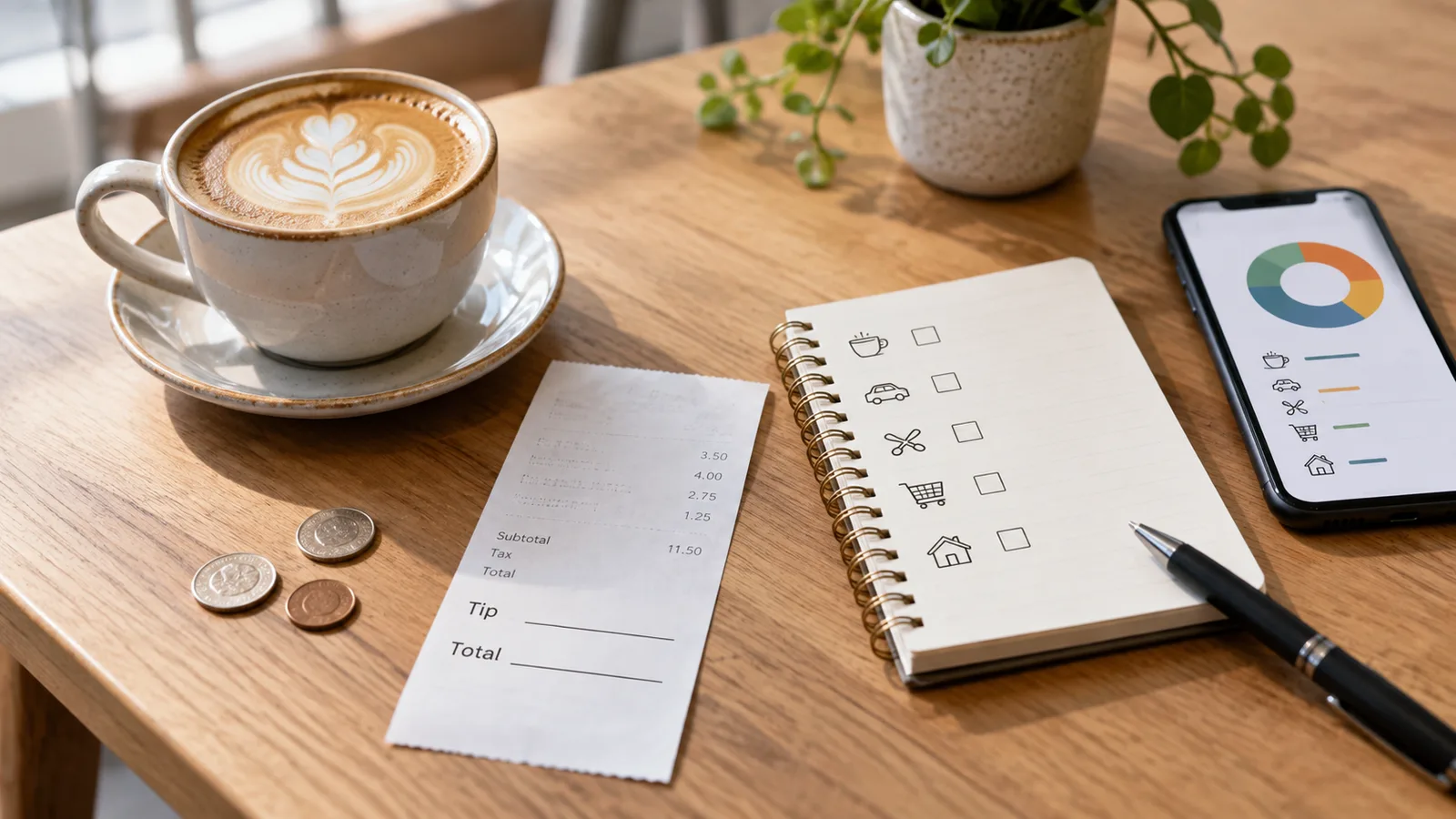
Tips can make a budget feel inaccurate even when the main purchase was planned. You may know the price of the haircut, meal, ride, delivery, hotel stay, or home repair, then remember the tip only when the payment screen appears.
A tipping budget gives those add-ons a place before they become awkward decisions. It is not about judging generosity or creating a rigid rule for every situation. It is about seeing the full cost of service-heavy weeks, choosing your default approach, and keeping your monthly spending plan honest.
List where tips actually happen
Start by writing down the places where you usually tip. Do not begin with an ideal version of your life. Use recent receipts, card transactions, and memory from the last one or two months.
Common tipping categories include:
- restaurants, cafes, bars, and takeout counters
- food delivery, grocery delivery, and courier services
- rideshares, taxis, airport transfers, and valet parking
- haircuts, grooming, beauty appointments, and spa services
- hotel stays, luggage help, tours, and travel services
- home services such as cleaning, moving help, repairs, and installations
- holiday or occasional appreciation for regular service providers
Your list may be short. That is fine. The goal is to find the pattern that belongs in your budget, not to copy someone else’s habits.
If you use Furt Money or another expense tracker, review transactions with service fees, delivery fees, and card totals that were higher than the menu or appointment price. Those differences often reveal where tips are hiding.
Build tips into the full purchase cost
A useful tipping budget treats the tip as part of the decision before you buy. If dinner fits only when you ignore the tip, the dinner does not fully fit yet. If a grooming appointment fits only before gratuity, the appointment needs a more honest number in the budget.
Try estimating the total in one line:
- meal or service cost
- taxes or platform fees, if relevant
- delivery, booking, or convenience fees
- tip
- transport, parking, or other connected costs
This prevents the common mistake of budgeting for the advertised price while paying the real price. It also makes comparison easier. A lower menu price with higher fees and a larger tip may not be cheaper than a simpler option with fewer add-ons.
Choose default ranges before the moment
Tip prompts can feel stressful because they appear when someone is waiting, a line is moving, or you are already tired. A default range reduces decision fatigue.
You do not need one universal number. Instead, create a few personal ranges:
- one range for sit-down meals
- one range for delivery or rides
- one range for personal care appointments
- one range for one-time home services
- one small default for coffee, counter service, or quick extras when you choose to tip
Keep the ranges flexible. Service quality, local norms, your financial situation, and the type of work can all matter. The point is to make the decision calmer by deciding your usual approach before the screen is in front of you.
Create a small monthly tip category
If tips happen often, give them their own budget category for a month. This does not have to be permanent. It is a temporary visibility tool.
A separate category helps answer questions like:
- Are tips mostly connected to dining out?
- Are delivery tips replacing grocery or meal planning costs?
- Do travel weeks need a larger cash buffer?
- Are personal care appointments more expensive than the appointment price suggests?
- Are small counter-service tips adding up because they happen every weekday?
After one or two months, you may decide to fold tips back into their parent categories. Dining tips can live with restaurants. Delivery tips can live with convenience spending. Grooming tips can live with personal care. The temporary category simply helps you understand the size of the pattern first.
Plan for service-heavy weeks
Some weeks naturally include more tipping than others. A normal monthly average may not prepare you for them.
Watch for weeks with:
- travel, hotel stays, tours, or airport transfers
- weddings, birthdays, holidays, or family visits
- moving day, furniture delivery, or home setup
- several appointments close together
- illness or busy work periods that increase delivery and rides
- visitors staying with you, which can mean more dining out and transportation
When a service-heavy week is coming, add a temporary tip buffer to the plan. It can sit inside the trip budget, event budget, moving budget, or weekly spending limit. Naming it ahead of time keeps you from feeling surprised by a cost you could reasonably expect.
Keep cash and digital tips visible
Tips are easy to lose track of when some are paid by card, some are added in an app, and some are paid in cash. The payment method matters less than the follow-up.
Use a simple rule: record the full amount you actually spent, not only the base price. If you pay a cash tip after a card payment, add a note so the total service cost is still visible later.
For example:
- Haircut paid by card, cash tip added.
- Hotel stay paid online, small cash tips during the trip.
- Delivery order charged in an app, tip adjusted afterward.
- Repair invoice paid by transfer, appreciation tip paid separately.
These notes are especially useful when reviewing the month. Without them, cash disappears from the budget and app totals look confusing.
Make room without resentment
A tipping budget should not make you feel trapped between being generous and being financially careless. It should help you choose services at a total price you can actually afford.
If tipping keeps pushing a category over budget, adjust the decision before the service instead of blaming yourself after payment. You might:
- choose a simpler meal out
- pick up the order instead of using delivery
- space out appointments
- use transit for some trips and rideshares for others
- plan fewer service-heavy activities in the same week
- move money from a lower-priority category before spending
The key is to change the full plan, not quietly expect the tip to vanish. Service costs are still costs, even when they arrive at the end.
Review the pattern monthly
At the end of the month, look at tips alongside the categories that created them. You are not looking for a perfect number. You are looking for the story.
Ask:
- Which tips were expected?
- Which ones caught me off guard?
- Did I underbudget for a recurring service?
- Did a busy week create more delivery, rides, or restaurant spending?
- Should tips stay as a separate category next month?
- Is there one habit I want to change before the next pay cycle?
This is where tracking helps. Categorizing spending in Furt Money can show whether tips are tied to dining, travel, personal care, transport, or convenience. Once the pattern is visible, the next budget can be more realistic.
The bottom line
Tips are small only when you look at them one at a time. Across a month, they can change the real cost of dining, travel, appointments, deliveries, and service visits.
For the next week, choose one service category where tips often appear. Estimate the full cost before you pay, record the actual total afterward, and use that number when planning the next month. A tipping budget starts with that simple habit.