Monthly rent is the number everyone notices first. It is also only one part of the real cost of renting a home. A place can look affordable on the listing page, then become stressful once deposits, utilities, transport, furniture, maintenance rules, parking, and moving costs show up.
A rent budget checklist helps you slow the decision down before you sign. Instead of asking only, “Can I pay this rent?” you ask, “Can I live here comfortably after all the related costs are included?”
The goal is not to find a perfect apartment. The goal is to choose a home that fits your cash flow, your daily routine, and the other money priorities you do not want rent to crowd out.
Start with your real take-home pay
Before comparing apartments, use take-home pay instead of salary. Take-home pay is the amount that actually arrives after taxes, payroll deductions, retirement contributions, benefits, or other automatic withholdings.
If your income changes from month to month, use a conservative number. A rent plan built on your best month can become fragile very quickly. For variable income, start with the lower amount you can reasonably expect and treat higher months as room to build savings, pay down debt, or get ahead on upcoming bills.
Write down:
- Monthly take-home income
- Any predictable side income you can rely on
- Current fixed bills
- Minimum debt payments
- Savings you want to protect
- Regular family or household support you provide
This gives you the first boundary. Rent should fit inside your real monthly life, not just inside a rule of thumb.
Add the move-in costs before you fall in love
Move-in costs can make an apartment expensive before the first normal month even starts. These costs vary by lease, city, landlord, and building, so read the actual terms carefully.
Common move-in costs include:
- Security deposit
- First month’s rent
- Last month’s rent, if required
- Application or screening fees
- Broker, agent, or administrative fees where applicable
- Utility setup deposits
- Elevator, move-in, parking, or building access fees
- Cleaning supplies, basic furniture, and household items
- Movers, truck rental, storage, fuel, or delivery costs
Put these in a separate one-time moving budget. If you use a credit card or loan for move-in costs, include the repayment in your future monthly budget too. Otherwise, the apartment may look affordable while the move itself creates a new debt payment.
Estimate monthly housing costs beyond rent
The next step is to build a full monthly housing number. Rent is the base, but the apartment may bring several attached costs.
Check whether you will pay separately for:
- Electricity
- Gas
- Water, sewer, or trash
- Internet
- Parking
- Laundry
- Storage
- Renters insurance
- Building amenities
- Pet rent or pet fees
- Maintenance items the tenant must handle
Ask which costs are included, which are billed directly by providers, and which are billed through the landlord or building. If you cannot get exact numbers, use a practical estimate and leave a little room. A budget that only works when every estimate is low is not a comfortable budget.
If you track expenses in Furt Money, review your current utility, transport, household, and grocery categories before estimating. Your past spending can keep the new apartment plan grounded in how you actually live.
Compare the commute, not just the rent
A cheaper apartment can become more expensive if it adds daily transport costs or eats the time you need for work, study, rest, or family. The rent budget should include the cost of living in that location, not just the cost of occupying the unit.
Before deciding, map a normal week:
- Work or school commute
- Grocery trips
- Childcare, family care, or regular appointments
- Public transport passes, rideshares, fuel, tolls, or parking
- Time spent traveling during busy hours
- Whether you will need a car, bike, or additional transit option
Then compare the total. A place with slightly higher rent but lower transport costs may be easier on your month. A place with lower rent but expensive commuting may still be the right choice, but it should be chosen with eyes open.
Protect the rest of your budget
Rent has a way of making every other category smaller. That is not always wrong; housing is important. But if rent absorbs too much cash, normal life can start moving onto credit cards or borrowed money.
Before signing, test the apartment against the rest of your budget:
- Can you still buy groceries without relying on debt?
- Can you cover transport for the full month?
- Can you pay existing debt minimums on time?
- Can you keep a small checking buffer?
- Can you save something for irregular expenses?
- Can you handle a modest surprise without missing rent?
- Can you afford the routines that matter to your health and relationships?
This is where a rent budget becomes personal. Two people with the same rent can feel very different depending on debt, dependents, health costs, commute, savings, and income stability.
Watch for lease details that affect cash flow
The lease can include money rules that do not show up in the headline rent. Read slowly and ask questions before you commit.
Look for:
- Due date and late-fee rules
- Grace period wording, if any
- Rent increase notice requirements
- Renewal terms
- Utility billing method
- Guest, roommate, sublet, or pet rules
- Maintenance responsibilities
- Early termination costs
- Deposit return conditions
- Required insurance or building fees
This is not legal advice, and local rental rules can vary widely. If a lease term is unclear or high-stakes, ask a qualified local source before signing. From a budgeting perspective, the key is simple: any rule that can turn into a payment deserves attention before it becomes a problem.
Use a simple yes, maybe, no system
Apartment decisions can become emotional quickly. A simple system helps you compare options without pretending the decision is purely mathematical.
For each place, mark it:
- Yes if the full monthly cost fits, move-in costs are manageable, the commute works, and the lease terms are clear.
- Maybe if the rent works but one or two costs need confirmation.
- No if the apartment only works by ignoring likely bills, skipping savings, using debt for normal expenses, or hoping future income improves.
Keep notes for each option. A short list of clear trade-offs is more useful than trying to remember every showing, message, fee, and feeling at once.
Make the first month easier
Even a good rental decision can feel tight during the first month. Deposits, setup costs, moving supplies, and routine bills may overlap.
Before move-in, choose one short first-month plan:
- Pause nonessential shopping for a few weeks.
- Delay furniture upgrades that are not urgent.
- Keep a small moving-supplies category.
- Schedule utility setup before the old place closes.
- Track every housing-related cost separately for the first month.
- Review the budget after the first full billing cycle.
The first month teaches you what the apartment really costs. Use that information to adjust categories before small surprises become permanent stress.
Choose a home your budget can live with
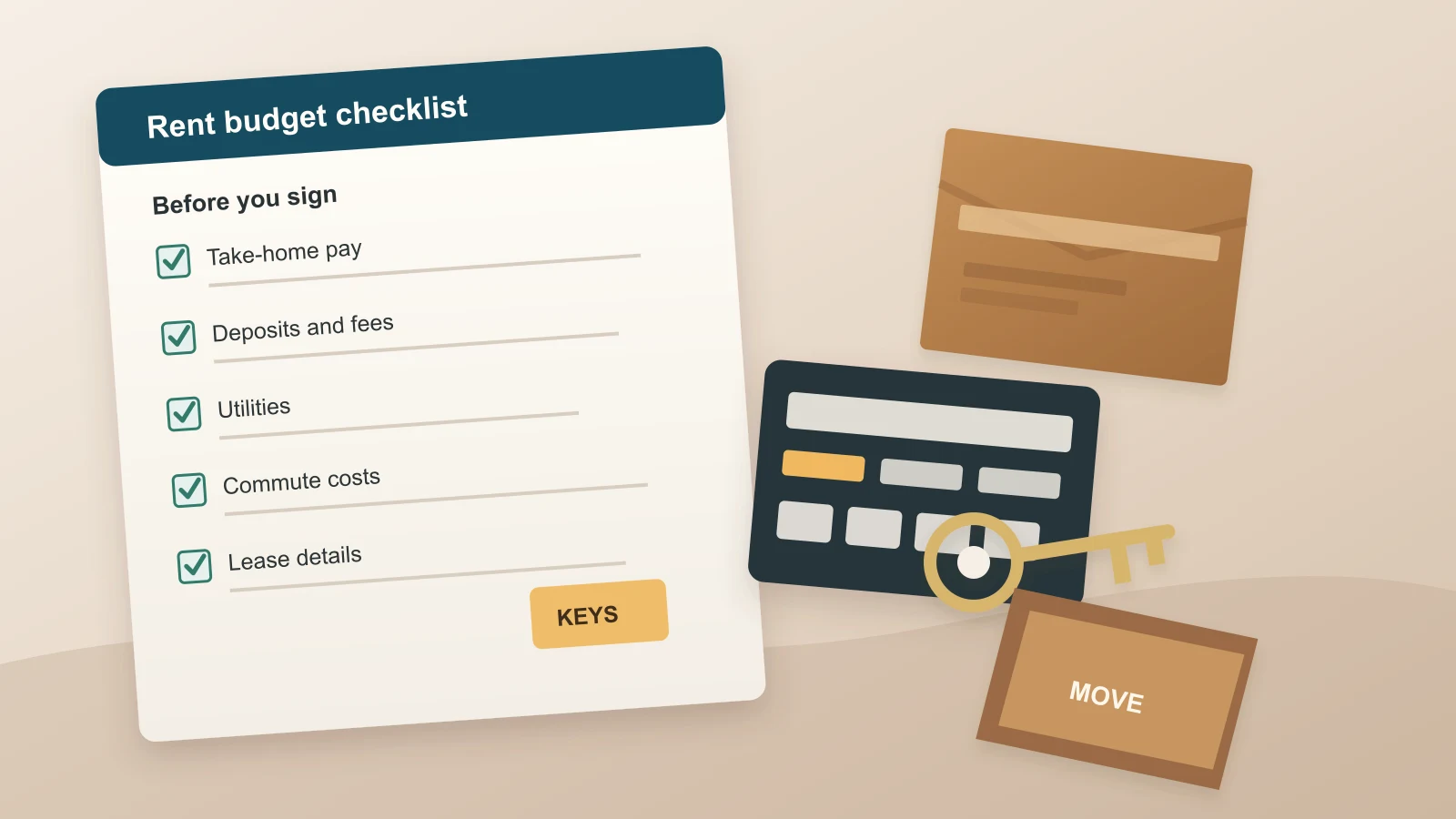
A good rent budget checklist does more than approve or reject an apartment. It helps you see the full shape of the decision: take-home pay, move-in costs, utilities, transport, lease terms, and the everyday categories that still need room.
Before you sign, build the full monthly number and the one-time moving number. If both fit without draining every bit of cash, you are making a calmer decision. If they do not, the checklist has done its job by showing the pressure before you are locked in.