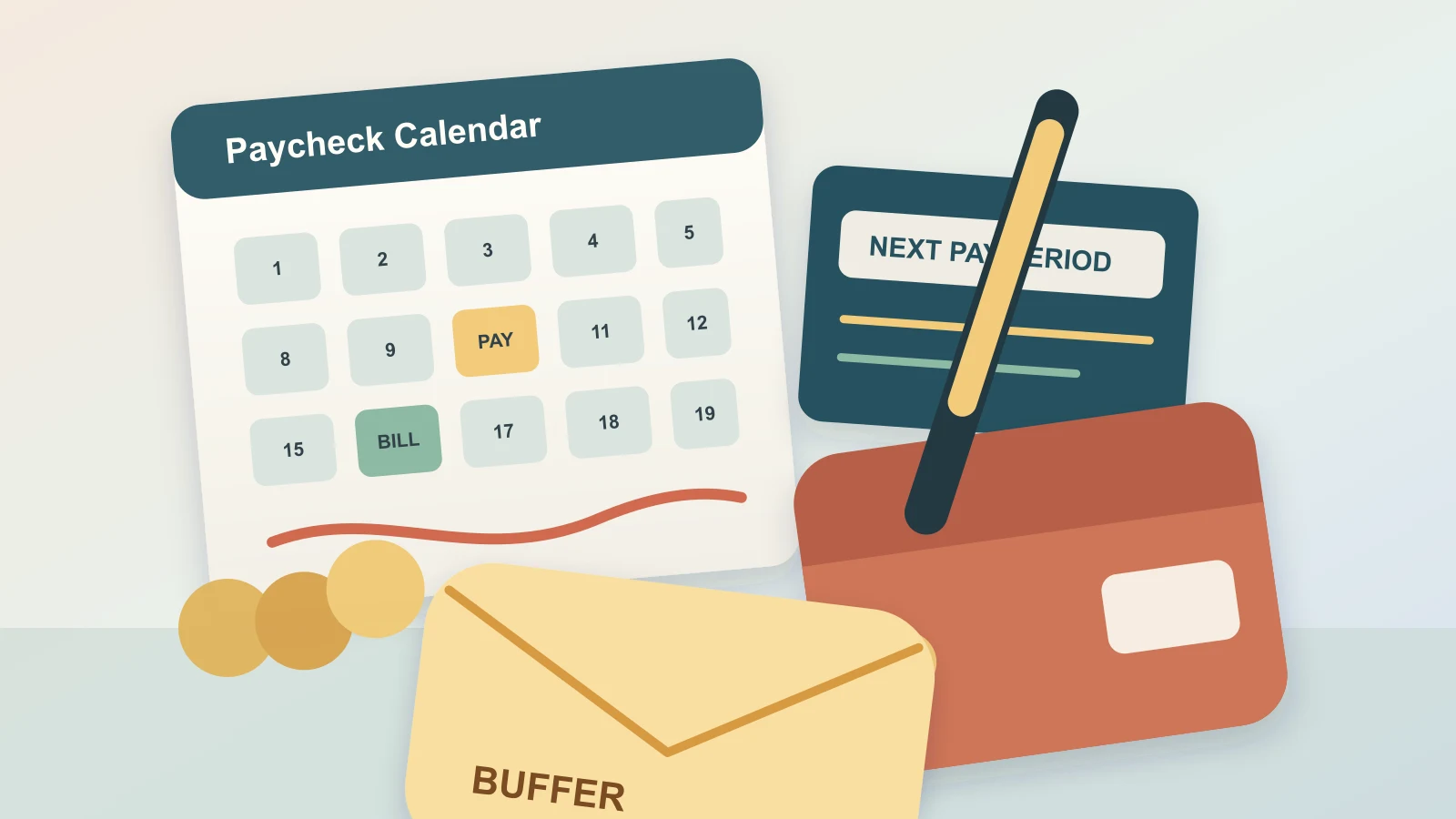
Living paycheck to paycheck is often a timing problem before it is a discipline problem. The bills may technically fit the month, but the due dates, grocery runs, card payments, and subscriptions all compete for the same narrow stretch of cash. One delayed payment or higher-than-usual errand can make the next payday feel too far away.
A one paycheck ahead budget creates a small buffer between the money you earn and the money you spend. Instead of using the next paycheck to rescue the current week, you gradually build enough room to pay normal expenses from money already sitting in the account.
This does not require a perfect month or a huge emergency fund first. It starts with one practical question: how can you make the next paycheck slightly less urgent?
Know what one paycheck ahead means
Being one paycheck ahead does not mean you are rich, finished, or free from every surprise. It means the money for your next short budget period is already available before that period begins.
For a biweekly earner, the goal may be to have two weeks of ordinary expenses set aside before the next pay cycle starts. For a weekly earner, it may be one week of essentials and flexible spending. For a monthly earner, a smaller starter version might be half a month before building toward the full month.
The exact size depends on your real cash flow. The useful idea is the same: your bills stop depending on the paycheck that has not arrived yet.
Start with your baseline number
Do not begin by guessing a large savings target. Begin with the cost of one normal pay period.
Add up the expenses that usually need to happen between two paychecks:
- rent, mortgage, or the portion due in that period
- utilities, phone, internet, insurance, and subscriptions
- groceries, household supplies, transport, and medicine
- debt minimums and required payments
- childcare, school, pet, or family costs
- a realistic amount for small personal spending
This number does not need to include every dream goal. It should represent the money required to get through one ordinary stretch without waiting for the next deposit.
If you track spending in Furt Money, review the last few pay periods by category. Look for the categories that repeat every time, then separate them from one-time costs that do not belong in the baseline.
Build the buffer in small layers
Trying to save a full paycheck all at once can feel impossible. A layered approach works better because every layer creates a little more calm.
Try this order:
- First layer: keep enough extra cash to avoid overdraft stress.
- Second layer: hold one day of normal spending before payday.
- Third layer: hold one recurring bill before it is due.
- Fourth layer: hold one week of baseline expenses.
- Final layer: hold one full pay period of baseline expenses.
Each layer has value. Even one bill paid from older money can reduce the scramble. You are not failing because the buffer is small. You are proving that cash flow can become less reactive over time.
Give new money a waiting room
When a paycheck lands, it is tempting to immediately assign every dollar to overdue pressure, current bills, and small rewards. A one paycheck ahead budget needs one new habit: some money waits before it is spent.
Create a separate place for buffer money. It can be a savings account, a labeled pocket, a budget category, or a simple line in your tracker called “next pay period.”
Then choose a repeatable transfer rule:
- Move a small fixed amount from every paycheck.
- Move leftover grocery or dining money at the end of each week.
- Move part of any refund, gift, bonus, or reimbursement.
- Move the amount from a bill you lowered or canceled.
- Move the extra from a three-paycheck month if you are paid biweekly.
The amount can be modest. Consistency matters more than drama. A buffer that grows slowly and stays intact is better than an ambitious transfer you keep pulling back three days later.
Protect the buffer from fake emergencies
Once the buffer exists, it can become tempting to treat it as extra spending money. That is why it needs a clear job.
Decide what the buffer is allowed to cover:
- normal bills before payday
- timing gaps between income and required payments
- groceries, transport, and essentials during a tight week
- a temporary shortfall that will be refilled from the next paycheck
Then decide what it does not cover:
- impulse shopping
- upgrades that can wait
- social plans you did not budget for
- subscriptions or add-ons you forgot to cancel
- purchases that belong in a separate sinking fund
This is not about being strict for its own sake. It is about keeping the buffer available for the timing problems it was built to solve.
Use a refill rule every time
A buffer is useful only if it gets rebuilt after use. Without a refill rule, it slowly turns into ordinary spending.
Keep the rule simple: when the buffer drops, the next paycheck refills it before new flexible spending expands.
For example, if you used part of the buffer to cover groceries before payday, the next paycheck first restores that amount. Only after the refill do you decide what is available for dining out, shopping, entertainment, or extra debt payments.
This can feel repetitive at first, but it teaches your budget to recover. The goal is not to never touch the buffer. The goal is to touch it for the right reasons and bring it back.
Keep bills aligned with the new rhythm
As the buffer grows, your bill timing may become easier to manage. That is a good moment to clean up due dates and automatic payments.
Look for:
- bills that arrive immediately before payday
- subscriptions that cluster in the same week
- card payments that clear before deposits
- annual or quarterly charges that interrupt the buffer
- transfers that happen too early and then need to be reversed
Some providers let you change due dates. Some do not. Even when dates cannot move, seeing the pattern helps you decide how much buffer belongs in each week.
If you use Furt Money, review your recurring categories and upcoming bills together. A paycheck-ahead system works best when bills, categories, and account balances all tell the same story.
Measure progress by pressure, not perfection
The first sign of progress may not be a big balance. It may be a less frantic Thursday, a bill paid two days earlier, or a grocery trip that does not depend on the next deposit.
Track a few signs:
- How often did you worry about a bill clearing before payday?
- How many times did you move money back out of savings?
- Did the same category drain the buffer more than once?
- Did your next paycheck already have too many jobs?
- Is your baseline number realistic, or too optimistic?
These questions make the system practical. If groceries keep using the buffer, the grocery number may need to rise. If subscriptions keep interrupting the plan, an audit may help. If income is irregular, the first goal may be a smaller weekly buffer before aiming for a full pay period.
The next step
Pick one layer, not the whole goal. If you have no buffer yet, choose a small amount to keep untouched until the day before payday. If you already have a little room, assign one upcoming bill to money you already have instead of money you expect.
A one paycheck ahead budget is built by shifting the timing one decision at a time. The win is not a perfect account balance. It is the moment your next paycheck stops feeling like the only thing holding the week together.