A credit card minimum payment can feel like a small, manageable number. It is the amount your card issuer asks for this month to keep the account in good standing. Paying it on time matters, but treating it as the whole plan can keep the balance hanging around for much longer than expected.
The better move is to understand what the minimum payment does, what it does not do, and how it fits into the rest of your budget. You do not need complicated math to start. You need a clear view of the balance, the due date, and the extra amount you can send without creating new debt somewhere else.
What a credit card minimum payment does
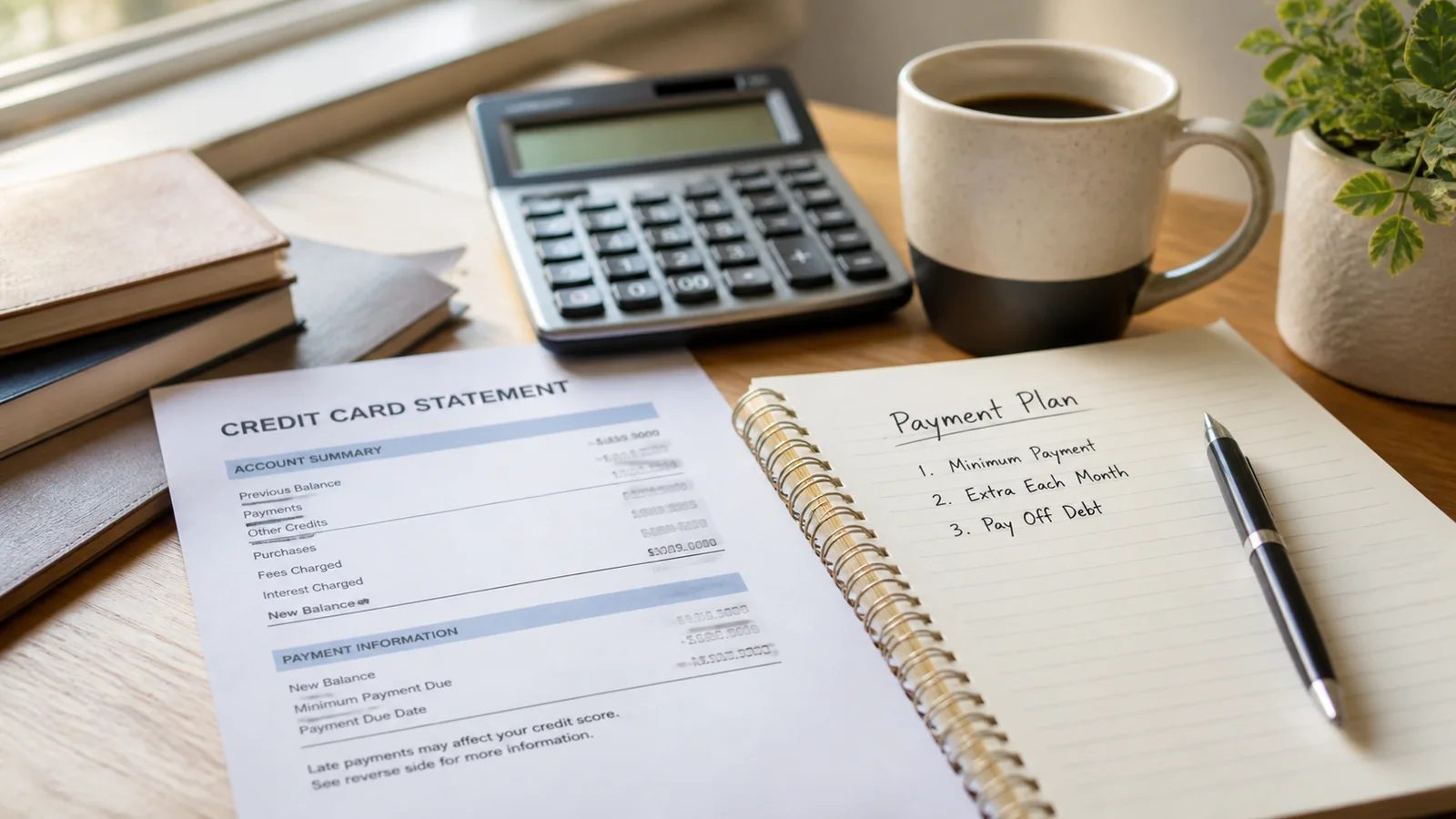
The minimum payment is the smallest amount you must pay by the due date to avoid being marked late. It usually includes a mix of interest, fees if any, and a small portion of the principal balance. The exact formula depends on the card agreement.
Paying at least the minimum helps you protect the account from late-payment consequences. It can also buy time during a tight month when cash is limited. That is useful, especially when the alternative is missing the due date entirely.
But the minimum payment is not designed to make debt disappear quickly. If you keep charging new purchases and only pay the smallest required amount, the balance can become a long-term bill instead of a short-term bridge.
Why the minimum can feel misleading
Minimum payments are often low compared with the full balance. That makes them easy to fit into a monthly budget, but it can also make the debt look less urgent than it really is.
There are three common traps:
- The payment feels affordable, so the balance stops getting attention.
- New purchases replace the progress made by last month’s payment.
- Interest keeps part of each payment from reducing the amount you borrowed.
This is why a card can feel “handled” even while the balance barely moves. The account is current, but the debt is still occupying future income.
Start with a no-drama snapshot
Before choosing a payoff strategy, write down the basics for each card. Keep it simple enough that you will actually update it.
Your snapshot should include:
- Current balance
- Minimum payment
- Due date
- Interest rate or promotional rate end date, if you know it
- Any automatic payment already scheduled
- Whether you are still using the card for new purchases
This snapshot turns vague stress into a set of decisions. If you track expenses in Furt Money, review recent credit card categories too. The goal is to see whether the balance came from one unusual month, a recurring shortfall, or several small habits adding up.
Put the minimum payment in the fixed-bill list
The minimum payment belongs in your budget even when you plan to pay more. Treat it like a fixed bill because missing it can create more problems than skipping a flexible purchase.
List all minimum payments before you assign money to dining out, shopping, upgrades, travel, or other flexible categories. Then decide how much extra debt payment is realistic after essentials, near-term bills, and a small cash buffer are covered.
This order matters. If you send every spare dollar to the card and then have to use the card again for groceries or transport, the payoff plan becomes circular. A slightly smaller extra payment that you can keep repeating is often more useful than an impressive payment followed by new charges.
Choose one extra-payment rule
Once the minimum is covered, create a rule for the extra amount. The rule should be specific enough to repeat without a fresh debate every month.
Useful options include:
- Add a fixed amount above the minimum every payday.
- Send any money left in a chosen flexible category at the end of the week.
- Apply refunds, rebates, or small windfalls to the card before spending them.
- Pay the minimum on every card, then put all extra money toward one selected balance.
- Round each payment up to a number that feels easy to remember.
Avoid building the plan around money you hope might appear. Use income you can reasonably expect and spending cuts you can actually maintain.
Stop the balance from refilling
A credit card payoff plan works best when the balance is no longer growing. That does not always mean closing the card or never using it again. It means deciding what role the card is allowed to play while you are paying it down.
You might choose to:
- Pause nonessential card spending for one billing cycle.
- Move recurring subscriptions to a debit card or checking account so they are visible.
- Use the card only for one budgeted category and pay that category off weekly.
- Remove the card from shopping apps that make impulse purchases too easy.
- Keep the physical card out of your wallet while you rebuild the habit.
The important question is simple: can you make the next payment reduce the old balance instead of paying for new purchases?
Prepare for tight months
Some months will not allow a big extra payment. Repairs, medical bills, travel, school costs, and family needs can interrupt even a careful plan. A good debt plan has a fallback rule for those months.
Your fallback can be:
- Pay at least the minimum by the due date.
- Avoid new nonessential charges.
- Keep a small checking buffer intact.
- Resume the extra-payment rule next payday.
- Review what changed instead of treating the month as a failure.
This keeps one hard month from turning into three careless ones. Consistency matters, but so does staying solvent.
Review progress by balance, not just payment size
Payment size is only part of the story. The balance trend tells you whether the plan is working.
Once a month, compare the current balance with last month’s balance. Ask:
- Did the balance go down?
- Did new purchases erase part of the payment?
- Was the extra payment too aggressive, too small, or realistic?
- Is one category repeatedly pushing spending back onto the card?
- Does the due date fall at an awkward point in the pay cycle?
If the balance is not moving, adjust the system before blaming yourself. You may need a smaller spending category, a different due-date reminder, a temporary pause on card use, or a more realistic extra-payment amount.
Make the minimum payment the floor, not the plan
A credit card minimum payment has one useful job: keeping the account current when paid on time. It should be the floor of your plan, not the ceiling.
Start with a simple snapshot. Put every minimum payment into your fixed bills. Choose one extra-payment rule you can repeat. Then watch whether the balance is actually falling. The calmer your system feels, the more likely you are to keep using it until the card debt is no longer a monthly drain.