Some purchases look expensive because the price is high. Others look harmless because the price is small. Neither view tells the whole story. A coat you wear every week for years may be easier to justify than a cheap gadget that sits unused after two days.
A cost per use budget gives you a calmer way to compare purchases. Instead of asking only “Can I afford this right now?”, you also ask “How often will I use it, what job will it do, and does it fit the money I already need this month?”
This approach is not a rule that says expensive things are always good or cheap things are always wasteful. It is a simple check that helps you slow down before buying and spend more intentionally when the purchase really does belong in your life.
What cost per use means
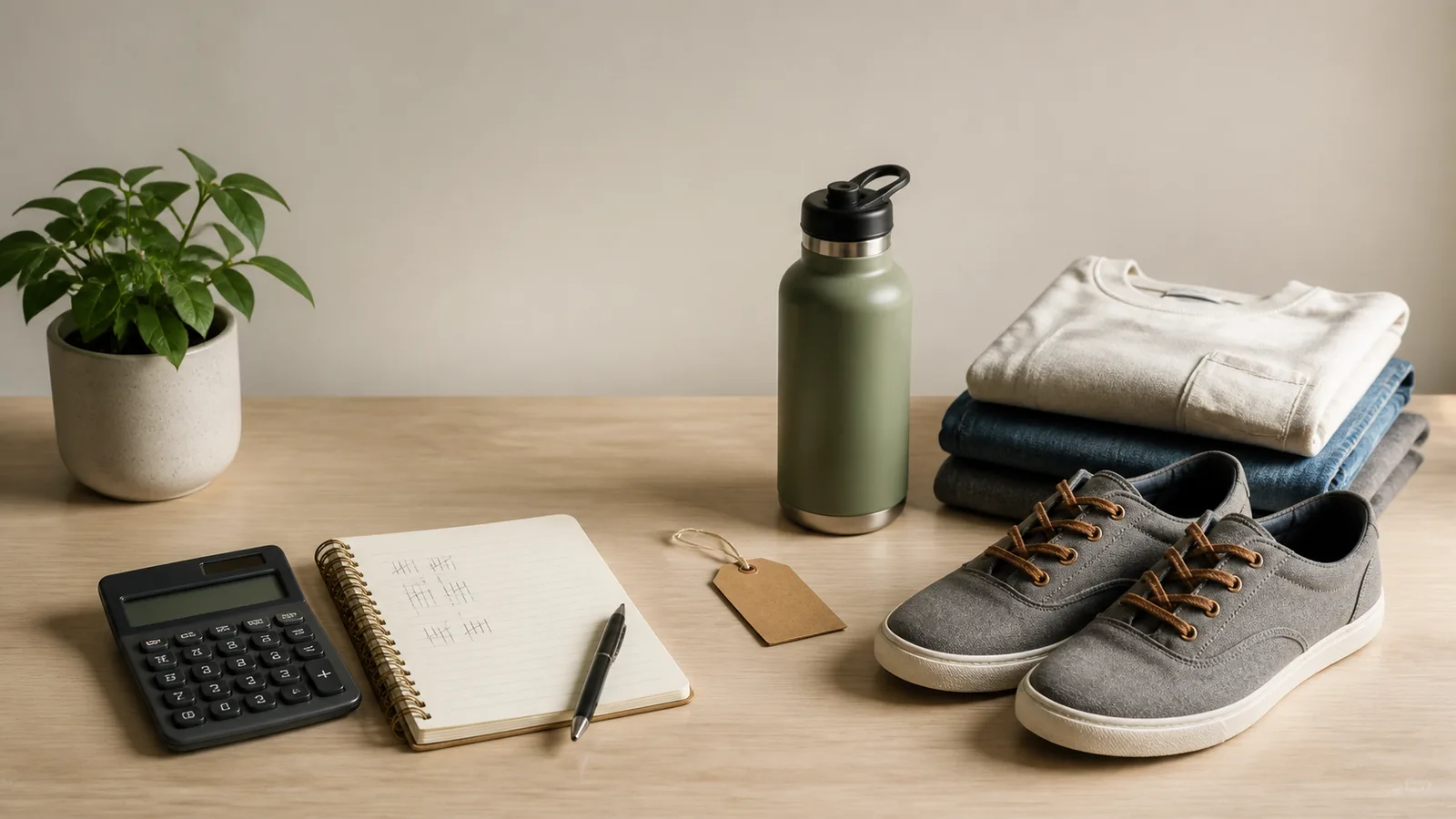
Cost per use is the price of an item divided by the number of times you expect to use it. If something costs 100 and you use it 50 times, the cost per use is 2. If something costs 30 and you use it twice, the cost per use is 15.
The exact math is less important than the question behind it. You are trying to connect the purchase to real life instead of judging it only by the checkout price.
Cost per use works well for:
- Clothing, shoes, bags, and accessories
- Kitchen tools, small appliances, and home items
- Fitness gear, hobby supplies, and creative tools
- Work equipment that you buy yourself
- Travel gear and luggage
- Subscriptions, memberships, and paid apps
It works less well for urgent repairs, medical needs, groceries, gifts, or one-time experiences where usefulness is not measured by repeated use. Those purchases may still be valid, but they need a different decision rule.
Start with the job of the purchase
Before you calculate anything, name what the item is supposed to do. A purchase without a job is easy to rationalize because the goal keeps changing.
Ask:
- What problem does this solve?
- What will it replace, improve, or make easier?
- When will I use it in a normal week or month?
- Do I already own something that does most of the same job?
- Would I still want this if nobody else saw it?
The last question matters because some purchases are really about identity, comparison, or pressure. That does not automatically make them bad. It simply means the budget should see the emotional reason clearly instead of hiding it behind practical language.
If you cannot name the job, pause the purchase. If the job is clear, the next step is to test whether the use is realistic.
Estimate realistic uses, not fantasy uses
Cost per use becomes misleading when you use imaginary numbers. A blender is not a low-cost purchase just because you picture yourself making smoothies every morning. Shoes are not a good deal just because you imagine a version of your life where you walk everywhere.
Use your current habits as the starting point.
For example:
- If you cook once a week now, estimate from one or two uses a week, not daily use.
- If you attend formal events twice a year, estimate from those real occasions.
- If you already have three similar items, assume the new one will share use with them.
- If a subscription supports a habit you keep abandoning, use the number of times you actually used it last month.
This is where expense tracking can help. If you use Furt Money, review the category connected to the purchase and look for patterns. A clothing category with frequent small buys may suggest that the issue is not one item, but a shopping rhythm. A fitness category with one unused membership may warn you to test the habit before buying more equipment.
Compare the item with the alternative
A cost per use budget should compare choices, not just defend one item. Sometimes the better option is buying higher quality. Sometimes it is buying secondhand, borrowing, renting, repairing, or waiting.
For each purchase, compare at least two alternatives:
- Buy the item now.
- Buy a cheaper or used version.
- Repair or maintain what you already own.
- Borrow or rent it for occasional use.
- Wait one pay cycle and see if the need remains.
- Skip it and use a workaround.
Then ask what each option costs in money, time, frustration, and space. The cheapest item can become expensive if it breaks quickly, makes the task harder, or needs to be replaced soon. The expensive item can still be the wrong choice if it creates pressure in the current month.
Good budgeting is not about always choosing the lowest price. It is about choosing the option that fits your life and your cash flow.
Check timing before you buy
Even a worthwhile purchase can be poorly timed. Cost per use answers one question. Your monthly budget answers another: can this purchase happen now without crowding out more important money?
Before buying, check:
- Bills due before the next paycheck
- Groceries, transport, and other essential spending still needed
- Debt payments or minimum payments already scheduled
- Savings you promised to a specific goal
- Irregular costs coming soon, such as renewals, travel, school fees, repairs, or medical appointments
If the purchase passes the cost per use test but fails the timing test, it may belong on a waiting list or sinking fund. That is not a failure. It means the item might be useful, but the budget needs more room before you bring it in.
A simple rule can help: if buying it today would force you to undo a decision you made earlier in the month, wait.
Use a buy, wait, or skip decision
After the math and timing check, make the decision explicit. Avoid leaving the item in a vague mental cart where it keeps asking for attention.
Use three choices:
Buy when the item has a clear job, realistic use, a better value than the alternatives, and room in the current budget.
Wait when the item seems useful but the timing is wrong, the use is uncertain, or you need more comparison. Add it to a list with the price, reason, and date. Revisit it after a week or on the next payday.
Skip when the purchase has no clear job, duplicates something you already own, depends on a fantasy habit, or only feels appealing because of a sale, stress, or social pressure.
This keeps the process practical. You are not trying to turn every purchase into a research project. You are giving bigger or repeated purchases enough attention to avoid regret.
Review what actually got used
The best cost per use budget improves over time. Once a month, look back at purchases you expected to use often and ask what happened.
Notice:
- Which items became part of your routine
- Which items were useful only once
- Which categories produced the most regret
- Which purchases replaced several smaller purchases
- Which items needed extra costs, such as accessories, maintenance, storage, or subscriptions
Do not use the review to shame yourself. Use it to improve the next estimate. If you regularly overestimate use in one category, make future estimates more conservative. If you discover that a higher-quality everyday item reduced repeat spending, remember that too.
Tracking categories in Furt Money can make this review easier because you can see whether one purchase was unusual or part of a pattern. The pattern is usually more useful than the single receipt.
Keep the rule simple enough to repeat
A cost per use budget should make decisions clearer, not heavier. Use it for purchases that are expensive for your budget, easy to overbuy, or likely to repeat. Skip the math for small essentials and obvious needs.
Start with one category where regret shows up often. It might be clothes, gadgets, subscriptions, hobby supplies, or home upgrades. For the next few purchases, name the job, estimate realistic uses, compare one alternative, and check the month before buying.
The goal is not perfect spending. The goal is to buy fewer things that quietly disappoint you and more things that genuinely earn their place in your life.