Riding to work can make a commute more enjoyable, but a bicycle is not a free transport plan. The bike, a reliable lock, repairs, storage, and occasional trips home another way all affect what you spend. A bike commuting budget lets you see those costs before you compare cycling with a transit pass or driving.
You do not have to ride every day to make the plan worthwhile. Start with the trips you can realistically take, then decide whether the setup cost fits your cash flow and whether the routine works for your time, route, and comfort.
Count the days you would actually cycle
Look at the next month of work or school days. Mark days when you will be remote, away, carrying heavy items, making a pickup, or traveling at a time when you would rather use another option. Then estimate your cycling days conservatively. A plan based on every possible day can make expensive gear look easier to justify than it is.
If you already ride, look back at a few weeks rather than guessing. Count complete round trips and note one-way rides followed by a train, bus, or lift. Those mixed days still need a transport budget.
Separate one-time setup from monthly spending
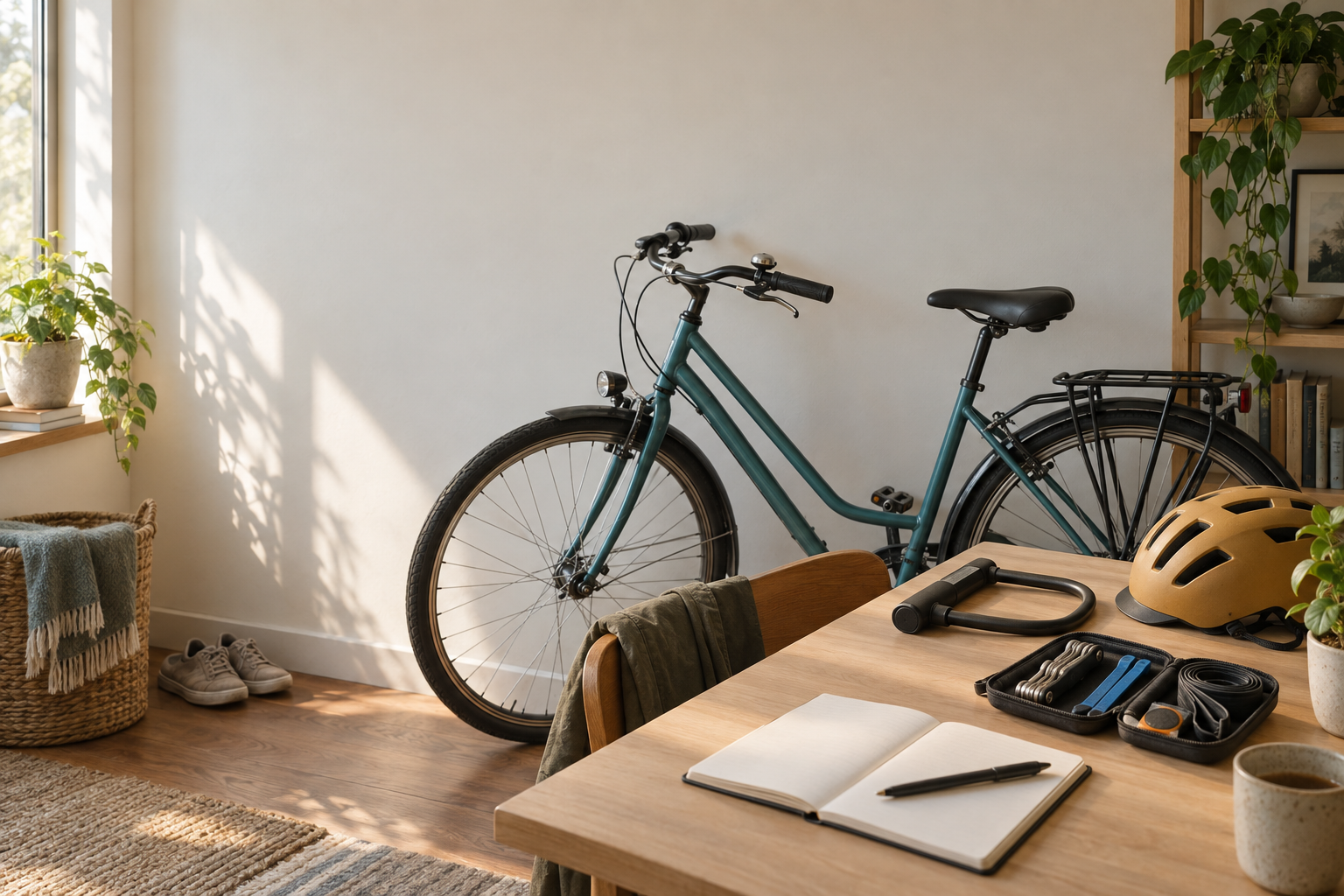
Write two lists before buying anything. The setup list might include a suitable bicycle or work on one you already own, a lock, lights, helmet, weather-ready clothing, a bag, and any parking or storage setup. Check what you own first; the goal is a usable, safe routine, not a matching collection of accessories. Ask about secure storage at both ends of the trip before committing to a purchase.
The ongoing list might include:
- routine servicing and replacement parts
- tire repairs and basic supplies
- paid storage or parking
- occasional transit fares or a backup ride
- work clothes or laundry needs caused by the trip
Get local prices for your actual route and equipment rather than copying someone else’s estimate. If you are buying a bike, compare the full setup cost with the cash you can spend now; a theoretical long-term saving does not pay this month’s bills.
Turn irregular repairs into a monthly amount
Maintenance does not arrive neatly each payday. A chain, tire, brake adjustment, or service can be easy to ignore until the bike is unavailable. Estimate a yearly repair and replacement amount from your own bike’s condition, local shop quotes, and past costs, then divide it by 12. Put that amount in a transport savings bucket each month.
For example, if your working estimate is 240 in your currency over a year, setting aside 20 a month makes the cost visible. The example is only arithmetic, not a suggested spending level. Revisit the estimate after a season of riding. Keep a small separate cushion for an unexpected repair that cannot wait for the monthly bucket to fill.
Compare the whole trip, not just the fare
A simple comparison is expected cycling days × the fare or driving cost you would otherwise pay. Then subtract the cycling costs linked to those days and account for your monthly maintenance, storage, and setup spending. If the bicycle replaces only some trips, keep paying for the rest in your estimate.
Suppose your normal alternative costs 8 per round trip and you expect to cycle 10 days this month. That is 80 of avoided travel spending, not automatically 80 saved. If you spend 20 on maintenance savings, 15 on storage, and 10 on backup transport, the difference is 35 before any upfront purchase. Change the numbers to match your own circumstances. If you already own the bike, the setup calculation will look different from buying one now.
Do not count the same saving twice. If you keep an unlimited transit pass because you use it for many other trips, cycling a few days may not lower the pass bill at all. Compare what will actually leave your account under each option.
Give bad-weather and mixed days a place in the plan
A cycling plan needs a fallback, not a promise to ride no matter what. Set aside enough for the alternative route you would comfortably take when the weather, your energy, a mechanical problem, or an errand changes the day. Check whether your usual transport option permits a bicycle if you expect to combine modes, and whether you can leave the bike securely if you travel home without it.
This protects the budget from a common surprise: buying cycling gear and still needing a full set of transit, parking, or ride-hailing costs. If backup trips become frequent, increase that line rather than treating each one as a failure.
Decide how to pay for the setup
If the setup would strain essentials, consider a staged plan. Service a bike you already have, borrow or rent for a short test where practical, or save a fixed amount before buying. Price the essential items and storage first, then leave optional upgrades for later. Do not rely on an optimistic payback date to justify a purchase you cannot comfortably cover today.
For a purchase you are considering, divide the upfront amount by your realistic monthly difference between the old commute and cycling. That gives a rough payback time only if the monthly difference is positive and your travel pattern stays similar. It is a decision aid, not a guarantee. Safety, route practicality, time, and enjoyment matter alongside the number.
Review after one month of actual rides
At the end of the month, count cycling days, repairs, storage charges, and backup trips. Compare your estimated costs with actual transactions. If you track expenses in Furt Money, review transport and related categories together; a repair or ride home may not appear beside regular fares. Adjust the maintenance bucket and the next month’s cycling-day estimate if the pattern was different from your plan.
A useful next step is to write down your realistic cycling days and the two lists—setup and ongoing costs—before shopping. A bike commuting budget works best when it makes the choice clearer, whether you ride daily, occasionally, or decide a different commute fits this season better.