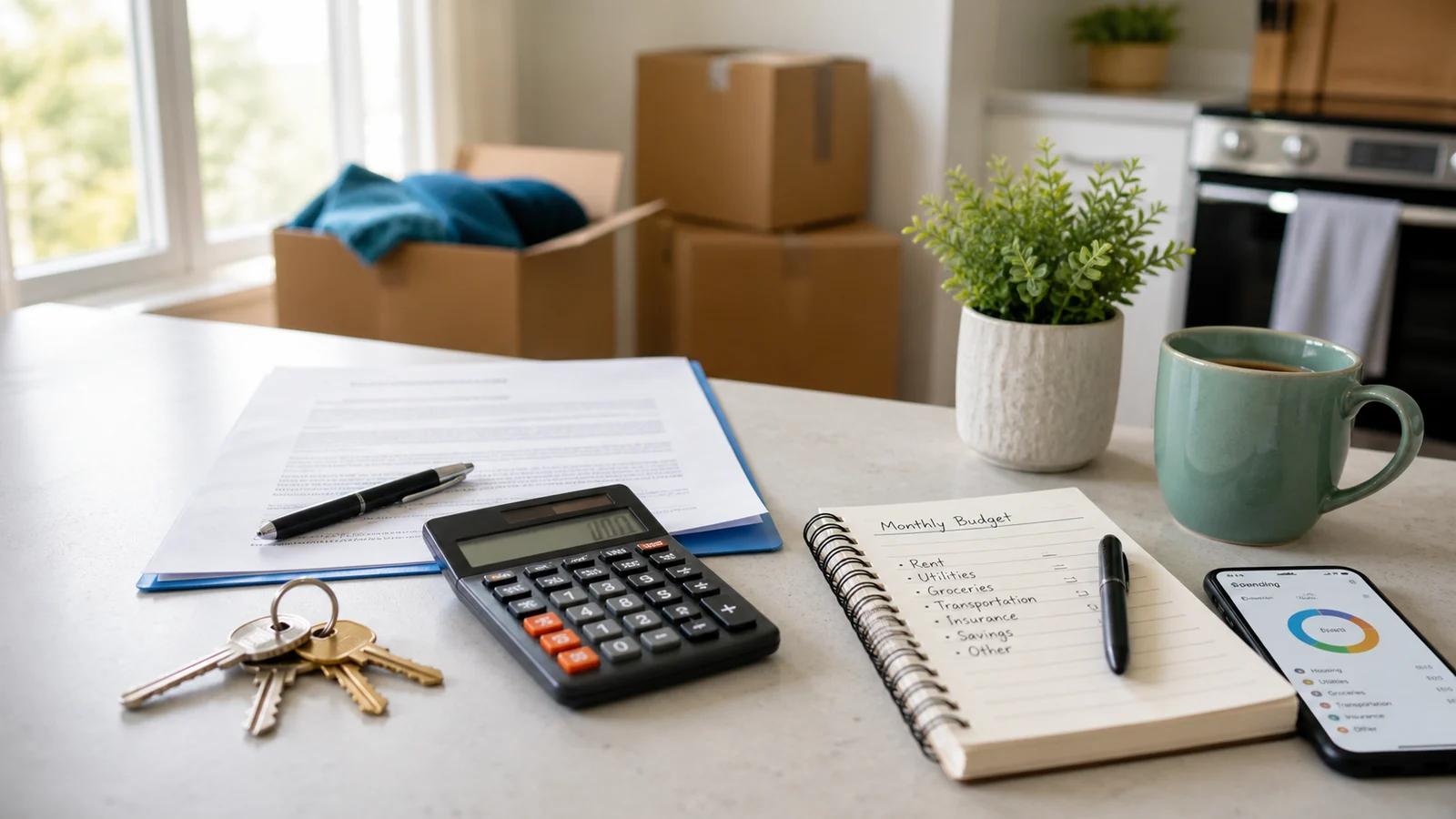
Getting a first apartment is exciting because it gives you more independence, control, and privacy. It can also be more expensive than it looks in the listing. Rent is only the headline cost. The real budget includes deposits, setup fees, utilities, furniture, moving supplies, household basics, insurance, transport, food, and the first few weeks of learning what the place actually needs.
A first apartment budget helps you slow down before you sign. It does not need to be perfect. It needs to show whether the lease fits your regular income, whether move-in cash is ready, and what choices you may need to make before the first month gets crowded.
Start with the monthly rent you can repeat
The most important question is not whether you can pay the first month. It is whether you can pay the rent every month while still covering the rest of your life.
Before you fall in love with a place, compare the rent with your regular take-home pay and your non-negotiable expenses. Include:
- current debt payments
- groceries and basic household supplies
- transport to work or school
- phone and internet
- medical costs and prescriptions
- insurance
- savings you do not want to pause
- family support or other recurring commitments
If the rent only works when every other category goes perfectly, the apartment may be too tight. A first place often comes with surprises: a higher utility bill, a broken chair, a bus route that costs more than expected, or a grocery routine that changes because the nearest store is different.
Leave room for ordinary messiness. A calmer rent target is usually better than a nicer apartment that makes every payday feel like a deadline.
Separate move-in cash from monthly affordability
Move-in costs can make a reasonable apartment feel impossible, or make an expensive apartment look manageable for the wrong reason. Treat move-in cash as its own mini-budget.
Common move-in costs include:
- application fees
- security deposit
- first month’s rent
- last month’s rent, if required
- broker, admin, or document fees
- utility deposits or connection fees
- moving truck, fuel, movers, or delivery costs
- boxes, tape, cleaning supplies, and basic tools
- temporary storage or overlap between old and new housing
Write these costs down before you commit. If the total move-in amount will empty your checking account, create a small backup plan. You may need a later move date, a less expensive unit, a roommate, a slower furniture plan, or more time to save.
The goal is to avoid starting the lease with no cash cushion. Even a small buffer can prevent the first grocery run, transit pass, or utility setup from landing on a credit card by default.
Estimate utilities before choosing the place
Utilities are easy to ignore during apartment hunting because they are not always listed next to the rent. But they can change the real cost of a unit.
Ask what is included and what you will pay separately. Depending on the building and location, you may need to budget for:
- electricity
- gas or heating
- water and sewer
- trash
- internet
- renter’s insurance
- parking
- laundry
- building fees or amenity fees
Do not assume a lower rent means a lower total cost. A slightly cheaper apartment with paid parking, coin laundry, poor insulation, and a longer commute may cost more than it first appears.
If you cannot get exact numbers, use cautious estimates and review them after the first two or three bills. Once real bills arrive, update your categories in Furt Money or your preferred tracker so your budget reflects the apartment you actually live in, not the one you guessed on move-in day.
Plan the first-week essentials
Many first-apartment budgets break because the small basics arrive all at once. You may not need a full furniture set on day one, but you do need enough to sleep, clean, cook, and handle daily life.
Start with essentials:
- mattress, bedding, and pillows
- towels and basic toiletries
- toilet paper, soap, and cleaning supplies
- trash bags and laundry supplies
- a few dishes, utensils, cups, and pans
- light bulbs, extension cords, and chargers
- basic groceries
- shower curtain, if needed
- plunger, small toolkit, and first-aid basics
Then make a second list for upgrades. A sofa, rug, art, matching dishes, extra storage, and better cookware can come later. This keeps the first week functional without turning move-in into a shopping spree.
A good rule is to buy for the life you already know you have. If you rarely cook now, you probably do not need a large kitchen setup immediately. If you work from home, a supportive chair may matter more than a decorative coffee table.
Build a furniture plan in phases
Furniture spending can get emotional because an empty apartment feels unfinished. Try planning in phases instead of filling every room at once.
Phase one is survival and safety: bed, lighting, basic seating, window coverings if privacy requires them, and anything needed for work or school.
Phase two is routine: storage, kitchen tools, laundry setup, a desk, better seating, and anything that makes daily habits easier.
Phase three is comfort: decor, larger upgrades, guest items, rugs, artwork, and pieces chosen for style rather than need.
This phased approach gives you time to measure rooms, understand the layout, compare prices, and avoid buying things that do not fit. It also lets you use secondhand finds, family hand-me-downs, or slower savings instead of forcing the whole apartment onto one card.
Track furniture separately from regular shopping if you can. That way, one move-in season does not make your ordinary spending categories look permanently inflated.
Check the commute and neighborhood costs
The apartment itself is only part of the budget. The surrounding routine matters too.
Before signing, map a normal week:
- How will you get to work, school, errands, and regular appointments?
- Will you pay for parking, transit, tolls, fuel, or ride-hailing more often?
- Is the nearest grocery option more expensive than your current one?
- Will laundry cost more?
- Are there safer or cheaper routes at the times you actually travel?
- Will you need new services, equipment, or subscriptions because of the location?
Small routine costs can quietly change the math. A unit that saves money on rent but adds paid parking and a longer commute may not save as much as expected. A place near reliable transit or affordable groceries may make everyday budgeting easier even if the rent is a little higher.
This is where expense tracking becomes useful after the move. Review your first full month and look for categories that changed because of the apartment. Then adjust the budget instead of blaming yourself for old numbers that no longer match your life.
Keep a move-in buffer for surprises
Even careful renters miss something. The apartment may need extra cleaning. The internet setup may require equipment. A delivery may fail. You may need curtains sooner than expected. A utility deposit may be higher than planned.
Create a move-in buffer if you can. It does not need to be huge. It just needs to be separate from rent and groceries so surprises have somewhere to land.
Use the buffer for true setup gaps, not every decorative idea. Good uses include:
- replacing a missing safety item
- buying an essential tool or cleaning product
- handling a utility or delivery issue
- covering a small rent-overlap cost
- filling a grocery gap during the first week
If you do not use the buffer, keep it as the start of an apartment sinking fund. Future costs will come: repairs you are responsible for, small replacements, annual renewals, moving again, or a rent increase negotiation. A first apartment is easier when housing has its own cushion.
Make the lease decision with numbers and limits
Before you sign, put the decision on one page. Include the monthly cost, move-in cash required, utility estimates, commute changes, first-week essentials, furniture phases, and buffer target.
Then ask:
- Can I pay the move-in amount without draining every account?
- Can I repeat the monthly cost during a normal month?
- What category would I cut first if costs run high?
- What purchase can wait until month two or three?
- Who do I need to coordinate with before paying deposits or booking movers?
- What would make me walk away from this unit?
That last question matters. A clear walk-away point protects you from making the budget fit the apartment after your emotions have already decided.
The bottom line
A first apartment budget is not just a rent calculation. It is a plan for the full move-in season and the monthly routine that follows. When you separate move-in cash from monthly affordability, estimate utilities, phase furniture, and leave a small buffer, the decision becomes easier to trust.
Before you sign, write down the full cost of saying yes. If the numbers still work after deposits, utilities, basics, transport, and a little breathing room, you can move in with more confidence and less financial guesswork.