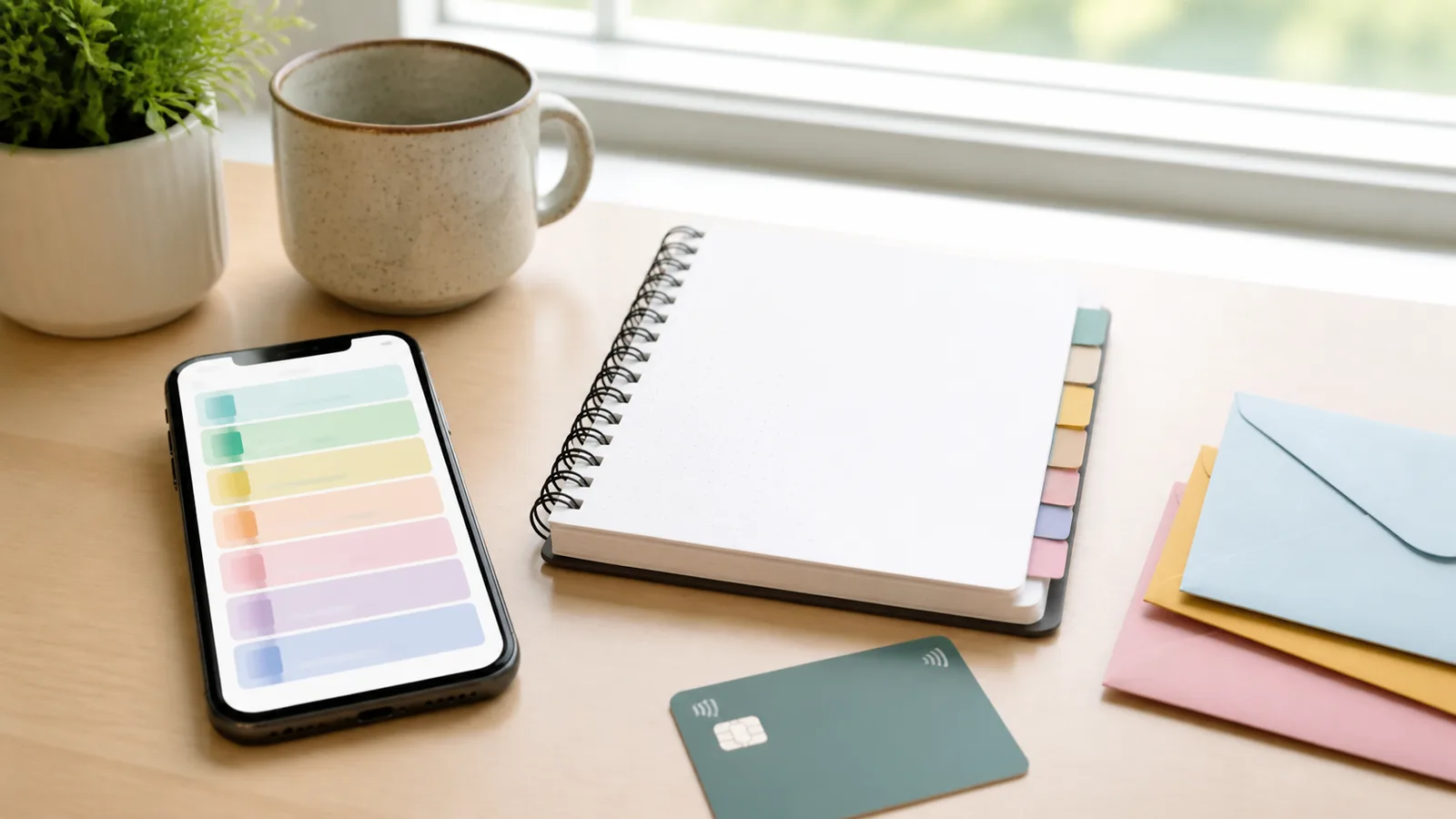
Envelope budgeting works because it turns vague money into visible limits. Groceries has its own amount. Eating out has its own amount. Transport, gifts, personal spending, and weekend plans stop competing inside one blurry balance.
The old version used physical cash envelopes. That can still work, but many people now pay with cards, bank transfers, mobile wallets, and automatic bills. A digital envelope budget keeps the useful part of the method without requiring cash for every purchase.
The goal is simple: decide how much each category can use before the money leaves, then review the buckets often enough to make real choices.
Start with money you already have
A digital envelope budget works best when it is based on available money, not expected money. If the next paycheck has not arrived, do not spend it inside your plan yet.
Start with the balance that is actually ready to use. Then subtract bills or transfers that are already committed. What remains can be divided into digital envelopes for the current week, pay cycle, or month.
This keeps the system grounded. It also prevents a common budgeting mistake: giving the same future income too many jobs before it lands.
Ask three questions before filling envelopes:
- What money is available today?
- What bills or payments must be protected before the next income arrives?
- How many days does this money need to last?
If those answers are clear, the rest of the plan becomes much easier.
Choose fewer envelopes than you think
Too many categories make a budget tiring. Too few categories make spending hard to understand. Start with the categories that change your decisions most often.
Useful first envelopes might include:
- Groceries and household basics
- Eating out, coffee, and snacks
- Transport, fuel, rides, and parking
- Personal spending
- Gifts and social plans
- Small home, clothing, or convenience purchases
Fixed bills usually do not need daily envelope attention if they are already scheduled and protected. Rent, utilities, insurance, subscriptions, and minimum debt payments can sit in a bill plan or cash flow calendar. The envelope budget is most useful for flexible spending that can drift.
You can always add more detail later. A budget you actually check is better than a perfect list you avoid.
Give every envelope a decision rule
An envelope should do more than hold a number. It should help you decide what to do at the moment of spending.
For each category, write a simple rule:
- Groceries: cover planned meals first, then extras.
- Eating out: use after groceries are handled, not as a replacement for planning.
- Personal spending: small wants are fine until the envelope is empty.
- Gifts: spend from the gift envelope, not from the bill buffer.
- Transport: protect work and essential errands before convenience trips.
Rules make the system feel less like permission and more like clarity. You are not asking whether you are “allowed” to buy something. You are checking which bucket should pay for it and whether that bucket still has room.
Track purchases close to the moment
Digital envelopes fail when purchases stay invisible for too long. Card payments, tap-to-pay, and payment apps can make spending feel weightless until several days of transactions arrive at once.
Try to update envelopes near the moment of purchase, especially for categories that move quickly. If real-time tracking is too much, use a short daily catch-up instead. The key is not perfection. The key is seeing the category while there is still time to adjust.
With Furt Money, you can categorize spending and review where transactions are landing. That makes it easier to notice when groceries, dining, or personal spending is using more of the plan than expected.
A simple rhythm helps:
- Check fast-moving envelopes once a day.
- Review all flexible envelopes before the weekend.
- Refill or adjust envelopes only when new money arrives or the plan truly changes.
Use rollovers on purpose
Some envelopes should reset often. Others should carry money forward.
Food, transport, and personal spending may reset each pay cycle because they support regular life. Gifts, repairs, travel, school costs, and annual fees may need to roll over because they build toward larger expenses.
The important part is deciding on purpose. If every leftover amount rolls forward automatically, the budget can become crowded and confusing. If nothing rolls forward, irregular expenses stay surprising.
Use a simple rule:
- Daily-life envelopes can reset when the budget period ends.
- Predictable-but-irregular envelopes can roll forward.
- Leftover money without a clear job can move to savings, debt payoff, or next month’s buffer.
This keeps the method flexible without turning leftovers into accidental spending money.
Handle overspending without starting over
One envelope will eventually go over. That does not mean the whole budget failed.
When a category is over, pause and choose a repair:
- Move money from another flexible envelope.
- Reduce the same category for the rest of the week.
- Delay a nonessential purchase.
- Use a small buffer if the overspend protects something important.
- Change next month’s category amount if the limit was unrealistic.
Avoid covering every overspend from savings by default. Savings can protect the month when the issue is urgent, but frequent category overspending usually means the plan needs better limits or more honest numbers.
Also avoid hiding the overspend. A digital envelope budget is useful because it shows tradeoffs. If dining out uses part of the personal spending envelope, that is information. If a gift costs more than planned, the next social plan may need to be simpler.
Review before the next refill
Before new income arrives, take five minutes to review the envelopes. This is where the method turns into learning.
Look for:
- Envelopes that always run out early
- Envelopes with leftover money every cycle
- Purchases that were hard to categorize
- Bills or fees that should not have been in flexible spending
- Categories that need a rollover instead of a reset
Then make one small change. Raise a category, merge two envelopes, split a messy category, or add a reminder before a high-spend day.
Do not rebuild the whole budget every time. The best digital envelope budget becomes more accurate through small edits.
Keep the system visible
The envelope method works because it makes money visible before the balance gets too low. Digital payments remove some of that friction, so your system needs another kind of visibility.
Put the categories somewhere you will actually see them. That could be an app, a note, a spreadsheet, or a weekly money review. The format matters less than the habit of checking the buckets before the spending decision becomes automatic.
If your budget feels chaotic, start with three envelopes for the next seven days: groceries, eating out, and personal spending. Give each one a number, track purchases as they happen, and review what changed by the end of the week.
A digital envelope budget does not need to be strict to be useful. It just needs to show where the money is meant to go before the month is already over.