Credit cards can be useful tools when they fit inside your cash flow. They can also make a budget feel unclear because the purchase happens today, the bill arrives later, and the balance can grow quietly in between.
Credit utilization is the part of your available credit that you are using. A high balance compared with your card limit can make a card harder to manage and may matter for credit scoring, depending on the scoring model and how your issuer reports balances. But you do not need to memorize complicated score formulas to use the idea well.
A credit utilization budget turns the concept into a practical question: how much card balance can you carry through the statement cycle without stressing your bills, savings, or payoff plan?
Start with the balance you can actually pay
Many people think about credit cards from the limit down. If the card limit is high, the available room can look like permission. A healthier budget starts from the amount you can comfortably pay from cash you already have or will reliably receive before the bill is due.
Write down:
- Your current card balance
- Pending charges that have not posted yet
- The next statement closing date, if you know it
- The payment due date
- The cash already set aside for the card
- Any planned card purchases before the next payment
This gives you a working number. The goal is not just to stay under the card limit. The goal is to keep the balance aligned with money that belongs to the bill.
If you track spending in Furt Money, review the categories that usually land on the card. Dining out, groceries, transport, online shopping, subscriptions, and travel can all behave differently. Seeing those patterns helps you plan the card balance from real habits instead of guesses.
Separate everyday card use from carried debt
Card balances become confusing when new purchases sit on top of older debt. The budget may say you spent a reasonable amount this week, but the total balance still feels heavy because last month’s balance is still there.
Separate the card into two mental buckets:
- New purchases you expect to pay in full by the due date
- Older balances that need a payoff plan
This split matters because the decisions are different. New purchases need spending limits and category tracking. Older balances need payment priority, interest awareness, and a plan that does not rely on more card spending.
If the card already has a carried balance, consider pausing nonessential new purchases on that card. Use a debit card, cash, or a separate payment method for current spending if that makes the plan clearer. The point is to stop mixing fresh spending with debt you are trying to reduce.
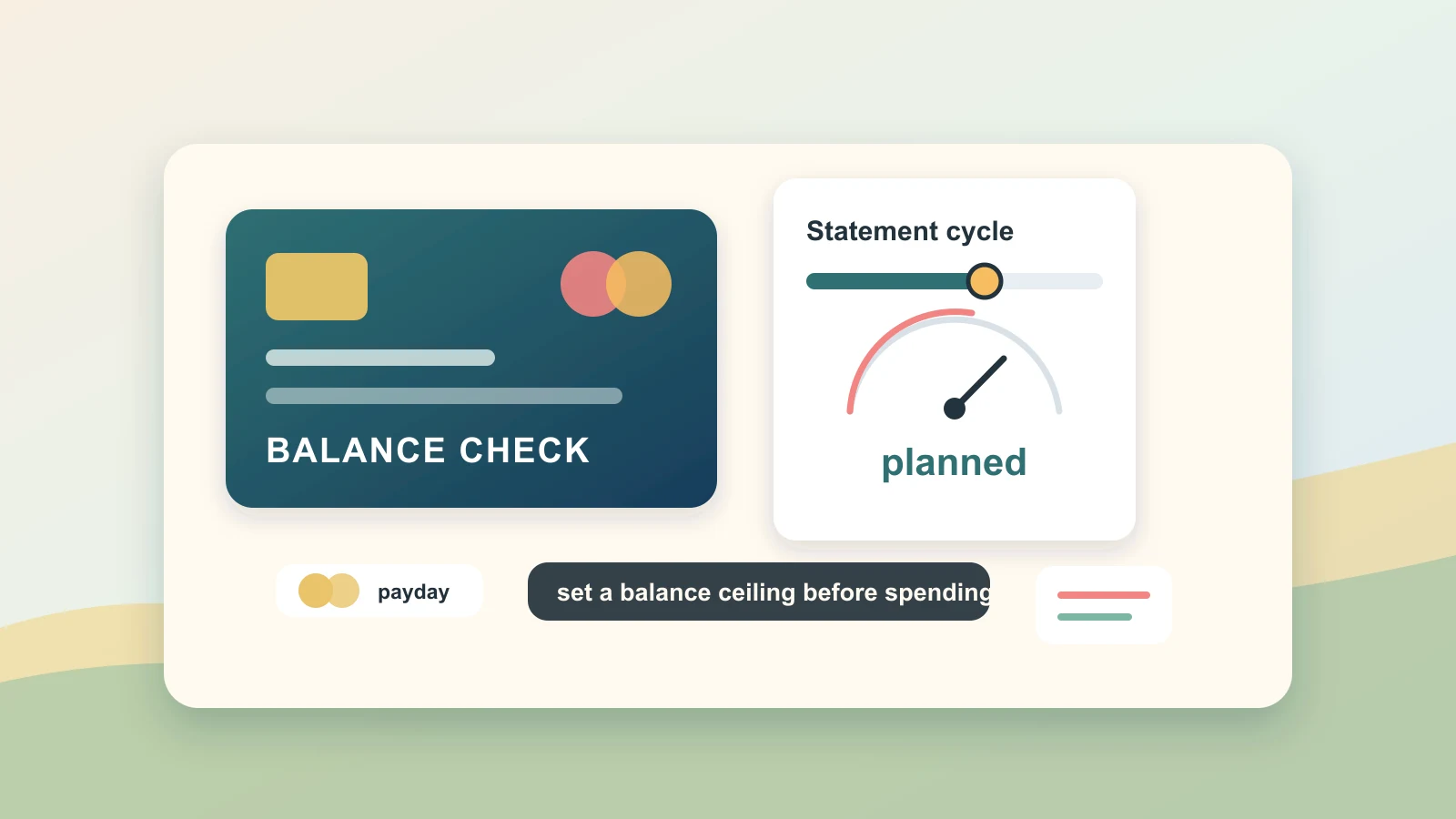
Set a personal balance ceiling
A credit limit is chosen by the lender. Your personal balance ceiling should be chosen by your budget.
Pick a number that answers this question: what is the highest balance I can see on this card without feeling squeezed when the payment is due?
Your ceiling might be based on:
- One planned payment amount
- A fixed share of your monthly take-home pay
- The amount you can pay before the statement closes
- A lower limit for categories where you overspend easily
- A temporary cap while you are rebuilding savings
The right number depends on your income, bill timing, savings cushion, and whether you pay the card in full. Keep it simple enough to remember. A clear dollar ceiling is often more useful than a vague promise to “use the card less.”
Once the balance reaches the ceiling, new nonessential card spending pauses until a payment brings it down. This gives you a rule before the card becomes stressful.
Watch statement timing, not only due dates
The due date tells you when payment is required. The statement closing date tells you when the issuer usually snapshots the cycle and creates the bill. Both dates matter for planning.
If you only check the due date, you may miss why the statement balance feels larger than expected. A grocery run, travel booking, or annual renewal right before the statement closes can make the bill look crowded even if you plan to pay it soon.
Use a simple calendar note:
- Closing date: review the balance before the statement is created.
- Due date: confirm the payment leaves on time.
- Payday: decide whether an extra payment makes the next cycle calmer.
You do not need to make multiple payments every month unless it helps your cash flow. The important habit is knowing when the balance will become visible on the statement and when cash needs to be ready.
Give card categories their own limits
A credit utilization budget works better when it connects to spending categories. Otherwise, the total balance grows from many small decisions that never get reviewed together.
Choose the categories you allow on the card. For example:
- Groceries
- Fuel or transport
- Phone and internet
- Streaming or software subscriptions
- Planned travel
- Work expenses that will be reimbursed
Then decide which categories do not belong on the card right now. Maybe impulse shopping, late-night delivery, or hobby purchases need a different payment method until the balance is lower.
This is not about declaring a category bad. It is about matching the payment method to the behavior. If a category is easy to overspend on, making it feel slightly more visible can protect the budget.
Plan payments before the balance feels urgent
Waiting until the due date can work, but it leaves less room for mistakes. A payment plan gives the balance a path down before it feels urgent.
Try one of these approaches:
- Pay the card every payday.
- Pay fixed bills on the card, then immediately move the same amount aside.
- Make a small mid-cycle payment after high-spend weeks.
- Pay new purchases in full while sending extra money to older debt.
- Set a reminder three to five days before the due date to avoid last-minute transfers.
If autopay is on, check the setting. Minimum payment, statement balance, full current balance, and fixed payment amount can all affect your cash flow differently. Autopay can prevent missed payments, but it should not replace reviewing the balance.
Make a plan for high-balance months
Even careful budgets have high-balance months. Travel, repairs, medical costs, school expenses, or family needs can push the card above your normal ceiling.
When that happens, avoid pretending the next month is normal. Build a temporary recovery plan:
- Pause optional card spending.
- List the charges that created the high balance.
- Decide what can be paid this cycle.
- Set a realistic target for the next payment.
- Lower flexible categories until the card returns to your ceiling.
- Move future irregular costs into sinking funds when possible.
The recovery plan should be specific, not punishing. A high balance is information. It tells you which expenses need better timing, better savings, or a different payment method next time.
Review the card once a week
A short weekly review keeps card spending visible while decisions are still fresh.
Use this checklist:
- Compare the current balance with your personal ceiling.
- Scan recent charges for mistakes or forgotten subscriptions.
- Match each charge to the right budget category.
- Check whether pending charges change the picture.
- Confirm the next payment date and amount.
- Decide whether new card spending should continue, slow down, or pause.
This review should take minutes. The goal is to keep the card inside the budget instead of discovering at the end of the month that the balance has been making decisions for you.
Keep credit useful, not mysterious
Credit utilization can sound technical, but the everyday version is simple: keep card balances visible, connected to cash flow, and low enough that repayment still feels manageable.
Start by listing the balance, due date, closing date, and planned payment. Set a personal balance ceiling. Decide which categories belong on the card. Review the balance weekly. If the card is already carrying debt, separate old debt from new spending so the payoff plan has room to work.
You do not need a perfect credit strategy to make progress. You need one clear rule for the next statement cycle.