A credit report can feel intimidating because it collects years of borrowing, payments, account history, and lender updates in one place. But reviewing it does not have to be a dramatic event. A simple credit report review routine can help you notice problems early, understand what lenders may see, and keep your money records cleaner.
The goal is not to obsess over every detail or chase a perfect score. The goal is to make sure the report reflects your real financial life. If something looks unfamiliar, outdated, duplicated, or simply confusing, you can slow down and investigate before it turns into a bigger problem.
What a credit report review is for
A credit report review is a practical checkup. You are looking for accuracy, completeness, and warning signs.
It can help you answer questions like:
- Do I recognize every account listed?
- Are closed accounts marked correctly?
- Do balances look reasonable compared with my own records?
- Are late payments, collections, or public records showing up that I need to understand?
- Is there personal information that looks outdated or unfamiliar?
This is different from checking a credit score. A score is a summary number created from report data. The report itself gives you the details behind the number. If the details are wrong, the score may not tell the full story.
Gather your own records first
Before reading the report, collect a few basic records so you have something to compare against. You do not need a perfect archive. Start with what is easy to find.
Useful items include:
- Current credit card and loan statements
- Recent payment confirmations
- A list of accounts you know are open
- A list of debts you believe are closed or paid off
- Notes about old accounts you no longer use
- Any collection notices, settlement letters, or payoff confirmations you have kept
If you track spending in Furt Money or another expense tracker, your categories can also help. Card payments, loan payments, fees, and transfers may show patterns that make the report easier to interpret. Your app record is not a substitute for lender records, but it can remind you what happened and when.
Start with personal information
The first section is easy to skim, so many people rush past it. Do not skip it. Personal information can give early clues that a file has been mixed, updated incorrectly, or touched by accounts you do not recognize.
Check your name, current address, previous addresses, date of birth, and employer information if it appears. Small formatting differences are common, but unfamiliar names, addresses, or identities deserve attention.
Ask:
- Is this an old address I recognize?
- Is this a spelling variation, or a completely different name?
- Could this be connected to an account I opened years ago?
- Is any information clearly not mine?
If something looks wrong, write it down before moving on. A review works better when you collect questions in one place instead of trying to solve each one immediately.
Review accounts one by one
Next, move through each account slowly. It helps to divide them into open accounts, closed accounts, and accounts you do not recognize.
For open accounts, compare:
- Account name
- Approximate balance
- Payment status
- Credit limit or original loan amount
- Date opened
- Most recent update
Balances may not match your current app or bank screen exactly because reports are updated on different schedules. A difference is not automatically an error. But a balance that is wildly higher than expected, an account you never opened, or a payment status that conflicts with your records is worth investigating.
For closed accounts, check whether the status makes sense. A closed card, paid-off loan, or transferred account may still appear on a report. That is not always a problem. The question is whether the account is described accurately and whether the history belongs to you.
Look for payment-history issues
Payment history is one of the most important parts to review because small labels can carry a lot of meaning. Look for late payments, missed payments, collections, charge-offs, or accounts marked as delinquent.
If you find one, pause before reacting. Ask:
- Do I remember this account?
- Do I have a statement or confirmation from that period?
- Was the payment actually late, or did it post after a due-date change?
- Is the same issue listed by more than one company?
- Has the account since been brought current, settled, transferred, or closed?
The purpose of this step is clarity. If the information is accurate, you can decide how to plan around it. If it looks inaccurate, your notes and records will help you ask better questions.
Watch for identity-warning signs
A credit report review can also help you catch potential identity problems. You do not need to assume the worst, but you should pay attention to anything that does not belong.
Warning signs include:
- Accounts you never opened
- Hard inquiries from lenders you do not recognize
- Addresses where you have never lived
- Phone numbers or names that are clearly unrelated to you
- Collections tied to services you never used
- Several unfamiliar changes around the same time
One unfamiliar item may have a simple explanation, such as a store card, a renamed lender, or an account servicer change. Several unfamiliar items deserve faster follow-up. Keep a written list of what you found, where it appeared, and why it looks suspicious.
Decide what needs action
After reviewing the report, group your notes into three buckets.
First, mark items that are accurate but need budget attention. This might include high balances, minimum payments that crowd cash flow, old debts you need to understand, or cards you have stopped tracking carefully.
Second, mark items that are confusing but not urgent. These may require a statement lookup, a call to a lender, or a check against old emails.
Third, mark items that appear incorrect or unfamiliar. These deserve the most careful documentation. Save screenshots or copies where appropriate, gather supporting records, and follow the reporting bureau or lender process for disputes or fraud concerns.
This is also a good moment to update your money system. If your report shows a card you forgot to include in your budget, add it. If a loan payment is being tracked in the wrong category, clean it up. If a balance feels higher than expected, schedule a short spending review instead of guessing.
Build a repeatable review rhythm
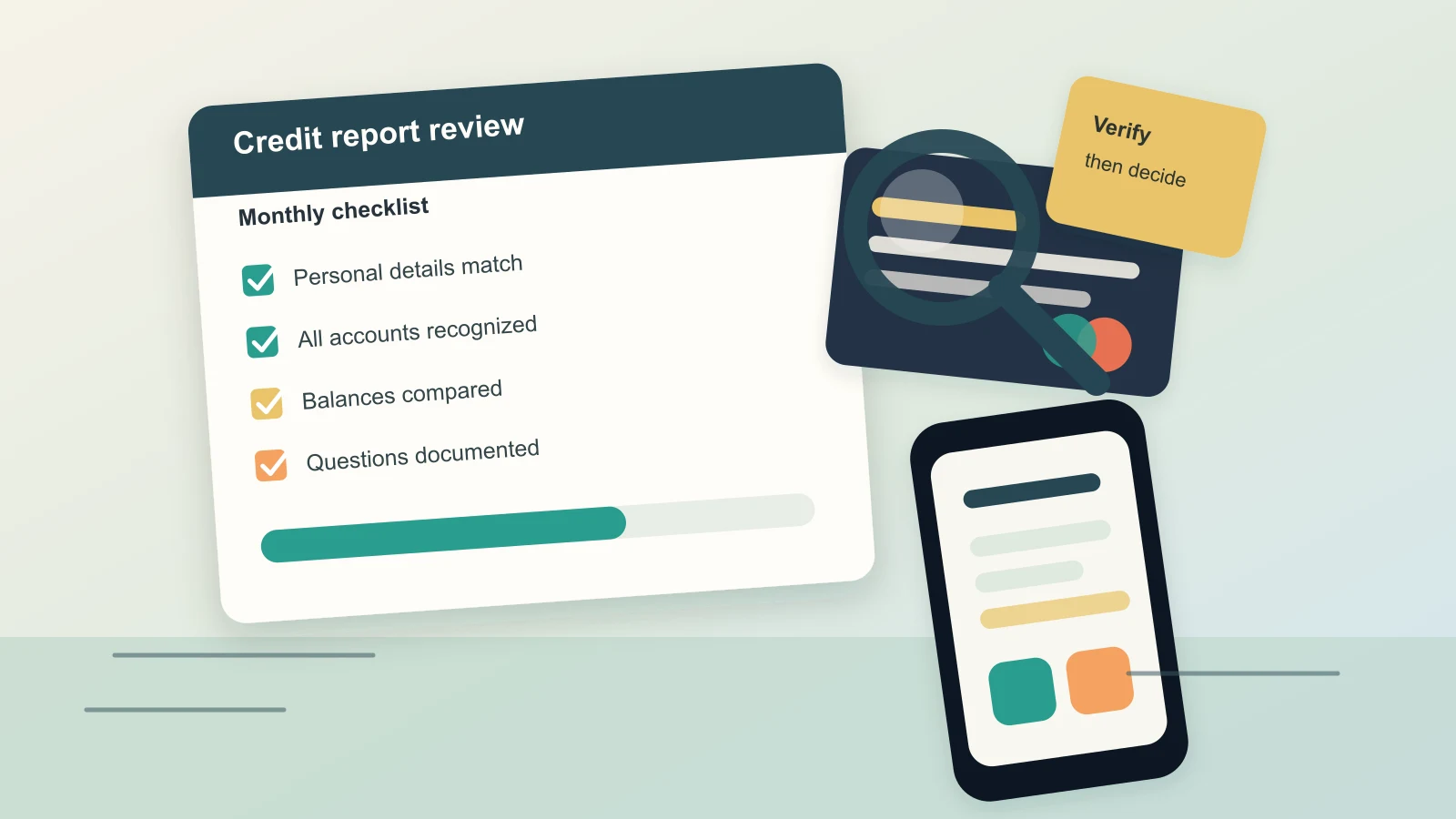
A credit report review is easier when it becomes routine. Choose a rhythm you can actually maintain. Some people prefer a full review a few times a year. Others do a shorter monthly check of known accounts and a deeper review before applying for major credit.
Keep the routine simple:
- Download or open the report.
- Check personal information.
- Review open accounts.
- Review closed and unfamiliar accounts.
- Note payment-history issues.
- Compare action items with your budget.
- Save your notes in one place.
Set a calendar reminder with a plain name like “review credit report” or “check credit file.” Avoid making the routine bigger than it needs to be. A calm 30-minute review is more useful than a perfect system you never start.
The bottom line
A credit report review routine gives you a clearer view of your borrowing history and helps you catch problems while they are still manageable. You are not trying to judge every past decision. You are checking whether the record is accurate and whether anything needs your attention now.
Start with one report, one notebook page, and one quiet review. Write down what you recognize, what you need to verify, and what you want to fix first. That is enough to make your credit file feel less mysterious and more manageable.