Cash can be useful. It helps with small shops, tips, markets, shared errands, parking, and places where card payments are awkward. The problem is that cash can disappear from a budget as soon as it leaves the ATM.
Your bank statement may show one clean withdrawal, but your real life had seven different purchases inside it. A snack, a tip, bus fare, a school request, a small gift, and change handed to someone else all become one vague line called cash.
A cash spending tracker gives those purchases a simple place to land. The goal is not to record every coin forever. The goal is to stop cash withdrawals from hiding the patterns that matter.
Start With Why Cash Leaves Your Account
Before building a system, name the reasons you use cash. A tracker works better when it matches your actual habits instead of copying someone else’s method.
Common cash uses include:
- tips and small service payments
- local markets, street food, or small shops
- transport, parking, or tolls
- children’s school requests or allowances
- gifts, collections, or group contributions
- household help or casual services
- emergencies when cards or mobile payments fail
- privacy for small personal spending
Look at the last few withdrawals and ask what they were mostly for. If you use Furt Money, review ATM withdrawals, uncategorized spending, transport, groceries, and miscellaneous categories together. The pattern may already be visible even if the details are fuzzy.
This first step matters because different cash has different jobs. Emergency cash should not be judged like cafe money. A weekly market envelope should not be confused with random impulse spending. Naming the job makes the tracking less annoying.
Choose A Tracking Method You Will Actually Use
The best cash spending tracker is the one you can maintain when you are busy. It should take seconds, not a full budgeting session.
Pick one simple method:
- Write cash purchases in a small notes app list.
- Keep receipts in one pocket or envelope until review day.
- Add a quick note to the ATM withdrawal transaction.
- Use one paper card in your wallet with date, amount, and reason.
- Split the withdrawal into categories during your weekly money review.
Avoid making the system too detailed at first. If you try to log every purchase with merchant, time, tax, category, and mood, you may stop after two days. Start with three facts: amount, category, and reason.
For example: “6 transport, late bus change” is enough. “12 lunch, forgot packed meal” is enough. The goal is clarity, not a perfect receipt archive.
Split Withdrawals Into Real Categories
An ATM withdrawal is not a category. It is a transfer from digital money to physical money. The budget still needs to know what the cash paid for.
When you review cash spending, divide the withdrawal into the categories it actually served:
- groceries or market food
- transport or parking
- dining or snacks
- gifts and contributions
- personal spending
- kids or family costs
- household help
- emergency backup
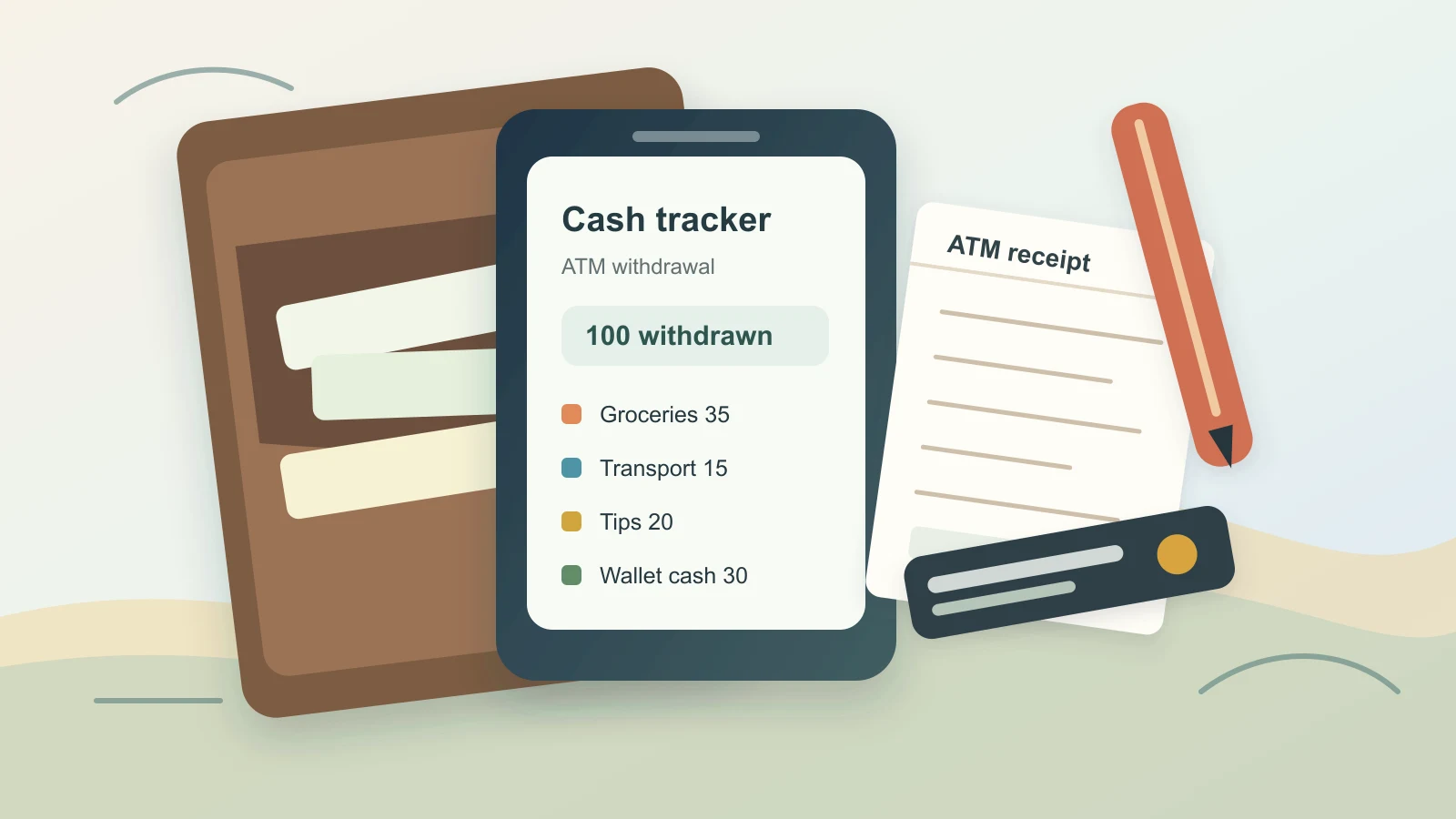
If you withdrew 100 and spent 35 on groceries, 15 on transport, 20 on tips, and still have 30 in your wallet, record it that way. The unspent 30 is still cash on hand, not money that vanished.
This helps prevent a common budget mistake: treating the full withdrawal as already spent, then also treating the remaining cash as free money. Cash is part of your budget until it is actually used.
Use A Cash-On-Hand Number
A cash spending tracker should tell you two things: what you spent and how much cash you still have. That second number protects you from accidentally double-counting money.
Try this simple routine:
- Start with the amount withdrawn.
- Subtract each cash purchase you record.
- Count the cash left in your wallet at review time.
- If the math does not match, label the gap as unknown cash spending.
- Watch whether the unknown gap shrinks over time.
Do not treat a small mismatch as failure. Cash is messy by nature. You may forget a parking meter, a tip, or money handed to someone in a hurry. The point is to make the unknown portion smaller and more visible.
If unknown cash spending is large every month, the tracker is giving you useful information. You may need fewer withdrawals, clearer envelopes, more receipt capture, or a cash category that is honest about how life actually works.
Set Rules For Shared Cash
Cash gets especially confusing when it moves between people. You may front money for a group meal, repay a friend, give someone change, collect contributions, or receive cash back for something you paid by card.
Create a small rule for shared cash:
- If you pay for someone else, note whether repayment is expected.
- If someone gives you cash back, decide whether it returns to the original category.
- If you collect group money, keep it separate from personal spending.
- If the amount is small and you are treating it as a gift, label it that way.
This keeps shared spending from distorting your categories. Without a rule, you might record the full meal on your card, spend the cash repayment later, and accidentally make both your dining and cash categories look wrong.
For recurring shared costs, such as roommate errands or family contributions, consider a separate note or category. You do not need a complicated ledger. You need enough detail to know what belongs to you and what is passing through.
Plan Cash Before High-Cash Weeks
Some weeks naturally use more cash than others. Travel, school events, local festivals, markets, service appointments, family visits, and busy errand days can all create extra small payments.
Before a high-cash week, choose the withdrawal amount on purpose. Ask:
- What cash-only or cash-preferred costs are likely?
- Which categories will the cash support?
- How much should stay untouched as backup?
- When will I review what is left?
- Is one planned withdrawal better than several rushed ones?
This can reduce ATM fees, rushed decisions, and mystery spending. It also helps you avoid the “I already took out cash, so it does not count” feeling. It does count. You are simply deciding its job earlier.
If you often withdraw cash in response to stress, delays, or last-minute plans, add a small buffer category. A planned buffer is calmer than pretending those moments will never happen.
Review Cash During Your Money Check-In
Cash tracking works best when it is tied to a routine you already have. Add it to your weekly review, payday budget, or month-end cleanup.
During the review:
- Count cash left in your wallet or envelope.
- Enter any notes or receipts you have not recorded.
- Move spending into the right categories.
- Mark unknown cash if something does not reconcile.
- Decide whether the next withdrawal should be smaller, larger, or skipped.
This is also a good moment to notice patterns. Maybe cash mostly goes to transport. Maybe tips need their own monthly number. Maybe market food belongs with groceries, not miscellaneous. Maybe a child allowance or family request should be planned instead of handled from spare wallet cash.
The useful question is not “Did I track perfectly?” It is “What did cash teach me about next month?”
Make Cash Visible Again
Cash does not have to ruin a budget. It only becomes a problem when withdrawals hide the real spending underneath.
Start with one small change: after your next withdrawal, write down the amount and its intended job. Then, during your next money review, split what happened into real categories and count what remains.
That simple cash spending tracker can turn a vague ATM line into useful information. You will know where the money went, what cash still needs a job, and which habits deserve a clearer place in next month’s budget.